What the Three of Swords means in Tarot
The Three of Swords is one of the most recognizable cards in the deck, and this recognizability is no accident: three blades piercing a heart are understood without preparation. But that is precisely why it is important to separate what the card actually says from what rumor attributes to it.
An important nuance that gets lost in retellings: the Minor Arcana describes an episode, not a lifelong diagnosis. If the Three of Swords appears in a spread, it almost always means that the pain has already occurred or is happening right now — hurtful words, a breakup, disappointment, news that is hard to accept. The card does not predict trouble from afar; it names what has already happened or is inevitably becoming clear.
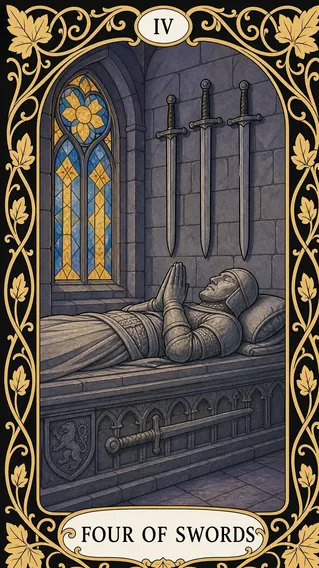
The element of Swords is air, and air in Tarot is associated with the mind, words, and truth, which is not always pleasant. Swords generally cut through illusions, and the Three is the moment when the illusion breaks most sharply: learning what you didn't want to know, hearing what changes everything. Pain here is not a punishment or a sentence, but an honest reaction to honest information. Next in the suit is the Four of Swords — a card of pause and recovery, and that is exactly where it is logical to move after what the Three has shown.
Reversed Three of Swords: meaning
The reversed Three of Swords is not an cancellation of pain, but a change in its phase. There are three common readings, and the context of the question helps to distinguish them.
- Beginning of healing. The acute phase is behind you, the pain becomes quieter, and the ability to think about what happened more calmly, without tears at every word, appears.
- Suppressed, unwept pain. A person does not allow themselves to grieve: they keep a brave face, work as if nothing happened, but inside, the wound remains untouched and untreated.
- An old wound resurfacing. A new situation has touched something that seemed to have passed long ago — not new pain, but an echo of the old.
There is also a softer reading: the reversed card sometimes describes forgiveness that is given through conscious effort rather than by itself. The difference between the readings is usually clear from how the person phrases the question: "I feel better already" is healing, "I am fine" said too insistently is likely suppression.
Three of Swords in a "yes or no" spread
In "yes/no" spreads, the Three of Swords in the upright position is read as no if the question assumes an easy or painless outcome. The card says directly: this path will be painful, the truth will surface, and what is desired will not coincide with reality.
If the question is phrased differently — "should I find out the truth," "is it necessary to speak honestly" — the answer is more likely yes, but with the caveat that honesty will come at a high emotional cost.
The reversed position in this spread softens the answer: the acute pain is already behind or has not yet arrived; the situation is in an intermediate phase. Here, it is worth rephrasing the question not as "will it happen," but "am I ready for the price of the answer."
Three of Swords in relationships and feelings
🔴 An important caveat right away: the Three of Swords in a relationship spread is a card about pain that is already felt or is being called by its name right now, not a prediction of infidelity or a breakup. A spread cannot look into other people's intentions and does not know what another person will decide — the card only reflects the tension that is already present in the question or the situation at the moment of the spread.
Most often, an upright Three of Swords in this position speaks of a conversation that causes pain to both parties: an admission that feelings have cooled, resentment that has been carried in silence for a long time, a conflict where truth is more important than the desire not to upset. Sometimes it refers to pain from a third party: words from friends or family that hurt the couple.
The reversed Three of Swords in relationships is more often about healing after a difficult period or about pain hidden behind external well-being. In any case, the card does not replace a conversation with a real person: if there is pain in a relationship, the most reliable source of an answer is the person next to you, not a spread.
Three of Swords in work and money
In career spreads, the Three of Swords is unpleasant but honest news: rejection, criticism of a project, termination of a business partnership, dismissal. The card rarely speaks of a catastrophe in the literal sense, more often of a moment when it becomes clear that something did not work, and this must be acknowledged rather than hushed up.
In money, the upright position can mean an unexpected loss or expense that is discovered suddenly: a fine, a canceled deal, deception that has been uncovered. This is a card of disappointment in a specific situation, not long-term poverty.
The reversed Three of Swords in work is recovery after a failure: losses are acknowledged, the worst is behind us, and one can rebuild. The card's advice in this area is not to delay an unpleasant conversation or decision, because honesty here is cheaper than prolonged uncertainty.
Three of Swords as a person: man and woman
When the Three of Swords appears in the "what kind of person" position, it describes not a stable character trait, but a person in a moment of acute pain or a person who speaks unpleasant truths directly, without softening them.
A Three of Swords woman is someone who experiences things openly: she does not hide her tears, calls pain by its name, sometimes sharply but honestly. A Three of Swords man is someone capable of telling a hard truth to one's face, even if it destroys the listener's current world, because he considers silence the worst option.
This is a state, not a permanent portrait: the person described by this card is usually going through a difficult period, not living in it for years. If you need to understand what will happen to them next, it is worth looking at the neighboring cards in the spread, for example, the Four of Swords — about a pause and recovery after a blow.
Three of Swords in the thoughts position
In the thoughts position, the Three of Swords represents replaying the same painful scene: words spoken, a hurtful phrase, the moment when everything became clear. Thoughts are sharp, intrusive, and it's hard to switch to something else.
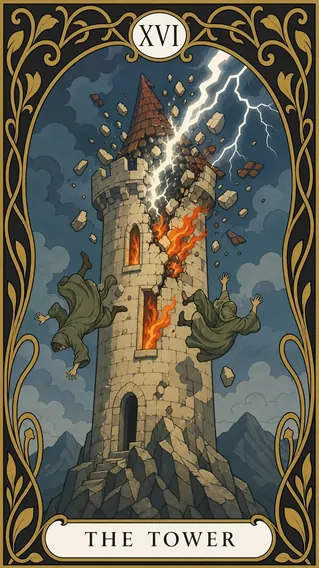
This isn't necessarily a sign of a long-term problem—often this state is natural in the first few days after a blow and passes on its own as the pain is processed. If the Tower appears nearby in the spread, the thoughts are linked to a sudden collapse of plans; next to the Four of Swords, the person is already ready to give themselves a break instead of replaying what happened endlessly.
What to do if you draw the Three of Swords
The advice of the upright card: do not deny the pain and do not rush its end. The Three of Swords is not about how to avoid the unpleasant, but about how to go through it without getting stuck.
What is worth doing in practice:
- Name what happened in your own words — to yourself or someone you trust. Voiced pain is easier to bear than unspoken pain.
- Do not make rash decisions in the first few days. The acute phase distorts the scale — what seems like the end of the world today often looks different in a week.
- Give yourself time, not a diagnosis. Tears and heaviness after a blow are a normal reaction, not a sign of weakness.
- If the pain is related to another person, talk to them directly, rather than looking for an answer only in the spread: the card shows a state, it does not read other people's minds or decide for two.
🔴 If the pain is deep, lasts a long time, or is related to loss, addiction, or abuse, the spread does not replace working with a specialist. The card can name a feeling, but it cannot heal it; in such situations, you should consult a psychologist or doctor, rather than looking for an answer only in the cards.
What is depicted on the card
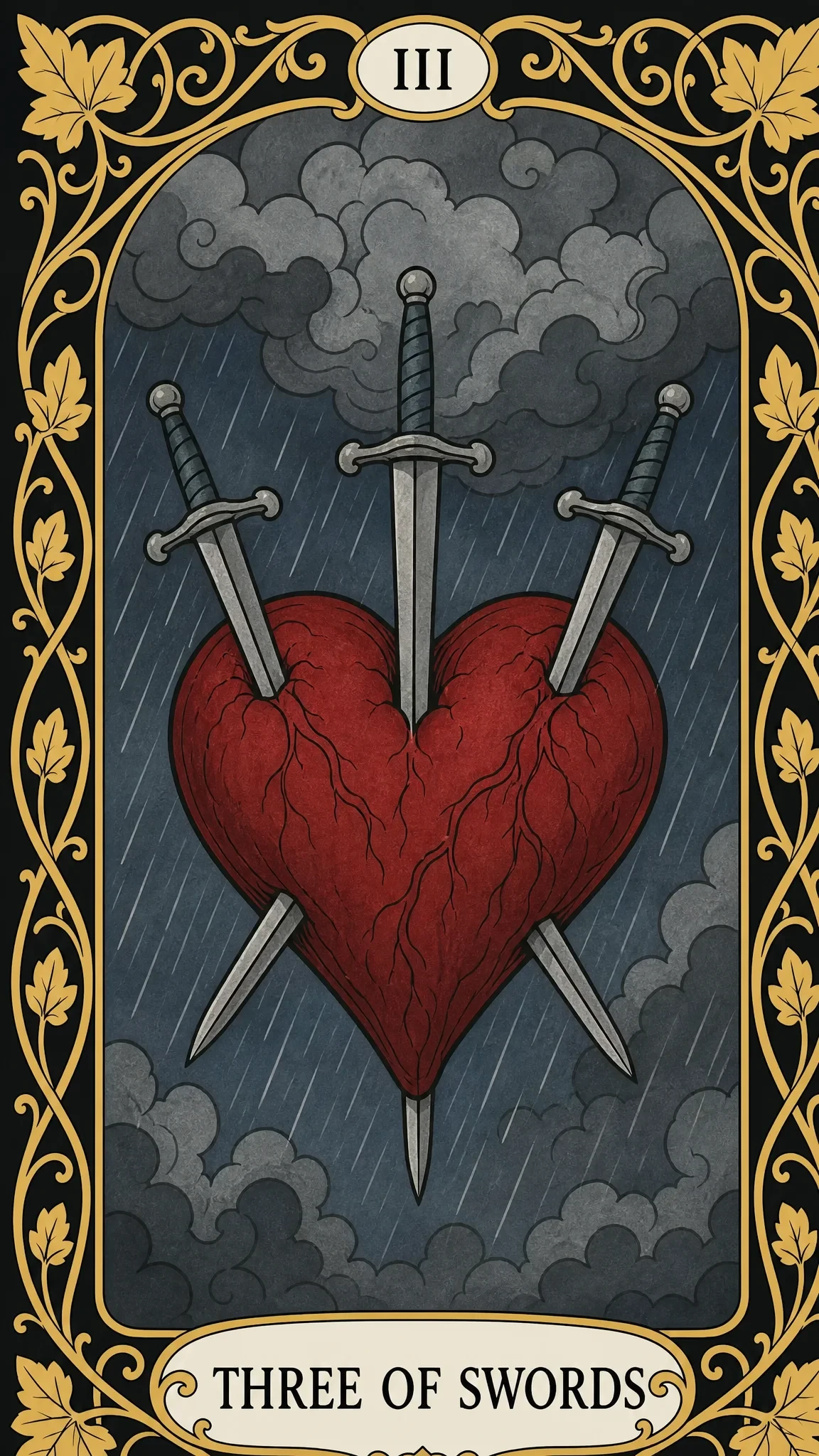
Our card features a large red heart with visible veins, as if it were living anatomical tissue rather than a decorative symbol. Three gray swords pass through it: one strictly down the center from top to bottom, and two others diagonally, crisscrossing, so that all three blades emerge from the bottom of the heart like a fan.
The background is a heavy, stormy sky: dark gray clouds, slanting streaks of rain. Not a single break, not a patch of clear sky — the entire scene is held in one tense, gloomy tone. The card's frame is formed by a golden Art Nouveau ornament: curling stems and leaves on a black background, with oval cartouches at the top and bottom: the Roman numeral III at the top, and the English name THREE OF SWORDS at the bottom.
The scene is interpreted as follows:
- A heart, not a person — pain is shown as a pure feeling, without a story about who caused it or why; the card names the sensation, not the history.
- Three swords, not one — several sources of pain are layered on top of each other: not just the blow itself, but also thoughts about it and conversations surrounding it.
- Rain and solid clouds — a state that is hard not to notice or avoid; unlike many sword cards, there is no hint of secrecy here, everything happens openly and clearly.
- Living, veined texture of the heart — in our deck, the emphasis is on the fact that the heart is alive and continues to beat even when pierced: the pain is heavy, but not final.
The scene is drawn in the Rider-Waite tradition, where the Three of Swords is one of the few Minor Arcana cards where the symbol is read unambiguously and without suit-hints: a pierced heart is understood without explanation in any culture.
The Three of Swords as the card of the day
The Three of Swords as the card of the day is a warning that the day may bring an unpleasant conversation, heavy news, or a moment when the truth turns out to be bitter. This is not a reason to cancel plans, but a signal not to be surprised if the day doesn't go according to plan, and if possible, to treat yourself with more care.
If the card is drawn reversed, the day is more about old pain already letting go or, conversely, unexpectedly reminding you of itself. A useful mindset for such a day is not to force yourself to be productive and to give space to what you are feeling instead of suppressing it.
Frequently asked questions about the Three of Swords
Is the Three of Swords a Major or Minor Arcana?
Minor Arcana, suit of Swords, element of Air. There are 56 Minor Arcana cards in the Tarot deck in total — 14 cards for each of the four suits, and the Three of Swords is the third card in the suit of swords.
How does the Three of Swords differ from the Three of Pentacles?
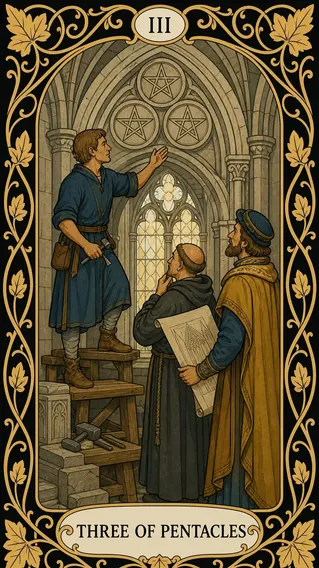
Both cards are the third step of their suit, but they speak of different things. The Three of Pentacles is the element of earth, about teamwork, mastery, and recognition of the results of labor. The Three of Swords is the element of air, about sharp emotional pain from the truth, a breakup, or resentment. If the Three of Pentacles builds and connects efforts, the Three of Swords names what has already caused pain.
Does the Three of Swords mean infidelity or a breakup?
No, the card does not predict specific events in another person's life and cannot look into someone else's intentions. It reflects pain, resentment, or a difficult conversation that is already felt in the relationship at the time of the spread, rather than prophesying infidelity or a breakup. For answers to questions about relationships, it is more correct to have a direct conversation with the person rather than looking at a spread.
What does the reversed Three of Swords mean?
Usually, it means a change in the phase of pain: healing after an acute period, suppressed, unwept resentment, or an old wound triggered by a new situation. The difference between these interpretations is usually clear from how the question is phrased and what is already known about the situation.
What if the Three of Swords is drawn for a heavy topic — loss, illness, addiction?
The card can name the feeling of pain, but it does not replace medical or psychological help and does not resolve such situations on its own. If the topic is truly heavy, the spread should be taken as a reason to reach out to a specialist or loved ones, rather than as the sole source of an answer.