What does Temperance mean in Tarot
Upright Temperance is a situation where everything unfolds slowly and correctly. It is not a sudden breakthrough or a miracle: it is the gradual connection of things that previously did not fit together — two people, two sides of life, work and rest, desires and opportunities.
An important nuance often lost in retellings: Temperance is not about "less," but about "the right proportion." It does not require you to give up or limit yourself for the sake of a principle; it points to the dosage at which a thing becomes useful instead of harmful.
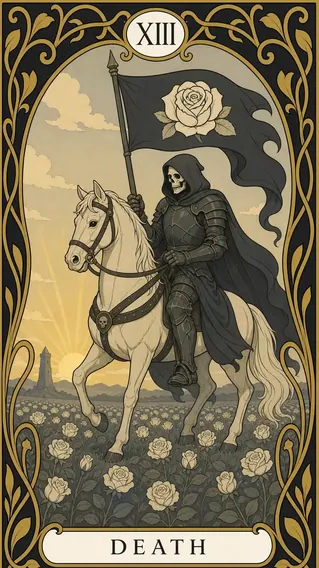
The second aspect of the card is healing. It follows Death in the deck, and this is the order of recovery: when the sharp phase ends, the slow phase begins. Temperance often appears during recovery, the return of strength, and the restoration of relationships after a crisis.
Reversed Temperance: meaning
Reversed Temperance is a loss of measure, usually in one of three senses:
- Extremes. A person swings back and forth: everything or nothing; a month of work without days off, followed by a complete burnout. This is the most common scenario.
- Impatience. The process is going correctly, but the person forces it and ruins it.
- Incompatibility. Less common: what is being forced together truly does not fit, and it is better to admit this sooner.
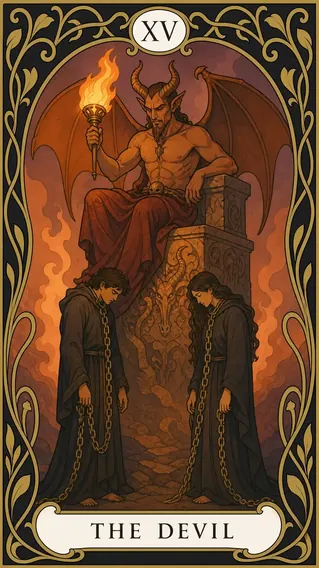
Neighboring cards help clarify: next to the Devil, it means abuse and excess; next to the Eight of Wands, it means harmful haste; next to the Five of Swords, it means an attempt to reconcile where it won't work.
Temperance in a "yes or no" spread
In "yes/no" spreads, Temperance answers yes — calmly and with a caveat about the pace: it will work out, but not immediately and not through a sudden push.
It answers particularly confidently regarding questions about reconciliation, recovery, and healing. It answers negatively to questions like "will it happen quickly" or "should I force it."
Reversed Temperance in a yes/no spread is no or "not at this pace": it is not the situation itself that will hinder you, but haste and imbalance.
Temperance in relationships and feelings
In a relationship spread, upright Temperance means agreement and good balance. Two different people have found a way to live together without trying to change each other. The card often appears for reconciliation after a quarrel or for relationships that are gradually improving.
In terms of feelings, Temperance describes steady warmth: no storms, no emotional swings, with a sense that everything is fine. Passion here is lower than with the Devil, but stability is higher.
A common specific scenario is the adjustment period when a couple learns each other's pace. The card says that this adjustment is going successfully.
Reversed Temperance in relationships means imbalance: one person is investing more, the paces do not match, and there are swings between closeness and distance.
Temperance in work and money
In career spreads, Temperance means a steady work rhythm and good cooperation. The project is moving, the team is working well together, and the workload is manageable. This is not a card of breakthroughs, but of the normal course of affairs.
Regarding money, it speaks of a balance between income and expenses: not wealth, but not need either. It often points to reasonable distribution — savings, planning, and avoiding impulsive purchases.
What Temperance advises in a work spread: maintain the pace and avoid burnout. Its scenarios break in the same way: a person speeds up without calculating the distance and crashes for a month.
Temperance as a person: man and woman
In the "what kind of person" position, Temperance describes someone who reconciles and balances. They are calm, patient, and able to find common ground between those who do not hear each other.
The Temperance woman in a spread is someone in whose presence things become calmer; she smooths things over without suppressing. The Temperance man is someone who does not rush or pressure, and with whom it is possible to agree on anything.
The weak point of such people is that they avoid sharp corners and sometimes prolong a conflict that would be easier to resolve directly.
Temperance in the mindset position
In the mindset position, Temperance represents calm reflection without extremes. Instead of swinging between "quitting everything" and "enduring until the end," a person seeks a middle ground, which usually turns out to be the most effective approach.
This also relates to thoughts on balance: how to combine work and life, how to distribute energy, and what is too much or too little. Neighbors provide context: next to the Two of Pentacles, it suggests practical juggling of tasks; next to the Star, it indicates recovery after a difficult period.
What to do if you draw Temperance
The advice of Temperance is to slow down and find the right dosage. Neither give up nor overdo it: find the amount where something works for you.
What you should actually do:
- Break it down into stages. Anything that seems overwhelming is solved by dividing it into parts with this card.
- Don't force someone else's pace. Especially in relationships and healing: rushing here sets you back.
- Combine, don't choose. Temperance often indicates that extremes are false and the "a little bit of both" option exists.
- Check where you're overdoing it. Work, food, anxiety, other people's requests—the imbalance is usually obvious if you look.
And specifically: this is one of the few cards that is useless to rush. Its advice only works at its own pace.
What is depicted on the card
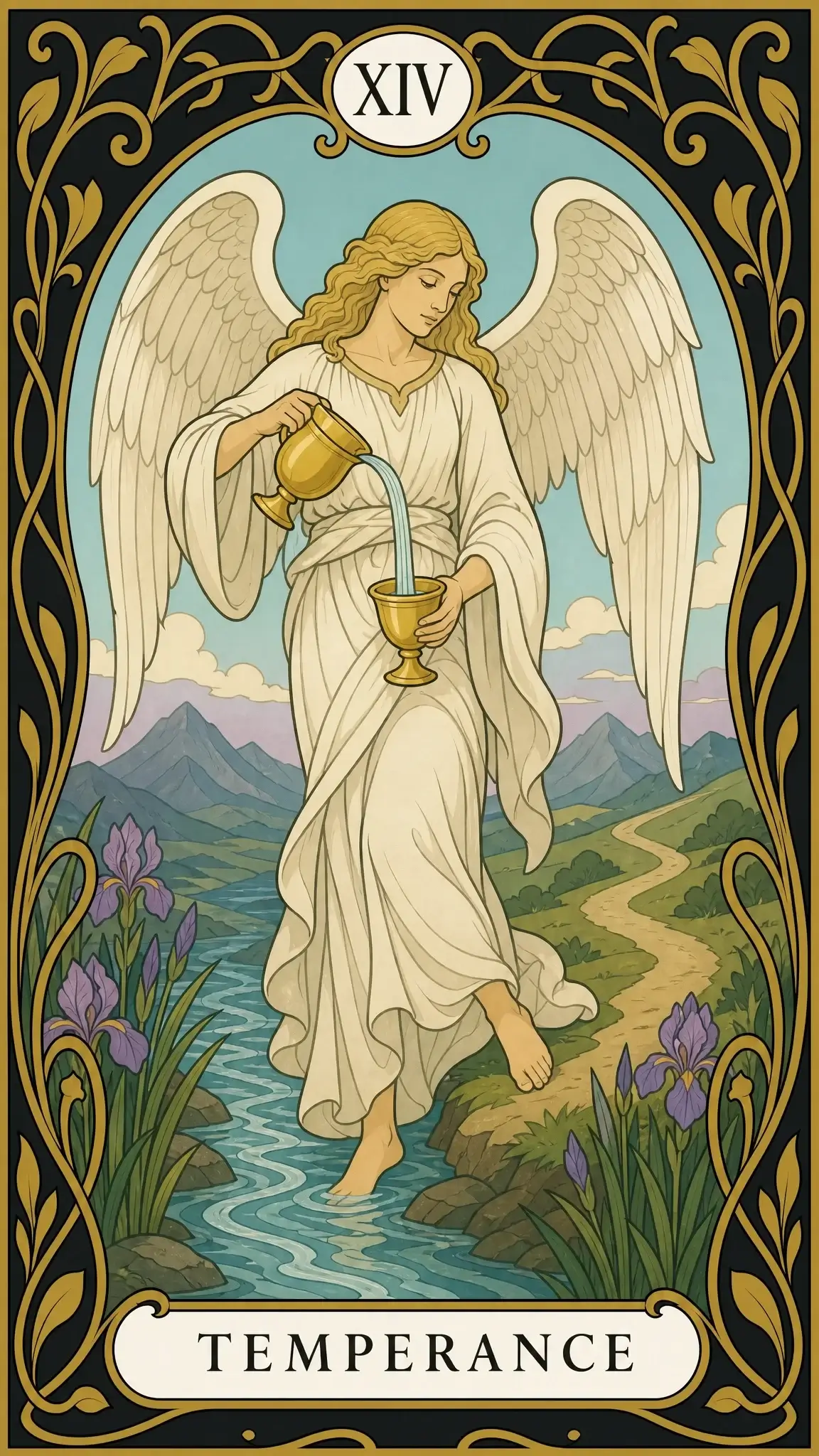
On our Temperance card, there is a winged figure in white pouring liquid from one vessel to another. One foot is on land, the other in water; behind them is a path leading to the mountains, surrounded by irises.
The scene is interpreted as follows:
- The stream between vessels is the essence of the card: it's not the content that matters, but the precision of the pouring. Not a drop wasted.
- One foot on land and one in water represents the union of opposites: the practical and the sensual, the solid and the fluid.
- The path to the mountains is the long journey that this card implies. Temperance is not about the finish line.
- Wings are what make the connection possible: patience, which is above ordinary human impatience.
At the top is the Roman numeral XIV, and at the bottom is the English name TEMPERANCE: our deck is drawn in the Rider-Waite tradition, where Temperance follows Death.
Temperance as the card of the day
Temperance as the card of the day means a steady day without extremes. Nothing extraordinary will happen, but nothing will break either; things will move at their own pace.
A useful mindset: don't overload your schedule and don't try to do a week's worth of work in one day. It's a good day for recovery, calm work, and reconciling with someone you've had a disagreement with.
Frequently asked questions about the Temperance card
What does Temperance mean in Tarot?
The right proportion and gradualness: combining what previously didn't fit, without haste or extremes. It often points to recovery—of strength, health, or relationships after a crisis.
Does Temperance mean I need to limit myself?
Not so much limit, as find the right dosage. The card is not about asceticism, but about the amount at which something stops harming and starts helping. Refusal for the sake of principle is as foreign to it as overdoing it.
What does reversed Temperance mean?
A loss of measure: swinging between extremes, impatience that ruins a normally progressing process, or overdoing something specific. Less often—an honest admission that what is being combined is truly incompatible.
Why does Temperance come immediately after Death?
This is the order of recovery: after a sharp ending, a slow gathering begins. In spreads, the Death-Temperance pair is read as "it's over and gradually improving."
Which arcanum is this?
The fourteenth Major Arcana, with the Roman numeral XIV on the card. In the Rider-Waite deck, which ours is based on, Temperance follows Death (XIII) and precedes the Devil (XV).