What The Star means in Tarot
The upright Star is the state after a major shake-up, when strength gradually returns and life seems possible again. It does not promise quick events or guarantee results: its essence is a calm confidence that things will get better.
An important nuance often lost in retellings: The Star is a card of state, not event. In a spread asking "what will happen," it answers poorly; in a spread asking "how will this be experienced," it is excellent. Therefore, it is often read as a sign that a person will cope, even if nothing has changed externally yet.
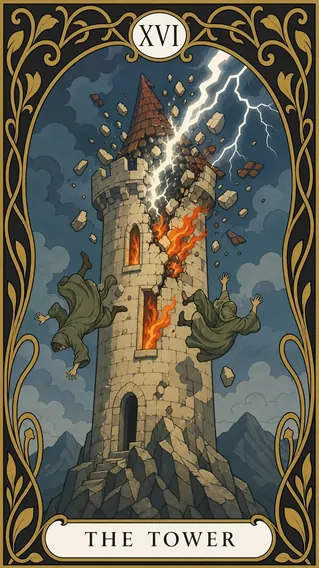
The second side of the card is sincerity. The Star has no defenses or masks; in its narratives, a person stops pretending that everything is fine, and that is exactly where recovery begins. In the classic sequence, it follows The Tower, and the order is not accidental: first, the unnecessary collapses, then it becomes quiet.
Reversed Star: meaning
The reversed Star is a loss of faith, usually in one of three senses:
- Despondency and exhaustion. There is no strength, the future is not visible, everything is done on autopilot. The most common scenario.
- Cynicism as a defense. A person refuses to hope in advance to avoid being disappointed again; from the outside, it looks like sobriety, from the inside — like fatigue.
- Hope instead of action. Less common: a person waits for everything to fix itself and therefore does nothing.
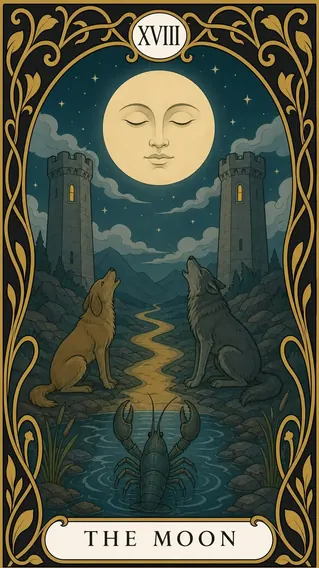
Neighboring cards help to choose: next to the Four of Swords — exhaustion and the need for a break, next to the Seven of Cups — dreams instead of steps, next to the Moon — loss of direction.
The Star in a "yes or no" spread
In "yes/no" spreads, The Star answers yes — gently and without haste. It is a "yes" without exact deadlines: it will work out, but not immediately and not in a rush.
It answers especially confidently to questions about recovery: will it improve, will it pass, will the ability to enjoy life return? Here, The Star is one of the most encouraging cards in the deck.
The reversed Star in a yes/no spread is no or "not in this state": the issue is not the circumstances, but the fact that the person currently lacks the resources.
The Star in relationships and feelings
In a relationship spread, the upright Star is a calm, honest period. Not passion or intense infatuation, but a state in which you don't have to pretend around the other person. It often appears in relationships that have survived a crisis: the sharpness is gone, and trust is returning.
In terms of feelings, The Star describes quiet tenderness and hope. It is a feeling without demands: the person does not wait for immediate proof and does not test.
A separate common scenario is the period after a breakup when things become easier. The Star here does not speak of an ex returning, but of life filling up again.
The reversed Star in relationships is fatigue and disillusionment: not quarrels, but the feeling that there is no reason to try anymore.
The Star in work and money
In career spreads, The Star is recovery after a failure or a break. Returning to a profession, a calm start to a new venture, work that finally doesn't drain you. The card does not promise quick successes, but it does promise stability.
In money, it speaks of a gradual leveling out: debts stop growing, income becomes predictable. There are no large sums here — those are described by Pentacles; The Star is about things becoming calmer.
What The Star advises in a work spread: do a little at a time and don't demand a breakthrough from yourself. Its narratives collapse exactly when a person, having barely recovered, takes on the load that broke them in the first place.
The Star as a person: man and woman
In the "what kind of person" position, The Star describes someone around whom you feel calm and don't need to defend yourself. Not flashy — quiet: they don't pressure, demand, or judge.
The Star-man in a spread is open and vulnerable; he speaks directly about what he feels, and this is disarming. The Star-woman is someone who restores others' faith in themselves, often without doing anything special to achieve it.
The weak side of such people is vulnerability. The Star is not about armor: next to heavy cards, it is easily exhausted.
The Star in the thoughts position
In the thoughts position, The Star represents calm reflections on the future. It's not about detailed plans, but a general sense that there is a path forward. For the first time in a long while, a person is thinking not about how to just get by, but about what they actually want.
This also includes thoughts about meaning and what truly matters. These usually come after something has fallen away—The Star rarely appears during prosperous times; it needs a cleared space. Surrounding cards provide clarity: next to the Ace of Wands, it's a budding intention; next to the Four of Swords, it's simply rest.
What to do if you draw The Star
The Star's advice is not to rush and not to demand proof from yourself. Recovery here isn't measured by results; it's measured by the ability to breathe easier.
Practical steps to take:
- Give yourself more time than you think you need. Accelerating at this stage usually leads to a setback.
- Don't be defensive. The Star works through openness: being honest, asking for help, and admitting when things have been tough.
- Do small things regularly. One page, one walk, one phone call a day—that is how this card works.
- Don't compare your pace to others. This is the fastest way to revert to the reversed position.
And a note: if you feel empty and hopeless for weeks and it doesn't pass, The Star describes the state but does not replace a professional. Seeking help is very much in the spirit of this card.
What is depicted on the card
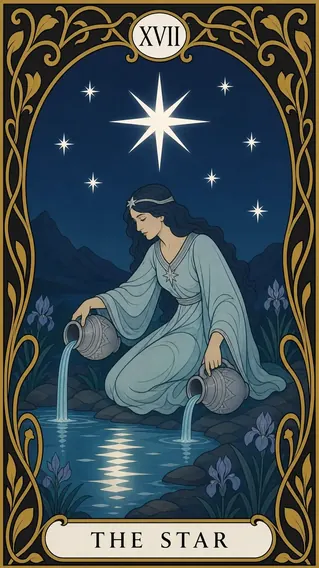
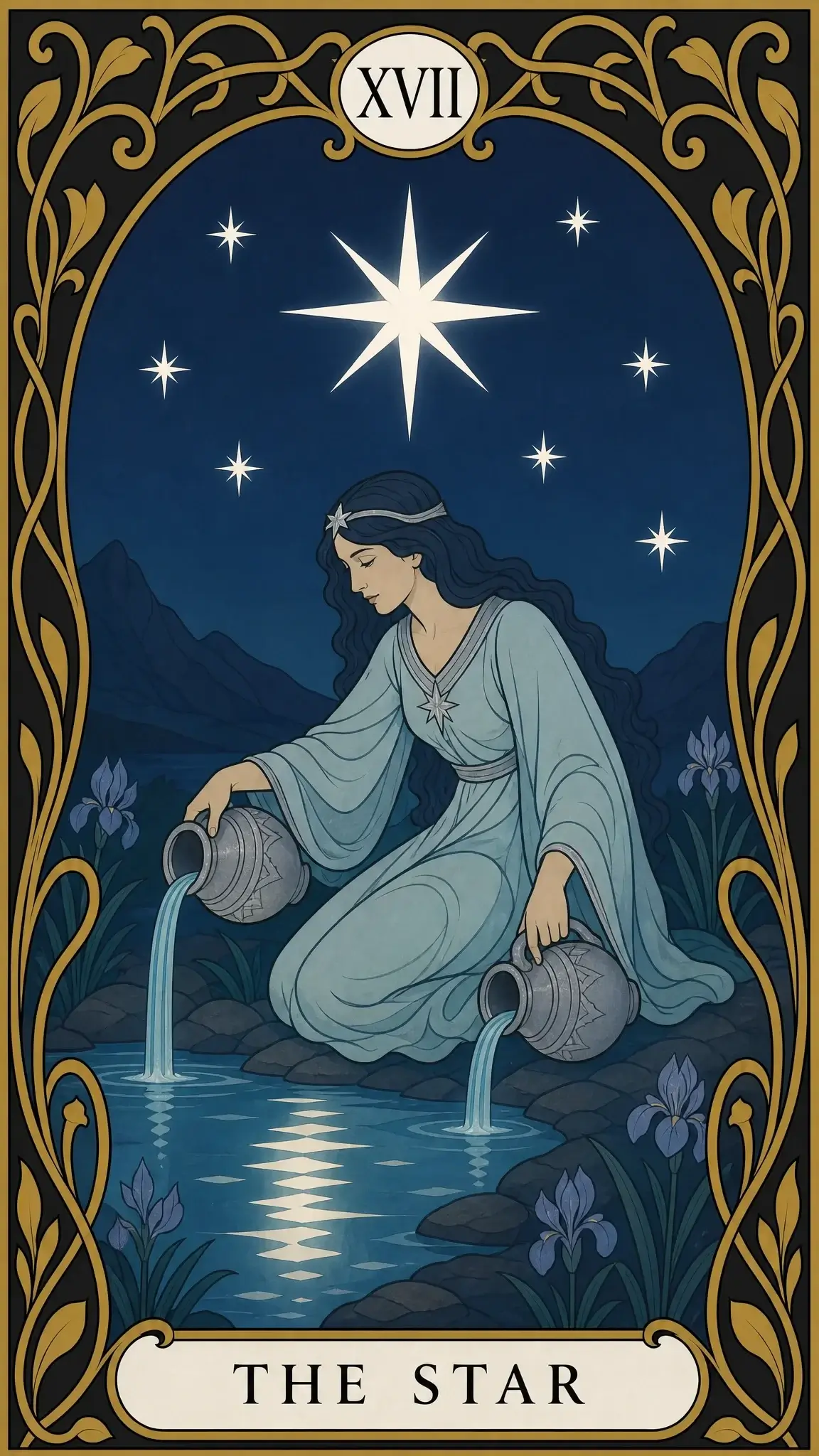
On our Star card, there is a woman by a night pool, pouring water from two vessels: one into the river, the other onto the bank. Above her is a large eight-pointed star and seven smaller stars, surrounded by irises, with a flat horizon in the distance.
The scene is interpreted as follows:
- Two vessels — what one gives to oneself and what one gives to the world. Recovery in this card requires both.
- Nudity — the absence of defenses. After The Tower, there is no one left to pretend for and no reason to do so.
- One knee on the ground, one foot in the water — support in both reality and feelings; The Star does not drift away into dreams.
- Large star and seven small ones — a guide to follow at night. It is far away and provides no warmth, but it shows the direction.
At the top is the Roman numeral XVII, at the bottom the English name THE STAR: our deck is drawn in the Rider-Waite tradition, where The Star follows immediately after The Tower.
The Star as the card of the day
As the card of the day, The Star signifies a calm day without major events. Nothing flashy will happen, but things will get a little easier: a small issue will be resolved, good news will arrive, or the desire to do something will return.
Useful mindset: don't plan for heroic feats and don't chase productivity. It's a good day to spend time outdoors, clear your thoughts, or write to someone you've missed. It is a bad day to demand results from yourself.
Frequently asked questions about The Star card
Is The Star in Tarot a good card?
Yes, one of the most favorable, but a quiet one. It describes not luck or an event, but a state: the return of strength, peace, and hope. It doesn't promise quick results—its themes unfold slowly.
What does a reversed Star mean?
A loss of faith: despondency, exhaustion, or cynicism as a defense against new disappointment. Less often, it means hope instead of action, when a person waits for everything to fix itself. The issue is usually not the circumstances, but a lack of resources.
Does The Star mean a wish will come true?
It is more about the confidence that what you desire is possible, rather than the fact of it coming true. The card answers well to questions about recovery and whether things will improve, but poorly to questions about specific events and timelines.
Why does The Star come immediately after The Tower?
This is the order of recovery: first, what was unstable collapses, then a silence follows in which you can regain your composure. In spreads, the Tower-Star pair is read as a difficult period that has a way out.
Which Arcanum is this?
The seventeenth Major Arcanum; the card features the Roman numeral XVII. In the Rider-Waite deck, which our deck is based on, The Star follows The Tower (XVI) and precedes The Moon (XVIII).