What the Moon and The Devil combination means
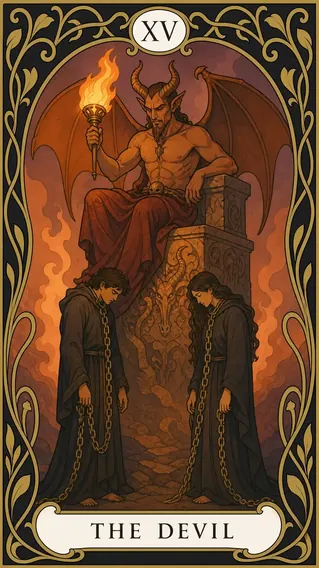
The Devil in this pair names the attachment—a habit, relationship, or job that the person chose themselves and continues to choose, even though the cost has long been visible. The Moon describes the fog around it: why it is kept silent, where the anxiety comes from, and what in the situation is imagined versus what is actually happening.
Which card is leading is shown by the order in the reading: the first card sets the frame, the second clarifies it. If The Devil comes first, the analysis begins with the fact that the attachment has already been recognized and named—and The Moon clarifies what excuses and half-truths the person uses to cover it up before themselves and others. If The Moon appears first, the order is reversed: they start with ambiguity and anxiety, while the attachment that keeps the person in place remains in the background—it is there, but it has not yet been named aloud.
Practical conclusion: the pair describes not two different stories, but one phenomenon from two sides. Silence justifies the attachment, and the attachment explains why one should remain silent. Neither card points to external evil or someone else's intent—both are about what a person does to themselves.
The Moon and The Devil in the reversed position
A reversal of one or both cards changes the reading significantly, and it is worth analyzing three cases separately.
- Only The Moon is reversed. The fog clears, the unspoken is named aloud, but the attachment (upright Devil) remains in place: the person already sees what is holding them, but still does not leave. This is most often a moment of honesty without action—the self-deception has ended, but the habit has not.
- Only The Devil is reversed. Movement toward the exit begins—realization or a first attempt to break the cycle—but the upright Moon continues to surround it with anxiety and ambiguity: the decision has been made, but it is kept silent, feared to be discussed aloud, or feared to be jinxed.
- Both cards are reversed. The exit is happening on two levels at once: both recognition and the first step out of the situation. A nuance that is easy to miss here: the combination of two reversals does not guarantee stability—a reversed Devil sometimes means not an exit, but a relapse after a short remission, and a reversed Moon at this stage is self-deception in the spirit of "this time everything is different." It is worth looking at neighboring cards to see what is behind the reversal: growth or a quiet retreat.
The Moon and The Devil in relationships
In a relationship reading, this pair is often read as follows: an anxious, stagnant attachment persists precisely because it is not spoken about directly—and the silence turns out to be convenient for both. The Devil names the "can't live with you, can't live without you" dynamic, while The Moon names the ambiguity due to which each person lives with their own guess about what the other is thinking.
If The Devil leads, the relationship continues consciously: both feel that something is wrong, and yet they choose to stay—for the sake of attraction, habit, or fear of starting over. The Moon in this reading describes how exactly they justify this choice to themselves: they withhold information, avoid direct conversation, and interpret the partner's silence in their own favor. If The Moon leads, the attachment has not yet been named: anxiety and jealousy come first, while what keeps the person in place remains an unspoken background.
A separate caveat, important specifically for this pair: if there is control, threats, or violence in the relationship, this is not about "devilish passion," but a situation where an exit plan and real people nearby are needed—not a reading.
The Moon and The Devil in work and money
In a work and money reading, the combination usually describes a situation where one is held not by the benefit itself, but by the ambiguity of the conditions. The Devil is work or income that the person has outgrown or that is draining them, but salary, status, or the fear of starting over prevents them from leaving. The Moon adds a second layer: agreements are blurred, promises have no deadlines, some conditions are not spoken about—and the person cannot honestly calculate what they are receiving and what they are paying, because they do not see the whole picture.
If The Devil leads, the attachment to work or money is already realized, and The Moon shows which details are still hidden or unspoken—they should be clarified before making a decision. If The Moon leads, the situation simply looks murky: unclear conditions, evasive answers—and the fact that what keeps the person here is not only the ambiguity but also their own benefit remains outside the field of attention.
In both cases, the pair does not predict the outcome of a deal or the level of income—it describes what prevents one from seeing the conditions in their entirety.
What to do if this combination appears
The analysis of this pair is not about whether to leave or stay, but about ensuring that the decision is not made in the fog or out of habit.
What is worth doing in practice:
- Separate facts from guesses. Write down separately what is known for sure and what has been imagined due to a lack of information.
- Name the gain aloud. The Devil's attachment always has something that the person receives—peace, money, a sense of being needed. Without this point, the conversation with oneself does not add up.
- Ask a direct question instead of guessing. Much of what is read as a threat in the fog of The Moon crumbles or is confirmed by a single direct question asked aloud.
- Do not make a decision at the peak of anxiety or temptation. Both cards in this combination amplify immediate reactions—evening gloom or an instant "yes"; it is more useful to return to the question a day later.
If the topic concerns substance dependency, gambling, or relationships with elements of control, the reading describes the pattern of the situation and does not replace a specialist—the decision and help here lie with real people, not with the cards.
FAQ about the Moon and the Devil combination
What is more important in this pair, the Moon or the Devil?
No card is "more important" on its own—what matters is which one comes first in the spread. The first card sets the frame for the analysis, and the second clarifies it. If the Devil is first, the bond is already named, and the Moon shows what justifies it. If the Moon is first, you start with anxiety and uncertainty, while the attachment remains an unspoken background.
What does it mean if the Devil is reversed and the Moon is upright?
Usually, this is the beginning of a move toward an exit—realizing a dependency or making a first attempt to break the cycle—which is still kept secret or accompanied by anxiety and unspoken issues. The decision has been made, but it hasn't been spoken aloud yet.
Are the Moon and the Devil in relationships always about codependency?
Not always, but this combination often describes a sticky attachment based on silence: the couple doesn't talk about what's wrong and continues on the same path. If there is control or abuse in the relationship, that is a separate situation that should be addressed with a professional and loved ones, not just a card reading.
How do I know which card in the pair is the leading one?
Usually, the leading card is the one that appears first in the spread or is closer to the position describing the essence of the question. If the spread doesn't explicitly set an order, you can focus on which theme is more acute for the question itself: if it's unclear what is happening, the Moon is stronger; if it's clear but you can't change it, the Devil is stronger.