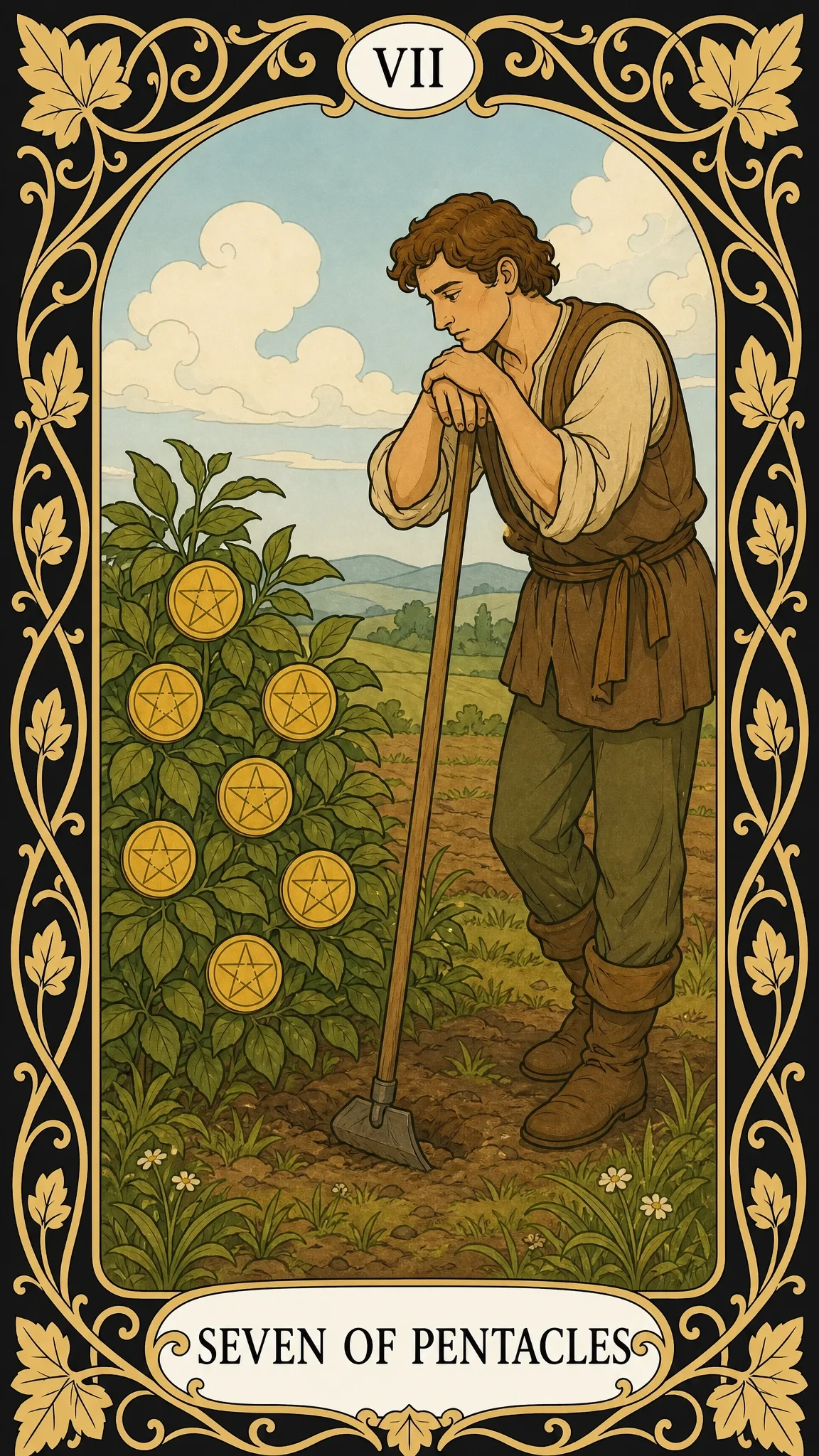
What the Seven of Pentacles means in Tarot
The Seven is a mid-journey card within its suit: not the beginning like aces and twos, and not the outcome like the ten, but a point where enough has been invested to look back and see if the venture is working. Pentacles are responsible for the material world: work, things, the body, daily labor — the element of earth is patient and slow, unlike the fast fire of wands.
An important nuance that is lost in retellings: the minor arcana describes a specific episode, not the whole destiny. If the major Hermit speaks about solitude and rethinking as a life stage, the Seven of Pentacles is about one workday, one project, one garden bed into which time and effort have already been invested, and now you need to decide whether to continue in the same spirit or change something.
The upright position is read as a pause without stopping: a person does not abandon the business, but steps aside for a minute to soberly evaluate what has been done. This is not a card of failure and not a card of victory — it is about an honest middle ground, where it is not yet clear how everything will end, and that is normal.
Reversed Seven of Pentacles: meaning
The reversed Seven of Pentacles is the same pause, but with a bias to one side. The spread usually points to one of three options.
- The pause has turned into treading water. The assessment seems to be done, but there are no conclusions, and time goes on without movement in any direction.
- The assessment is skipped out of impatience. You want to either quit everything or accelerate sharply without figuring out what has already been achieved.
- Disappointment in the result. You look back — and the result is less than expected, and now it is difficult to decide whether to continue investing or stop.
There is also a calmer reading: sometimes the reversed card is just a faster-than-usual assessment, without long deliberation. A question helps to distinguish one from the other: does the pause bring relief or anxiety.
Seven of Pentacles in a "yes or no" spread
In "yes/no" spreads, the Seven of Pentacles is one of those cards that does not give a direct answer, and this should be stated honestly. It is not about the outcome, but about the fact that now is the time to evaluate, not to act sharply. If the question sounds like "is it worth continuing" — the answer is more likely yes, but with a closer look: the card does not advise abandoning what has been started without a good reason, but it also does not promise that continuing is worth it.
If the question is about a quick result ("will it work out quickly", "will I see a return in the near future") — the answer is likely negative: the card speaks directly about a pause and a slow pace, not about a near ending.
The reversed position in this spread is read as "assessment is postponed" — neither yes nor no, because the decision has not yet been made, perhaps by the person themselves.
Seven of Pentacles in relationships and feelings
In a relationship spread, the upright Seven of Pentacles describes a moment of taking stock: how much has already been invested in these relationships — time, attention, effort — and where it is leading. This is not a card of crisis, but a card of a sober pause: feelings have not cooled down, but a desire has appeared to understand what they are adding up to.
In the position of feelings, the card is calmer than passionate: not a flash, but reflection. Sometimes it describes relationships that have entered a stage where infatuation has given way to everyday life, and this raises the question — is such everyday life satisfying.
For singles, the Seven of Pentacles can mean a pause in the search: not a rejection of them, but a conscious respite to understand what is really wanted.
The reversed card in relationships is impatience or disappointment: you want to either change everything sharply or quit everything without figuring out what is actually happening.
Seven of Pentacles in work and money
In career spreads, the Seven of Pentacles is an assessment of invested labor: a project into which a lot of effort has been spent, and now it is important to understand if it justifies itself. The card well describes the state of "I have been working for a long time, but I haven't had a chance to look at the result" — and suggests doing exactly that.
In questions about money, the card speaks not about the amount and not about the terms, but about the process of investing effort itself: is it worth continuing to invest in it in the same volume or to reconsider the approach. The Seven of Pentacles promises nothing about income — it is about a pause before deciding where to move next.
The reversed card at work is fatigue from routine, which turns into impatience: you want to quit everything or, conversely, accelerate without sorting out what has already worked and what has not. There is only one piece of advice here: before changing course sharply, it is worth understanding what exactly is not satisfying — the work itself or the lack of a visible result.
Seven of Pentacles as a person: man and woman
When the Seven of Pentacles falls in the "what kind of person" position, it describes not the character as a whole, but the role of an observer from the outside: someone who does not rush to conclusions, weighs and watches what the invested business is turning into before acting further.
A Seven of Pentacles man is judicious, a bit slow, does not like to make decisions on the run and prefers to evaluate first, then act. A Seven of Pentacles woman is someone who knows how to stop and honestly ask herself if it is worth continuing what has been started.
The flip side for both is the same: such caution sometimes turns into excessive slowness, and the decision is delayed longer than necessary.
အတွေးအခေါ်အနေအထားတွင် ပန်တာကယ် (Pentacles) ခုနစ်ခု
အတွေးအခေါ်အနေအထားတွင် ပန်တာကယ် ခုနစ်ခုသည် စိုးရိမ်ပူပန်မှုမရှိဘဲ စဉ်းစားတွေးတောနေသည့် အခြေအနေကို ပြသည်။ လူတစ်ယောက်သည် ထိတ်လန့်မနေဘဲ ရွေးချယ်စရာများကို အေးဆေးစွာ ပြန်လည်သုံးသပ်နေပြီး၊ ယခင်က လုပ်ဆောင်ခဲ့သည့်အရာများသည် ပေးဆပ်လိုက်ရသည့် ကြိုးစားအားထုတ်မှုနှင့် တန်ရဲ့လားဆိုသည်ကို ချိန်ဆနေခြင်းဖြစ်သည်။ ၎င်းသည် စိုးရိမ်စိတ်ထက် ပင်ပန်းနွမ်းနယ်နေသည့် ဆင်ခြင်တုံတရားနှင့် ပိုတူသည်။
တစ်ခါတစ်ရံတွင် ဤတွေးတောမှုနောက်ကွယ်၌ မဆုံးဖြတ်နိုင်မှုများ ပုန်းကွယ်နေတတ်သည်။ မေးခွန်းတစ်ခုတည်းကိုသာ အကြိမ်ကြိမ် ပြန်တွေးနေပြီး အဖြေမထွက်လာခြင်းမျိုးဖြစ်သည်။ ဓား (Swords) ကတ်များနှင့်အတူ ပေါ်လာပါက ဤသို့သော ရပ်တန့်မှုသည် မိမိကိုယ်ကို ပြန်လည်ဆန်းစစ်ခြင်းအဖြစ် ပြောင်းလဲသွားနိုင်သည်။ တုတ် (Wands) ကတ်များနှင့်အတူ ပေါ်လာပါက နောက်တစ်ဆင့်အတွက် ပြင်ဆင်မှုအဖြစ် ပို၍ဖြစ်နိုင်သည်။
ပန်တာကယ် ခုနစ်ခု ကျလာလျှင် ဘာလုပ်သင့်သလဲ
ပန်တာကယ် ခုနစ်ခု၏ အကြံပြုချက်မှာ ရှေ့ဆက်ဘာလုပ်ရမလဲ မဆုံးဖြတ်ခင် လုပ်ဆောင်ပြီးသမျှကို ရပ်တန့်ပြီး ရိုးသားစွာ ပြန်လည်သုံးသပ်ရန် ဖြစ်သည်။ ဤကတ်သည် စတင်ထားသည်ကို စွန့်လွှတ်ရန် သို့မဟုတ် မည်သို့ပင်ဖြစ်စေ ဆက်လုပ်ရန် တိုက်တွန်းခြင်းမဟုတ်ဘဲ၊ ဦးစွာ သေချာစွာ အကဲဖြတ်ရန် တောင်းဆိုခြင်းဖြစ်သည်။
အမှန်တကယ် လုပ်ဆောင်သင့်သည်များမှာ-
၁။ ရင်းနှီးမြှုပ်နှံထားသည်များကို ပြန်ကြည့်ပါ။ ယေဘုယျအားဖြင့်မဟုတ်ဘဲ တိတိကျကျကြည့်ပါ။ ဤအလုပ်အတွက် အချိန်၊ ခွန်အားနှင့် အာရုံစိုက်မှု ဘယ်လောက်ပေးခဲ့ရသလဲ။
၂။ ပင်ပန်းနွမ်းနယ်မှုကို ကျရှုံးမှုဟု မမှတ်ယူပါနှင့်။ တစ်ခါတစ်ရံတွင် အလုပ်မအောင်မြင်၍မဟုတ်ဘဲ ပင်ပန်းမှုများစုပုံလာသောကြောင့်သာ ရပ်တန့်ရခြင်းမျိုး ဖြစ်နိုင်သည်။
၃။ ဆုံးဖြတ်ချက်ချရန် အချိန်ပေးပါ။ ပန်တာကယ် ခုနစ်ခုသည် ရပ်တန့်ခြင်းကို ပြသောကတ်ဖြစ်ပြီး ချက်ချင်းကောက်ချက်ချရမည့်ကတ် မဟုတ်ပါ။
၄။ ရှေ့ဆက်ဘာလုပ်ချင်သလဲဆိုသည်ကို ကိုယ့်ကိုယ်ကိုယ် ရိုးသားစွာ မေးပါ။ အရှိန်အဟုန်အတိုင်း ဆက်လုပ်မလား၊ လမ်းကြောင်း ပြင်ဆင်မလား သို့မဟုတ် လုံးဝရပ်တန့်လိုက်မလားဆိုသည်ကို ဆုံးဖြတ်ပါ။
အကယ်၍ ဤရပ်တန့်မှုသည် အလုပ်ကြောင့် ပင်ပန်းရုံသက်သက်မဟုတ်ဘဲ စိတ်ဓာတ်ကျခြင်း သို့မဟုတ် ရေရှည်ခွန်အားကုန်ခမ်းခြင်းကဲ့သို့ ပိုမိုလေးနက်သော အခြေအနေနှင့် ဆက်စပ်နေပါက၊ ဤကတ်သည် ကျွမ်းကျင်သူနှင့် တိုင်ပင်ဆွေးနွေးခြင်းကို အစားထိုးနိုင်မည်မဟုတ်ပါ။ ဤကတ်သည် အကဲဖြတ်ရမည့်အချိန်ကိုသာ ပြသခြင်းဖြစ်ပြီး ပင်ပန်းနွမ်းနယ်မှုနောက်ကွယ်မှ အကြောင်းရင်းများကို ဖြေရှင်းပေးနိုင်မည်မဟုတ်ပါ။
ကတ်ပေါ်တွင် ဘာပုံဖော်ထားသလဲ
ကျွန်ုပ်တို့၏ကတ်တွင် ရိုးရှင်းသော လယ်သမားအဝတ်အစား ဝတ်ဆင်ထားသည့် လူငယ်တစ်ဦးသည် ပေါက်တူးရှည်ကြီးကို မှီထားပြီး လက်နှစ်ဖက်ကို ပေါက်တူးရိုးပေါ်တင်ကာ မေးစေ့ကို လက်ပေါ်တင်ထားသည်။ သူသည် အစိမ်းရောင်အရွက်များကြားတွင် အသီးများကဲ့သို့ ပေါက်နေသော ရွှေရောင်ပန်တာကယ် ခုနစ်ခုပါသည့် ချုံပုတ်ကို ငုံ့ကြည့်နေသည်။ သူ၏နောက်ကွယ်တွင် ထွန်ယက်ထားသော လယ်ကွင်း၊ အစိမ်းရောင် တောင်ကုန်းများနှင့် တိမ်တိုက်များပါသည့် တောက်ပသော ကောင်းကင်ယံကို တွေ့ရသည်။
ဤမြင်ကွင်းကို အောက်ပါအတိုင်း အဓိပ္ပာယ်ဖွင့်ဆိုနိုင်သည်-
- ချုံပုတ်ပေါ်ရှိ ပန်တာကယ်များ — မြင်သာသော ရလဒ်ကို ပေးစွမ်းသည့် ကြိုးစားအားထုတ်မှု။ အနာဂတ်တွင် ရမည့် ဆုလာဘ်မဟုတ်ဘဲ ဤနေရာတွင် တကယ်ပေါက်နေသည့် ရွှေဒင်္ဂါး ခုနစ်ပြားဖြစ်သည်။
- ပေါက်တူးကိုမှီပြီး ပင်ပန်းနေသည့်ဟန် — ပျင်းရိ၍ အနားယူခြင်းမဟုတ်ဘဲ အလုပ်လုပ်ရင်း သဘာဝအတိုင်း ရပ်တန့်ထားခြင်းဖြစ်သည်။ ကိရိယာသည် လက်ထဲတွင်ရှိနေဆဲဖြစ်ပြီး အလုပ်ကို စွန့်လွှတ်လိုက်ခြင်းမဟုတ်ဘဲ ခဏတာ ရပ်တန့်ထားခြင်းသာဖြစ်သည်။
- တွေးတောနေပြီး အနည်းငယ် ဝမ်းနည်းနေသည့် အကြည့် — စိတ်ပျက်ခြင်းမဟုတ်ဘဲ သံသယဝင်ခြင်းဖြစ်သည်။ ရင်းနှီးမြှုပ်နှံထားသည့်အရာသည် တန်ရဲ့လားဆိုသည်ကို သူကိုယ်တိုင် မသေချာသေးကြောင်း သူ၏မျက်နှာအမူအရာက ဖော်ပြနေသည်။
- နောက်ကွယ်ရှိ ထွန်ယက်ထားသော လယ်ကွင်းနှင့် တောင်ကုန်းများ — ဤမြင်ကွင်းပြင်ပတွင် ဆက်လက်လုပ်ဆောင်နေရမည့် အလုပ်များ။ သူကြည့်နေသည့်အရာသည် ပိုမိုကြီးမားသော အလုပ်၏ တစ်စိတ်တစ်ပိုင်းသာ ဖြစ်သည်။
ကတ်၏အပေါ်ဘက်တွင် ရောမဂဏန်း VII ရှိပြီး အောက်ဘက်တွင် SEVEN OF PENTACLES ဟု အင်္ဂလိပ်လို ရေးသားထားသည်။ ကျွန်ုပ်တို့၏ ကတ်ပြားသည် Rider-Waite ရိုးရာပုံစံအတိုင်းဖြစ်ပြီး ပန်တာကယ် ခုနစ်ခုသည် မူလပုံစံအတိုင်းပင် မိမိ၏ ကြိုးစားအားထုတ်မှုရလဒ်ကို အကဲဖြတ်နေသည့် အလုပ်သမားပုံစံကို ထိန်းသိမ်းထားသည်။
နေ့စဉ်ကတ်အဖြစ် ပန်တာကယ် ခုနစ်ခု
နေ့စဉ်ကတ်အဖြစ် ပန်တာကယ် ခုနစ်ခုသည် ကြီးမားသော ဆုံးဖြတ်ချက်များကို အလျင်စလို မချရန်နှင့် ယခင်က လုပ်ဆောင်ခဲ့သည့်အရာများ (စီမံကိန်း၊ အလေ့အကျင့်၊ ဆက်ဆံရေး သို့မဟုတ် ကြာရှည်စွာ ရင်းနှီးမြှုပ်နှံထားသည့် မည်သည့်အလုပ်မဆို) ကို ပြန်လည်သုံးသပ်ရန် သတိပေးချက်ဖြစ်သည်။
ဤနေ့အတွက် အသုံးဝင်သော သဘောထားမှာ ပင်ပန်းမှု သို့မဟုတ် စိတ်တိုမှုကြောင့် ဆုံးဖြတ်ချက်မချဘဲ လက်ရှိအရှိန်အဟုန်နှင့် ရလဒ်ကို ကျေနပ်မှုရှိမရှိ ကိုယ့်ကိုယ်ကိုယ် ရိုးသားစွာ မေးမြန်းရန်ဖြစ်သည်။ အကယ်၍ ကတ်သည် ပြောင်းပြန်ကျလာပါက ထိုနေ့သည် စိတ်မရှည်မှုနှင့် ပိုသက်ဆိုင်ပြီး အလျင်စလို ဆုံးဖြတ်ချက်များချခြင်းကို အထူးသတိထားသင့်သည်။
ပန်တာကယ် ခုနစ်ခုကတ်နှင့် ပတ်သက်၍ မကြာခဏ မေးလေ့ရှိသော မေးခွန်းများ
ဒါက Major Arcana လား၊ Minor Arcana လား။
Minor Arcana ဖြစ်ပြီး ပန်တာကယ် (Pentacles) အုပ်စု၊ မြေ (Earth) ဒြပ်စင်ဖြစ်သည်။ Tarot ကတ်ပြားတွင် Minor Arcana စုစုပေါင်း ၅၆ ကတ်ရှိပြီး အုပ်စုလေးခုစီတွင် ၁၄ ကတ်စီပါဝင်ကာ ပန်တာကယ်အုပ်စုတွင် ခုနစ်ခုမြောက်ကတ်ဖြစ်သည်။
ပန်တာကယ် ခုနစ်ခုနှင့် တုတ် (Wands) ခုနစ်ခု ဘာကွာသလဲ။
ကတ်နှစ်ခုစလုံးသည် ခရီးလမ်းတစ်ဝက်တွင် ကြုံရသည့် တင်းမာမှုအကြောင်းဖြစ်သော်လည်း သဘောသဘာဝချင်း ကွာခြားသည်။ ပန်တာကယ်သည် မြေဒြပ်စင်ဖြစ်ပြီး ပန်တာကယ် ခုနစ်ခုသည် ပြင်ပခြိမ်းခြောက်မှုမရှိဘဲ ရင်းနှီးမြှုပ်နှံထားသည့် အလုပ်ကို ရပ်တန့်ပြီး အေးဆေးစွာ အကဲဖြတ်ခြင်းဖြစ်သည်။ တုတ် (Wands) သည် မီးဒြပ်စင်ဖြစ်ပြီး တုတ် ခုနစ်ခုသည် ပြိုင်ဘက်များ သို့မဟုတ် အခြေအနေများကြောင့် မိမိလုပ်ဆောင်ထားသည်ကို ကာကွယ်ရသည့် တက်ကြွသော အခြေအနေဖြစ်သည်။ အကယ်၍ ကတ်ဖြန့်ရာတွင် ရလဒ်ကို အေးဆေးစွာ အကဲဖြတ်ခြင်းအကြောင်းဆိုလျှင် ပန်တာကယ်ဖြစ်ပြီး၊ ရရှိထားသည့်နေရာအတွက် တိုက်ပွဲဝင်ခြင်းဆိုလျှင် တုတ်ကတ်များ ဖြစ်သည်။
ပန်တာကယ် ခုနစ်ခုဆိုတာ ဟုတ်လား သို့မဟုတ် မဟုတ်လား။
သတိထားရမည့် 'ဟုတ်ကဲ့' ဟု ဆိုနိုင်ပါသည်။ ဤကတ်သည် အကြောင်းရင်းမရှိဘဲ စတင်ထားသည်ကို စွန့်လွှတ်ရန် မတိုက်တွန်းသလို၊ ချက်ချင်းရလဒ်ထွက်မည်ဟုလည်း အာမမခံပါ။ အကယ်၍ မေးခွန်းသည် အမြန်ရလဒ်နှင့် ပတ်သက်ပါက အဖြေမှာ 'မဟုတ်ပါ' ဟု ဆိုနိုင်သည်၊ အကြောင်းမှာ ဤကတ်သည် ရပ်တန့်ခြင်းနှင့် နှေးကွေးသော အရှိန်အဟုန်ကို တိုက်ရိုက်ပြသောကြောင့်ဖြစ်သည်။
ပန်တာကယ် ခုနစ်ခု ပြောင်းပြန်ကျလာလျှင် ဘာကိုဆိုလိုသလဲ။
အလားတူ ရပ်တန့်ခြင်းမျိုးပင်ဖြစ်သော်လည်း အခြေအနေမှာ ကွဲပြားသည်။ အကဲဖြတ်ခြင်းသည် အဖြေမထွက်ဘဲ နေရာမှာတင် လည်ပတ်နေခြင်း သို့မဟုတ် စိတ်မရှည်မှုကြောင့် အကဲဖြတ်ခြင်းကို လုံးဝကျော်သွားခြင်းမျိုး ဖြစ်နိုင်သည်။ အရာအားလုံးကို စွန့်ပစ်ချင်စိတ်ပေါက်ခြင်း သို့မဟုတ် ဆန့်ကျင်ဘက်အနေဖြင့် လုပ်ဆောင်ထားသည်ကို မဆန်းစစ်ဘဲ အရှိန်မြှင့်တင်လိုခြင်းမျိုး ဖြစ်နိုင်သည်။
ပန်တာကယ် ခုနစ်ခုက ငွေကြေးကို ဆိုလိုသလား။
ဤကတ်သည် ပန်တာကယ်လောကနှင့် ဆက်စပ်နေသဖြင့် အလုပ်နှင့် ရလဒ်များကို ဆိုလိုသော်လည်း တိကျသော ပမာဏ သို့မဟုတ် အချိန်ကာလကို မဆိုလိုပါ။ ၎င်းသည် ဝင်ငွေရမည်ဟု အာမခံချက်မပေးဘဲ၊ အလုပ်တွင် ဆက်လက်ရင်းနှီးမြှုပ်နှံသင့်၊ မသင့် ဆုံးဖြတ်ချက်မချခင် ရပ်တန့်ရမည့် အခြေအနေကို ဖော်ပြသည်။