What the Seven of Wands means in Tarot
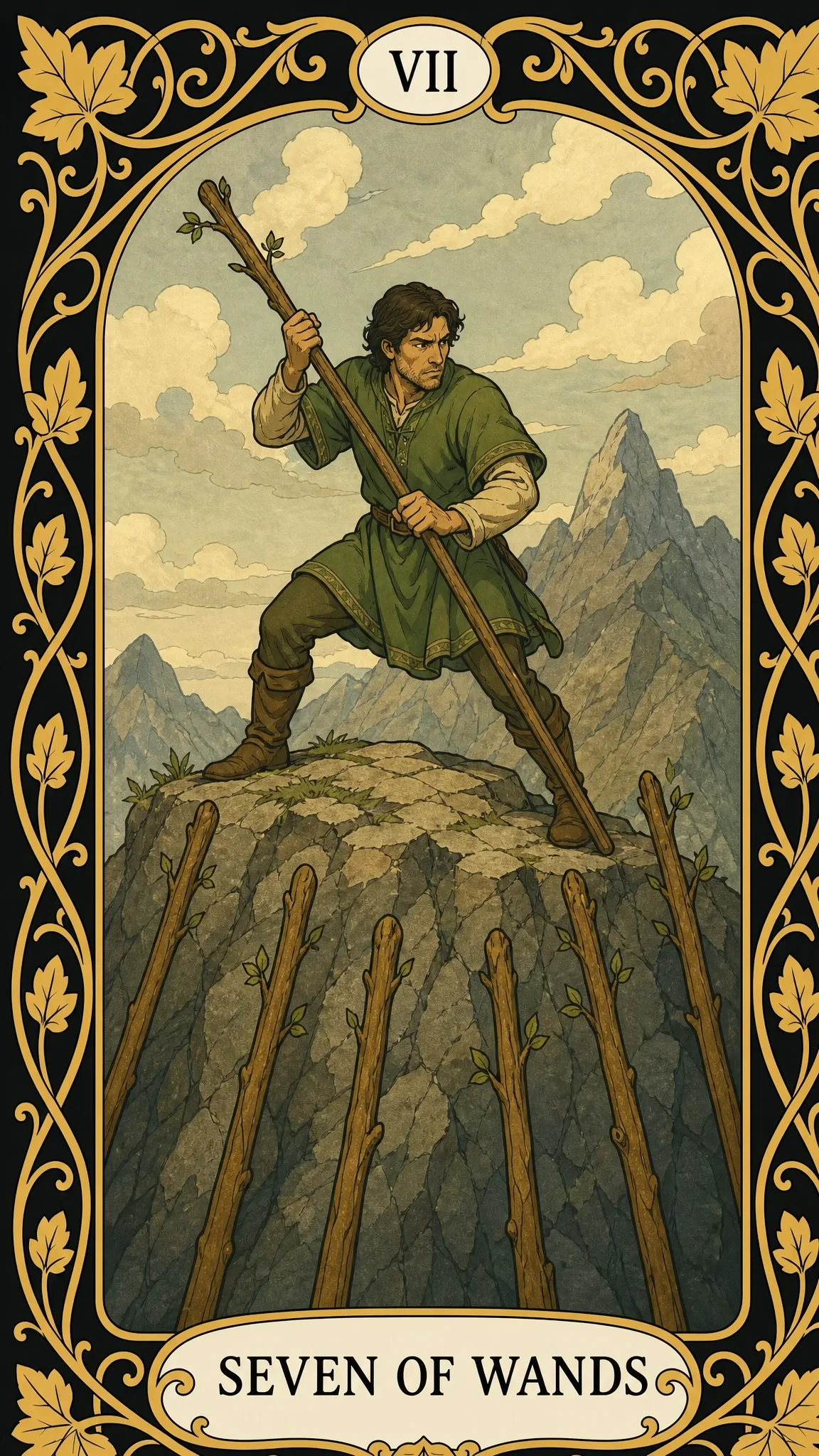
The upright Seven of Wands describes a specific episode, not a lifelong theme — and this is worth saying immediately, because the image on the card is intimidating in scale. In reality, the card is about one situation: you have already achieved a certain position — a job, an idea, a reputation, a decision — and now you need to defend it from several sides simultaneously.
An important nuance that is lost in retellings: many are attacking on the card, but only one is defending. This is not an equal fight, but the position of a person who has ended up above the others and is now in everyone's view. Criticism, doubts, competition — all this comes not because the position is weak, but because it is noticeable.
The second part of the meaning is that the defense itself is quite successful. The hero of the card stands firm, he has the advantage of height and initiative: he sees where the blows are coming from and strikes first. The Seven of Wands is not about defeat or retreat, it is about the fact that defending what is yours requires effort — and this effort is justified.
Reversed Seven of Wands: meaning
The reversed card is most often read in one of three senses, and the question of the spread helps to figure out which one.
- Defense has exhausted you. You had to fight back for so long that there is no strength left for the position itself — the person is holding on by inertia.
- Position surrendered. Under the pressure of several sides at once, it is easier to retreat than to continue the argument; sometimes this is reasonable, sometimes it is just fatigue passed off as a compromise.
- Defending where no one is attacking. A person perceives ordinary questions and remarks as an attack and defends themselves even from well-meaning interlocutors.
Neighboring cards help distinguish these options: next to Swords cards, the third scenario is more common — anxiety and a defensive reaction without a real reason; next to the Ten of Wands or the Tower — the first, physical and emotional exhaustion from a prolonged struggle.
Seven of Wands in a "yes or no" spread
In "yes/no" spreads, the Seven of Wands is read as yes, but with effort: the event will turn out in your favor if you are ready to defend your position, rather than counting on everything to resolve itself. The card does not promise an easy victory — it promises victory on the condition that you stay in place and do not give in at the first objection.
If the question sounds like "will it work out without a fight" — the answer is likely negative: the card speaks directly about resistance from the outside.
The reversed position in this spread is read as no or as "yes, but at a cost you didn't count on": either the position has already been surrendered, or the strength to defend it ran out before the outside resistance ended.
Seven of Wands in relationships and feelings
In a relationship spread, the upright card often describes a situation where feelings or the choice of a partner itself have to be defended from other people's opinions: family, friends, exes, an environment that doubts these relationships out loud. This is not about infidelity or a rival within the couple — rather about pressure from the outside.
In the position of feelings, the Seven of Wands is the readiness to defend what is important, even when it would be easier to remain silent: to speak out loud about your boundaries, to disagree with someone else's assessment of the relationship, to insist on your own option when everyone around is suggesting another.
The reversed position here means two opposite things. Either a person gives in under the weight of other people's opinions and stops defending relationships that are actually dear to them. Or, conversely, they defend themselves from a partner who meant no harm — defending in a conversation where there was no one to defend against.
Seven of Wands in work and money
In career spreads, this is one of the most recognizable cards: a new job, project, or idea for which there are immediately several applicants or several critics. You have to explain the decision to different people in turn, fight off questions of "why not otherwise," and hold your position in negotiations where they are pressing from several sides at once.
In money, the card speaks not of loss, but of a dispute over a resource: for a client, for a share, for the terms of a deal, for a place in the budget that someone else considers their own. The good news is that in the classic image of the card, the defender stands higher than the attackers — the position is stronger than it seems in the moment of the dispute.
The reversed Seven of Wands at work is either burnout from constant explanations and justifications, or the loss of a position to a more persistent competitor who simply didn't stop for longer.
Seven of Wands as a person: man and woman
When the card appears in the "what kind of person" position, it describes not the character as a whole, but behavior in a specific situation: someone who has taken a prominent place and is now defending it, often alone and from several opponents at once.
A Seven of Wands man in a spread is direct, not inclined to give in at the first objection, ready to argue for his rightness longer than others expect. A Seven of Wands woman is someone who firmly holds boundaries and does not change her decision just because several people are pressuring her at once.
This description is not about aggression, but about persistence: such a person rarely attacks first, but does not retreat when they are attacked.
7 ไม้เท้าในตำแหน่งความคิด
ในตำแหน่งความคิด ไพ่ใบนี้อธิบายถึงสภาวะของการเตรียมพร้อมที่จะโต้เถียงอยู่ตลอดเวลา: คนคนนั้นกำลังซ้อมโต้แย้งในใจ คิดหาวิธีตอบโต้ข้อโต้แย้งที่อาจจะยังไม่ได้เกิดขึ้นจริง
สภาวะนี้อาจสมเหตุสมผลหากคุณถูกกดดันจากหลายทาง การเตรียมตัวป้องกันไว้ก่อนย่อมเป็นเรื่องดี แต่บางครั้งมันก็เกินความจำเป็น คือความรู้สึกที่ต้องพร้อมป้องกันตัวจากทุกคน ทั้งที่ยังไม่มีใครโจมตี หากอยู่ใกล้ไพ่ดาบ มันมักหมายถึงความวิตกกังวลต่อความขัดแย้ง แต่หากอยู่ใกล้ไพ่ราชาหรืออัศวินไม้เท้า มันคือการเตรียมตัวอย่างมีสติเพื่อการโต้เถียงที่เกิดขึ้นจริง
ต้องทำอย่างไรเมื่อได้ไพ่ 7 ไม้เท้า
คำแนะนำของไพ่ใบนี้เรียบง่าย แม้จะทำตามได้ไม่ง่ายนัก: จงเลือกจุดยืนที่จะปกป้อง แทนที่จะโต้ตอบทุกคนไปหมด
- ระบุทิศทางการโจมตีหลัก ไม่ใช่ทุกข้อโต้แย้งจะสำคัญเท่ากัน บางเรื่องปล่อยผ่านได้โดยไม่ต้องเสียพลังงาน
- ยึดตามข้อเท็จจริง ไม่ใช่อารมณ์ จุดยืนจะแข็งแกร่งขึ้นเมื่อมีเหตุผลรองรับ ไม่ใช่แค่ความต้องการเอาชนะ
- อย่าสับสนระหว่างการป้องกันกับการโจมตี การปกป้องตัวเองไม่เหมือนกับการเปิดฉากโจมตีทุกคนที่สงสัยในตัวคุณ
- ยอมรับความเหนื่อยล้า หากไม่มีแรงจะสู้ต่อแล้ว การยอมรับตรงๆ ดีกว่าการฝืนทำไปเพียงเพราะทิฐิ
หากสถานการณ์ยืดเยื้อจนการป้องกันกลายเป็นนิสัย ลองตรวจสอบดูว่านอกจากความถูกต้องของจุดยืนแล้ว คุณต้องจ่ายราคาเท่าไหร่เพื่อรักษามันไว้ บางครั้งการพูดคุยอย่างตรงไปตรงมากับ 'ผู้โจมตี' อาจแก้ปัญหาได้ดีกว่าการโต้เถียงอีกรอบ
ภาพบนไพ่สื่อถึงอะไร
ในไพ่ 7 ไม้เท้าของเรา ชายหนุ่มในชุดคลุมสีเขียวยืนอยู่บนยอดหน้าผาหิน ถือไม้เท้าอันยาวด้วยสองมือ ปักปลายไม้ลงบนหินตรงหน้า ร่างกายหันไปด้านข้าง ขาข้างหนึ่งอยู่บนขั้นหินล่าง อีกข้างอยู่บนขั้นบน เหมือนกำลังหันตัวรับมือกับอันตรายอย่างกะทันหัน ใบหน้าดูเคร่งเครียด สายตามองลงไปด้านล่างและด้านข้าง ซึ่งเป็นทิศทางที่ภัยคุกคามกำลังมา
ฉากนี้ตีความได้ว่า:
- ไม้เท้า 6 อันที่โผล่ขึ้นมาจากเนินเขาด้านล่าง เป็นแถวที่นับได้ง่าย มันพุ่งขึ้นมาจากตีนเขาไปยังผู้ป้องกัน แต่ไม่เห็นตัวคนที่ถือไม้เท้าเหล่านั้น เห็นเพียงอาวุธ
- ไม้เท้าอันที่ 7 ในมือของตัวเอก คืออันที่ผู้ป้องกันถืออยู่ เขาเป็นคนเดียวที่มีความคิดริเริ่มในการรับมือกับทิศทางการโจมตีทั้ง 6 แต่เขายืนอยู่บนที่สูงกว่าและเห็นศัตรูก่อน
- โขดหินใต้ฝ่าเท้า ที่มีหญ้าขึ้นแซม เป็นฐานที่มั่นคงแม้จะดูไม่เรียบเนียน ตำแหน่งนี้ดูสั่นคลอนแต่ก็ถูกยึดครองไว้แล้วและยังไม่ยอมแพ้
- ภูเขาและท้องฟ้าที่มีเมฆมากในพื้นหลัง เป็นพื้นที่เปิดโล่งที่ไม่มีที่กำบัง ต้องป้องกันตัวในที่แจ้งโดยไม่มีที่ซ่อน
ด้านบนของไพ่ในกรอบวงรีมีเลขโรมัน VII และด้านล่างบนแถบมีชื่อภาษาอังกฤษ SEVEN OF WANDS: สำรับของเราวาดตามประเพณีไรเดอร์-เวท (Rider-Waite) โดยไพ่ชุดเล็กจะมีหมายเลขไพ่ในกรอบ ไม่ใช่สัญลักษณ์ของชุดไพ่
7 ไม้เท้าในฐานะไพ่ประจำวัน
ในฐานะไพ่ประจำวัน 7 ไม้เท้าไม่ค่อยบ่งบอกถึงความขัดแย้งใหญ่โต แต่มักเป็นวันที่คุณต้องอธิบายความคิดเห็น การตัดสินใจ หรือผลงานของคุณมากกว่าหนึ่งครั้ง ต่อหน้าผู้คนหลายคนและอาจจะในเวลาที่ต่างกัน
แนวคิดที่เป็นประโยชน์สำหรับวันนี้: ตัดสินใจให้แน่ชัดว่าจุดยืนไหนที่คุณพร้อมจะปกป้อง และอย่าหลงไปโต้เถียงกับทุกคำวิจารณ์เล็กๆ น้อยๆ ความหนักแน่นมีประโยชน์ในเรื่องที่สำคัญจริงๆ ส่วนเรื่องอื่นปล่อยผ่านไปบ้างเพื่อไม่ให้เสียพลังงานกับการป้องกันในที่ที่ไม่มีการโจมตีจริง
คำถามที่พบบ่อยเกี่ยวกับไพ่ 7 ไม้เท้า
นี่คือไพ่ชุดใหญ่หรือชุดเล็ก?
เป็นไพ่ชุดเล็ก (Minor Arcana) ชุดไม้เท้า ธาตุไฟ ในสำรับมีไพ่ชุดเล็กทั้งหมด 56 ใบ แบ่งเป็น 4 ชุด ชุดละ 14 ใบ ต่างจากไพ่ชุดใหญ่ที่พูดถึงเรื่องใหญ่ของชีวิต ไพ่ชุดเล็กจะพูดถึงเหตุการณ์เฉพาะเจาะจงหรือเรื่องใกล้ตัว เช่น การโต้เถียงหนึ่งครั้ง การตัดสินใจหนึ่งเรื่อง หรือสถานการณ์ในที่ทำงาน
ไพ่ 7 ไม้เท้าต่างจาก 7 ถ้วยอย่างไร?
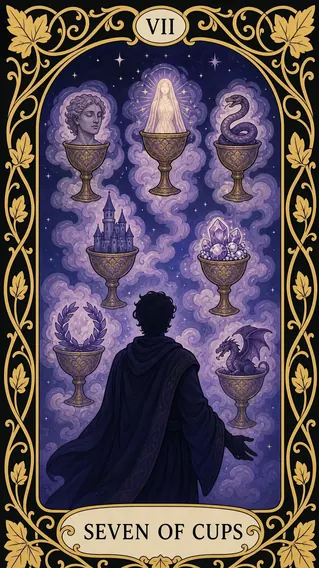
ไพ่ทั้งสองใบเป็นใบที่เจ็ดของชุด แต่พูดถึงเรื่องที่ต่างกัน 7 ไม้เท้าคือธาตุไฟ เกี่ยวกับการกระทำจริง คือจุดยืนที่ต้องปกป้อง ณ ที่นี้และเดี๋ยวนี้ ส่วน 7 ถ้วยคือธาตุน้ำ เกี่ยวกับตัวเลือกที่มากเกินไปและภาพลวงตาที่ยากจะตัดสินใจ ใบหนึ่งเกี่ยวกับการป้องกันความจริง อีกใบเกี่ยวกับการสับสนในจินตนาการและความต้องการ
ไพ่ 7 ไม้เท้าคือ 'ใช่' หรือ 'ไม่'?
ค่อนข้างไปทาง 'ใช่' แต่มีเงื่อนไข: เหตุการณ์จะเข้าข้างคุณหากคุณพร้อมที่จะปกป้องจุดยืนอย่างจริงจัง ไม่ใช่รอให้ทุกอย่างคลี่คลายไปเอง หากคำถามเกี่ยวกับผลลัพธ์ที่ง่ายดายโดยไม่มีการต่อต้าน คำตอบจะค่อนไปทาง 'ไม่' เพราะไพ่ใบนี้พูดถึงแรงกดดันจากภายนอกโดยตรง
ไพ่ 7 ไม้เท้ากลับหัวหมายถึงอะไร?
ส่วนใหญ่มักหมายถึงหนึ่งในสามกรณี: ความเหนื่อยล้าจากการป้องกันตัวมานาน การยอมแพ้ต่อแรงกดดันจากหลายฝ่าย หรือในทางกลับกัน คือการป้องกันตัวในที่ที่ไม่มีการโจมตีจริง ซึ่งกรณีไหนนั้นต้องดูไพ่ใบข้างเคียงประกอบ
ไพ่ 7 ไม้เท้าหมายถึงความขัดแย้งหรือชัยชนะ?
เป็นทั้งสองอย่างแต่ไม่ใช่ในเวลาเดียวกัน ไพ่ใบนี้อธิบายถึงช่วงเวลาแห่งความขัดแย้งที่ผลลัพธ์ยังไม่แน่นอน ตามภาพคลาสสิก ผู้ป้องกันยืนอยู่สูงกว่าผู้โจมตีและถือความได้เปรียบอยู่ ซึ่งถือเป็นข้อได้เปรียบมากกว่าความพ่ายแพ้ แต่สิ่งที่ยืนยันผลลัพธ์ไม่ใช่ตัวไพ่เอง แต่เป็นสิ่งที่คุณจะทำต่อไป