What Rune Wunjo Means
Wunjo is a rune of joy, but a special kind: not luck that falls by chance, but harmony that comes when a common cause finally succeeds. In Northern life, this state is easy to recognize: haymaking is finished, the house is built, guests have gathered — and for this occasion, a banner is hung or lights are lit. The joy here is collective, shared, not just personal.
The second part of its meaning is agreement between people. Wunjo describes not joy as a mood, but joy as an attitude: when there is no division in a family, clan, or group, and everyone pulls in the same direction. Harmony is more important than celebration — a celebration ends in a day, but harmony sustains the household all year.
Closing the first aettir, Wunjo summarizes the seven preceding runes: property, strength, defense, message, journey, craft, and gift. It says that if nothing was lost along the way, the reward is precisely this — peace and shared joy, not something else.
How Wunjo Looks and How to Draw It Correctly
The inscription of Wunjo is ᚹ: a vertical stem and a triangular pennant-like flag extending from the upper part of the stem to the right. It is one of the simplest runes in silhouette in the row — the sign is read as a flag on a pole.
Wunjo is written from bottom to top: first the stem, then the diagonal lines of the pennant converging at a point on the right. It is important that the pennant points to the right and up, not hanging down, otherwise the flag 'falls,' and the rune is read as reversed.
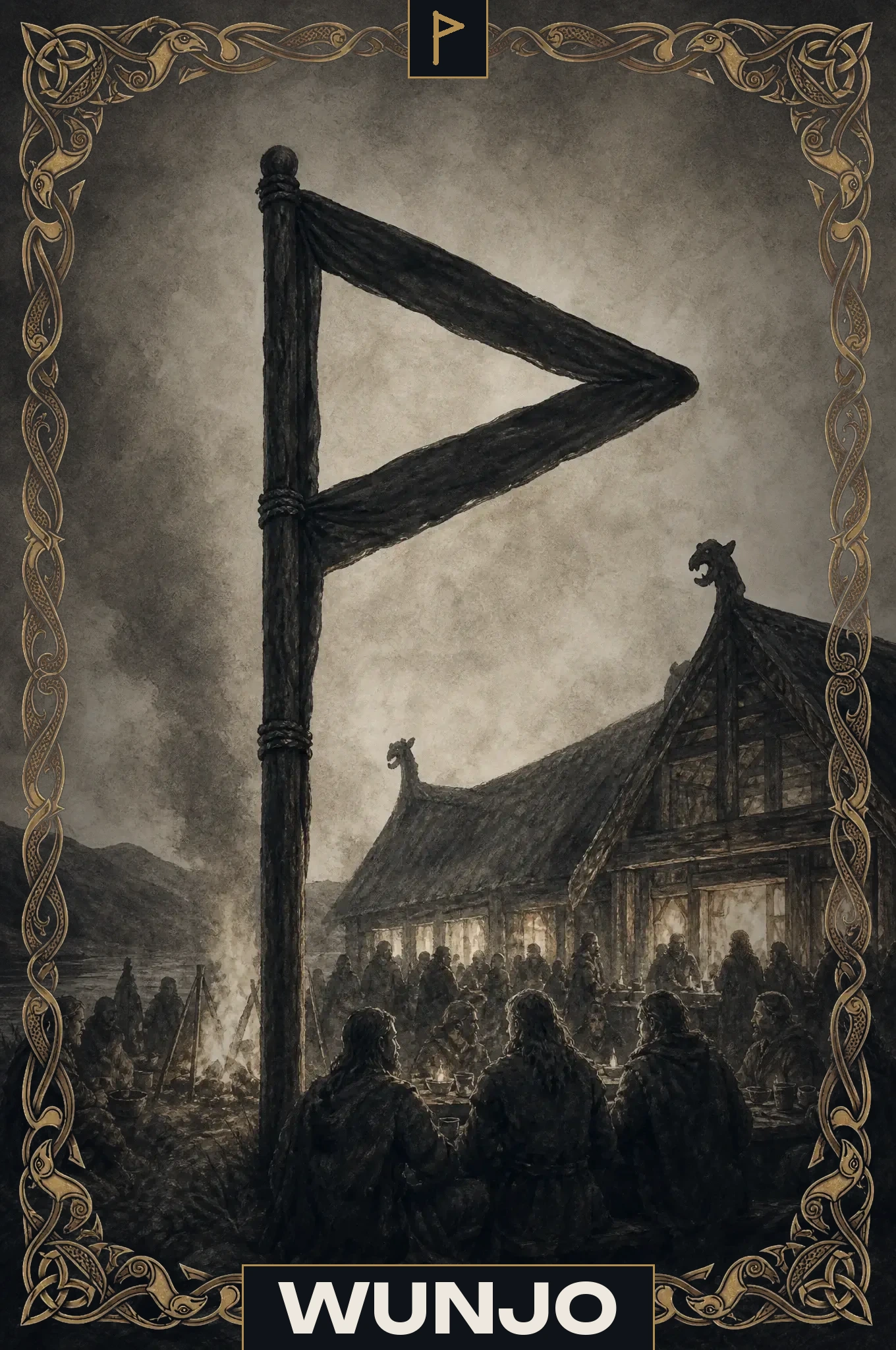
On our card, Wunjo is formed from a pole with a thrice-tied pennant near a longhouse, behind the windows of which the lights of a feast are burning. The pole provides the verticality of the sign, and the cloth its triangular part: the scene is the very pennant hung out, which was used in ancient times to mark a celebration.
Wunjo Upright
Upright Wunjo is one of the most favorable runes in the row. It promises satisfaction with what is being done: the work is nearing completion, relationships are forming, the group is gathering without quarrels. It is a rune of earned, not gifted, happiness.
In readings about the current state, it often answers: what you are doing now brings exactly the return you expected. Not more than deserved, but honestly and according to merit. Wunjo does not promise miracles — it confirms that the path chosen is correct.
There is a nuance: Wunjo describes the state of a community, not an individual. If runes of discord or loneliness are nearby in the reading, Wunjo's joy may be incomplete — there is success, but no one to share it with.
Wunjo Reversed
Reversed Wunjo is discord where harmony was expected. The pennant hangs down instead of fluttering: the celebration either didn't happen or turned out to be false — outward merriment with inner dissatisfaction. Often this rune appears when a person pretends everything is fine so as not to upset others.
Most often, reversed Wunjo indicates one of three situations. The first is a protracted dispute in a family or team that prevents the common cause from being completed. The second is disappointment: expecting joy from an event, but receiving emptiness because preparation focused on form rather than substance. The third is loneliness among people: the person is physically in a group but emotionally outside of it.
Unlike runes that warn of danger, reversed Wunjo is not about threat, but about honesty. It asks to admit that there is no joy yet, instead of pretending there is. Often, this is the first step towards harmony truly returning.
Wunjo in Relationships and Feelings
In a relationship reading, upright Wunjo is one of the best answers: it speaks of a couple who are truly happy together, of a home where there's no urge to argue over trifles. It's not passionate ardor, but a calm joy shared by two — cooking together, making plans together, laughing at the same things.
To the question about a person's feelings, upright Wunjo answers: they feel at ease with you. This is a feeling without tension, without pretense, without a hidden agenda — the very common cause that the entire rune speaks of, only on a scale of two.
Reversed Wunjo in relationships is a signal of discord that has not yet been openly acknowledged. A couple may appear happy to outsiders while harboring mutual irritation. Sometimes it indicates that joy existed but has ended, and habit keeps people together longer than affection.
Wunjo in Work and Money
In a business context, Wunjo is a rune of teamwork, not solitude. Upright Wunjo signifies a cohesive team, a project that succeeds precisely because everyone is pulling in the same direction, a bonus or recognition shared with those who earned it alongside you.
When asked "should I take on this task?", Wunjo answers yes if the task is collective or fits into an already established team. It speaks less strongly about solo ventures – other runes from the first aett answer more precisely there.
Reversed Wunjo at work indicates discord within the team: arguments about each person's contribution, envy of others' success, a show of unity with a real split. It doesn't advise leaving – it advises figuring out who is unhappy with what, before the discord spoils the result of the common labor.
Wunjo – yes or no
Upright Wunjo is a warm yes, especially if the question concerns a common cause, relationship, or event involving several people: the rune indicates that the outcome will please all involved.
Reversed Wunjo is no, but not definitively: more like "not in this company" or "not yet, until the discord is resolved." It indicates not the impossibility of joy, but an obstacle to it that can be overcome.
If the question is purely personal, without the involvement of other people, Wunjo answers more weakly: its strength lies precisely in shared happiness, and in solo readings, other runes of the row sound more precise.
If Wunjo appears in a reading
The rune's position in the spread changes its meaning. In the past position, Wunjo indicates that the situation had a happy, cohesive start – the team assembled well, the work began in harmony. In the present position – that harmony exists right now, and the only question is whether you notice it. In the future position, it promises a completion with shared joy: what you are working on will please not only you.
Wunjo first in the spread means "start together, not alone." Wunjo last – "the outcome will be joyful if the work is brought to completion together."
If Wunjo appears next to a rune that answers a difficult question, interpret it as a softening influence: even a complex answer will come with the support of your surroundings, not in solitude.
Combinations of Wunjo with other runes
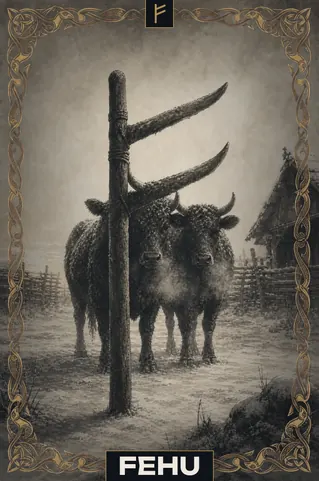
Wunjo and Fehu – joy from what has been acquired: a longed-for purchase, a wedding, or a celebration funded by your own means.
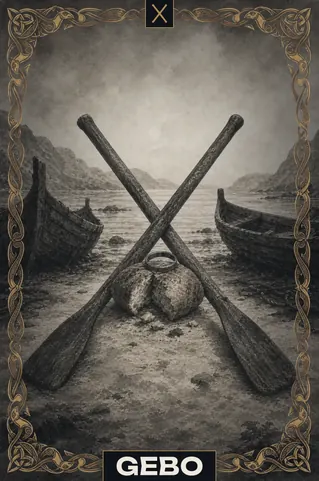
Wunjo and Gebo – a union sealed by shared joy: an engagement, a partnership, a friendship tested by time.
Wunjo and Sowilo – success that everyone sees: recognition, victory, a moment you want to share.
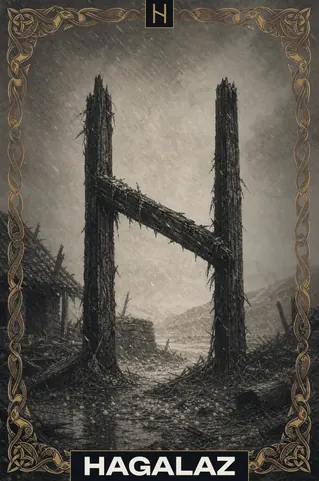
Wunjo and Hagalaz – a celebration interrupted by sudden misfortune; the pair warns not to relax too soon.
Wunjo and Nauthiz – joy through strength: a smile amidst real need, a reason to gather despite difficulties.
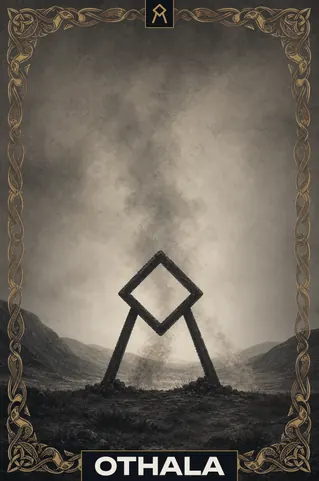
Wunjo and Othala – a family celebration, harmony in the ancestral home, an event uniting several generations.
Wunjo and Eihwaz – a common endeavor gains momentum: a cohesive team moves towards its goal faster than expected.
Wunjo as a symbol: talisman, tattoo, and amulet
Wunjo is worn as a symbol of harmony – it is invoked not for solo luck, but for harmony in the home and in the team. In tradition, such a symbol was hung above the entrance or applied to items of common use: on a table, a door frame, or festive utensils.
It is important to remember that Wunjo amplifies what already exists between people. It does not create joy where there is no common endeavor, but rather emphasizes and protects the joy that has already formed. Therefore, the symbol is more often chosen not for oneself alone, but as a symbol of family, team, or a circle of friends.
In modern practice, Wunjo is found on matching jewelry, family crests, and as a symbol for the home. It is applied strictly upright: the reversed form of Wunjo has its own meaning, and one should not confuse the direction of the pennant.
All of this is part of cultural tradition, not a way to influence events. The Wunjo symbol should be seen as a reminder to cherish the harmony that already exists, rather than a guarantee that it will appear on its own.
Frequently asked questions about the rune Wunjo
What does the rune Wunjo mean in simple terms?
Joy shared with others: harmony in the family or team, a deserved outcome of common labor. The easiest way to remember it is: Wunjo is not "got lucky," but "succeeded together."
Is Wunjo a good rune?
Yes, in its upright position, it is one of the most favorable runes in the row. It signifies harmony and deserved joy, not random luck, so in readings about relationships and common endeavors, it is almost always interpreted as a positive sign.
What does reversed Wunjo mean?
Discord disguised as merriment: superficial agreement, a prolonged dispute, disappointment with an anticipated event. It is not a prohibition against joy, but a signal to acknowledge the problem instead of masking it.
Is Wunjo good in a relationship reading?
Yes, if the question is about harmony in a couple: the rune speaks of calm, shared joy and a common life without excessive tension. It speaks less about passion – Wunjo is about agreement, not infatuation.
How to distinguish upright Wunjo from reversed?
By the direction of the pennant-like flag. In the upright rune, it extends upwards and to the right from the stem, like a waving flag. If it hangs down, the rune is reversed – the direction is immediately visible in any depiction.
Wunjo appeared first – what does that mean?
That the endeavor should be started together, not alone. In the first position of a spread, this rune almost always indicates: the outcome will be joyful if it is shared with others from the very beginning.