Present Simple 是英語中的簡單現在式。當我們談論習慣、事實與時刻表時會用到它:I get up at seven(我七點起床)、Cows eat grass(牛吃草)。核心規則一行就能記住:遇到 he, she, it 時,動詞要加上 -s,而在否定句與疑問句中則會出現助動詞 do / does。本頁面包含變化表格、-s / -es 規則、時間標記、例外情況、常見錯誤解析以及 10 組練習題。
檢查自己:10 組題目,每組 12 句,每題回答後都有解析。
開啟訓練器Present Simple:何時使用
Present Simple(簡單現在式)描述的是普遍、規律或恆常發生的事,而不是「現在這一刻」正在發生的事。這是英語中最常用的時態:用來談論自己、日常作息、習慣以及世界的運作方式。
記住核心問題:通常情況下是怎樣的? 如果答案是「規律發生」或「本來就是這樣」,那就需要用 Present Simple。以下是四種典型情況。
Present Simple:構成表格——肯定、否定、疑問
整個時態都基於一個規則:主詞為 he, she, it(他、她、它)時動詞會改變,其餘則不變。
- 肯定句。 使用動詞原形 (V)。若主詞為 he, she, it,則加上字尾 -s 或 -es。
- 否定句。 在動詞前加上助動詞 don't (do not) 或 doesn't (does not,僅用於 he, she, it)。動詞維持原形。
- 疑問句。 將 Do 或 Does 移至句首,接著是主詞與動詞原形。
- 簡答。 只重複助動詞:Yes, I do. No, she doesn't. 簡答中不需要實義動詞。
| I, you, we, they | he, she, it |
|---|---|
| +肯定句 | |
| VI work.They work. | V + s / esShe works.He watches. |
| −否定句 | |
| don't + VI don't work. | doesn't + VShe doesn't work. |
| ?疑問句 | |
| Do + … + V?Do you work? | Does + … + V?Does she work? |
| !簡答 | |
| Yes, I do.No, I don't. | Yes, she does.No, she doesn't. |
Present Simple 中的 -s / -es 字尾:拼寫規則
he, she, it 的動詞字尾會根據動詞結尾字母而有所不同。總共有四條規則,與名詞複數的規則相同:box — boxes, city — cities。
字尾的發音也有三種:無聲子音後發 [s] (works),有聲子音與母音後發 [z] (reads, lives),而在嘶嘶聲(齒音)後發 [ɪz] (washes, passes)。
否定與疑問:don't / doesn't 與 Do / Does
否定與疑問句的核心秘密:-s 字尾在句子中只能出現一次。一旦助動詞 does 出現,它就會把字尾拿走,實義動詞則維持原形。這導致了最常見的錯誤—— doesn't lives, Does he lives? ——字尾重複出現了。
疑問詞(where, what, when, why, how often)放在 do / does 之前:Where do they live? When does the film start? 語序保持不變:疑問詞 → do / does → 主詞 → 動詞。
例外是針對主詞的提問,使用 who 或 what 時:Who knows the way? 這裡不需要助動詞,動詞則像 he 一樣加上 -s。
Present Simple 的時間標記
時間標記是提示詞,能直接顯示動作是規律發生的。看到 always, usually 或 every day,幾乎可以確定需要使用 Present Simple。
注意頻率副詞的位置:She often visits her granny(在實義動詞前),但 She is often late(在 is 後)。
誰是 he, she, it:如何正確判斷主詞
-s 字尾不僅在 he, she, it 本身後需要,任何可以被它們取代的主詞也需要。因此在選擇形式前,問自己:可以用什麼代名詞取代主詞?
如果主詞很長(the girl with red hair),找出其中的核心詞——girl,也就是 she。核心詞後面的詞只是修飾,不會影響動詞形式。
- 單一人名或單一物品:Kevin, the teacher, my phone
- 物質或概念:milk, music, money
- -body 和 -one 結尾的詞:somebody, someone
- 多人或多物:my brothers, the trees
- 用 and 連接的兩人:Kevin and Lena
- 特殊複數無 -s:people, men, mice
例外:have → has, do → does, go → goes
幾乎所有動詞都遵循上述四條規則加上 -s。有三個最常見的需要特別記住:
- have → has. 這是唯一一個在 he, she, it 後會完全改變的動詞:I have a bike — My sister has long hair. 在否定與疑問句中又變回 have:She doesn't have a bike. Does he have a dog?
- do → does [dʌz] 與 go → goes [gəʊz] — 拼寫遵循「-o → -es」規則,但讀音與拼寫看起來的不太一樣。
還有另一組:情態動詞 can, must, should 永遠不會加上字尾:He can swim,而不是 He cans swim。
Present Simple 中的動詞 to be
動詞 to be(是、在、存在)有自己的規則。它有三種形式—— am, is, are ——而且它不需要 do / does:否定句使用 not,疑問句則透過倒裝完成。
She is ready. — She isn't ready. — Is she ready?
不要將 to be 與其他動詞混用:I am go 或 She is likes 是錯誤的。要麼用 I go,要麼用 I am at school。
| 肯定句 | 否定句 | 疑問句 |
|---|---|---|
| I am | I am not | Am I…? |
| he, she, it is | he isn't | Is he…? |
| you, we, they are | they aren't | Are they…? |
範例解析
範例 1. 從肯定句變為否定句與疑問句
題目: 將句子 Kevin's sister studies Chinese. 改為否定句與疑問句。
步驟 1. 主詞 Kevin's sister = she,所以助動詞是 does。
步驟 2. Does 拿走字尾,動詞回到原形:studies → study (i 又變回 y)。
答案: Kevin's sister doesn't study Chinese. Does Kevin's sister study Chinese?
範例 2. -ch 後的字尾
題目: Mrs Lee ___ (teach) history at the local school.
步驟 1. Mrs Lee = she → 需要加上字尾的形式。
步驟 2. 動詞以 -ch 結尾 → 寫上 -es。
答案: Mrs Lee teaches history at the local school. — 李太太在當地學校教歷史。
範例 3. 帶疑問詞的問句
題目: 對句子 My cousins live in Kazan. 提問「在哪裡?」。
步驟 1. My cousins = they → 助動詞 do。
步驟 2. 語序:Where → do → 主詞 → 動詞。
答案: Where do your cousins live?
範例 4. 主詞陷阱
題目: The people next door ___ (have) a big dog.
步驟 1. 核心詞是 people。結尾沒有 -s,但這是複數(「人們」)= they。
步驟 2. 對 they 來說,動詞 have 不變。
答案: The people next door have a big dog. — 鄰居們有一隻大狗。
Present Simple 常見錯誤
-
忘記 he, she, it 的字尾:❌ My dad work in a bank.
主詞 my dad = he,所以 ✅ My dad works in a bank.
-
字尾重複使用——在 does 和動詞上都加:❌ She doesn't speaks German. ❌ Does he lives here?
句子中 -s 字尾只能有一個,由 does 拿走:✅ She doesn't speak German. Does he live here?
-
混淆 do 和 does:❌ Do Lena like dogs? ❌ He don't know.
he, she, it 只能用 does:✅ Does Lena like dogs? He doesn't know.
-
隨意拼寫字尾:❌ studys, watchs, gos.
子音 + y → -ies,ch, sh, s, x, o 後 → -es:✅ studies, watches, goes.
-
在一般動詞前加上 am / is / are:❌ I am go to school. ❌ She is likes music.
Present Simple 的肯定句中,to be 和其他動詞不會同時出現:✅ I go to school. She likes music.
-
在 can 或 must 後加上 -s:❌ He cans swim.
情態動詞不會改變,後面的動詞也不會:✅ He can swim.
問答
用簡單的話說,什麼是 Present Simple?
這是英語中的簡單現在式。它描述規律發生或永遠正確的事:習慣、事實、時刻表、感受與狀態。例如:I get up at seven — 我七點起床(每天)。
什麼時候動詞加 -s,什麼時候加 -es?
字尾僅在肯定句的 he, she, it 後需要。通常加 -s (works),在 s, ss, sh, ch, x, z 和 o 後加 -es (washes, goes),在子音 + y 後,y 變 i 加 -es (studies)。
Present Simple 的否定句如何構成?
在動詞前加上 don't (do not) 或 doesn't (does not — 僅用於 he, she, it),動詞維持原形:I don't work, she doesn't work.
Present Simple 如何提問?
將 Do 或 Does 放在主詞前,動詞維持原形:Do you work? Does she work? 疑問詞放在最前面:Where does she work?
Present Simple 有哪些時間標記?
頻率副詞 always, usually, often, sometimes, rarely, never 以及表達式 every day, every week, on Mondays, at the weekend, once a week, in the morning.
Present Simple 與 Present Continuous 有什麼不同?
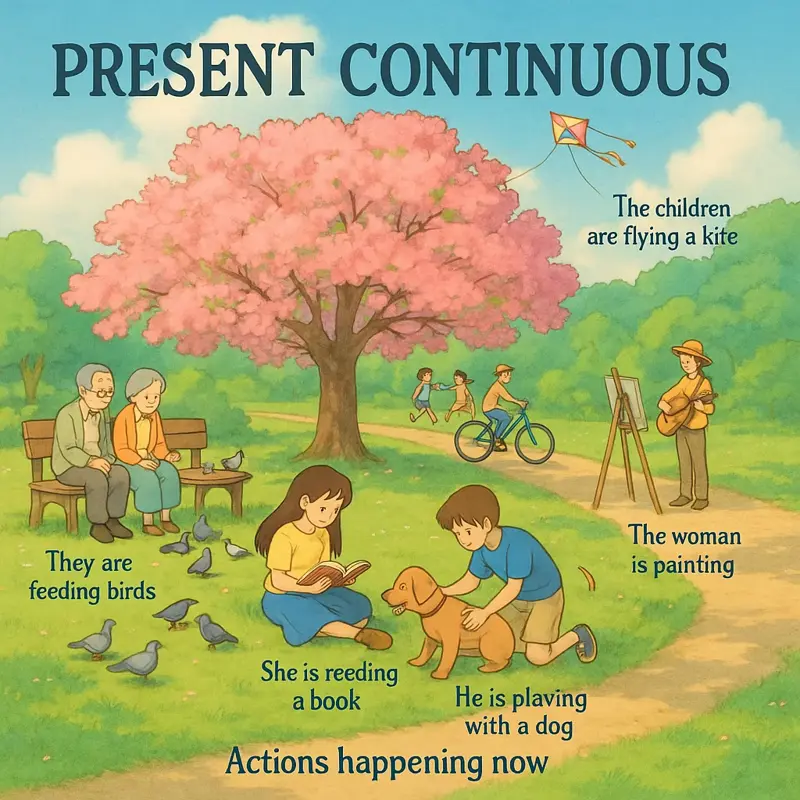
Present Simple 是關於規律發生的事 (He plays chess on Sundays),而 Present Continuous 是關於現在這一刻正在發生的事 (He is playing chess now)。Present Continuous 的標記是 now, at the moment, look!
動詞 to be 需要 do / does 嗎?
不需要。to be 有自己的形式 am, is, are:否定句用 not (She isn't at home),疑問句用倒裝 (Is she at home?)。
幾年級會學 Present Simple?
小學開始接觸,通常在 2–3 年級,從簡單的肯定句如 I like… 開始。do / does 的否定與疑問句在 3–5 年級練習,而 5–7 年級則會將 Present Simple 與 Present Continuous 進行比較。