What the Nine of Cups means in Tarot
The Nine of Cups is a card of personal satisfaction: the water in the cup has not decreased, the desire does not push, the person is content with what they already have. People often call it the "wish card," but it is important to separate two meanings of this nickname. Some read it literally: the card appeared — wait for the wish to come true. It is more correct to read it differently: the card describes not a future event, but a state in which the desire stops tormenting you because the person has either received what they wanted or learned to be content with what they have.
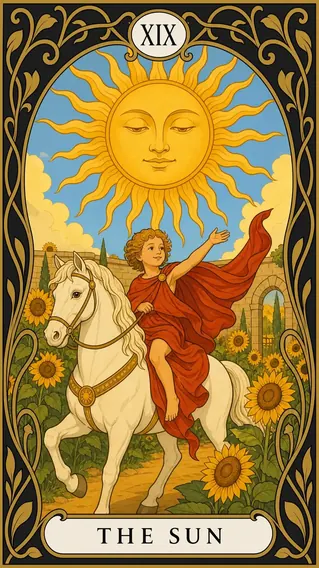
An important nuance that is lost in retellings: the Minor Arcana is about an episode, not about fate. If the major Sun card speaks of life's fullness in general, the Nine of Cups is about a specific evening, meeting, deal, or conversation after which things became easier. Do not inflate the card to the scale of global happiness for years to come — it is about today's feeling of "I am fine," not a guarantee that it will always be so.
In the upright position, the card is almost always positive: contentment, comfort, the feeling that efforts have paid off. But satiety has a flip side that is useful to keep in mind: the closer contentment is to narcissism, the closer the card is to its reversed meaning — not by the fact of being reversed in the spread, but by the essence of the state.
Reversed Nine of Cups: meaning
The reversed Nine of Cups is the same table with cups, but the joy is either ostentatious or has evaporated faster than it should have. The spread usually points to one of three options, and the hint is in the question itself.
- Contentment for show. A person demonstrates success and well-being more strongly than they actually feel — social media, status items, talk about achievements instead of real peace.
- Satiety. Everything was in abundance, but the joy has dulled: another purchase, another achievement no longer bring what they used to.
- Dissatisfaction despite external abundance. From the outside, everything looks prosperous, but inside there is a feeling that something important is missing, and no amount of cups on the table can fill it.
There is also a softer reading: sometimes the reversed card is not a rejection of joy, but an honest pause to ask yourself if this is the joy you were really looking for.
Nine of Cups in a "yes or no" spread
In "yes/no" spreads, the Nine of Cups is traditionally considered one of the most favorable cards: yes, and often exactly in the sense that the question was asked. Hence the nickname "wish card" — not because it guarantees fulfillment, but because it describes the state of contentment that usually occurs when the desired thing is actually received or is already close enough.
It is worth separating expectation and prediction immediately: the card does not name dates or the way it will happen, and it does not cancel the fact that effort is required. It is more correct to read it as — "the direction is correct, it's up to your actions," rather than as a promise that the desired thing will come by itself.
The reversed position in this spread is "yes, but not what was expected": there is a result, but the joy from it turns out not to be what was imagined in advance.
Nine of Cups in relationships and feelings
In a relationship spread, the upright Nine of Cups is calm contentment: partners receive from each other what they were looking for, without constant checking and anxiety about tomorrow. For those who are not in a couple, the card often means a state where it is good to be alone — self-sufficiency, from which relationships are built not out of lack, but out of a desire to share existing joy.
In the position of feelings, the card is satisfaction, not passion: warmth, comfort, the feeling that you don't need to prove anything next to this person. If the question is about an existing relationship, the Nine of Cups can mean a stage where the couple has finally received what they have been working towards for a long time — a common home, peace, mutual recognition.
Reversed Nine of Cups in relationships is contentment for show: the couple looks happy to others, but inside one or both partners feel that something is missing. Or a situation where one is so content with themselves that they stop noticing the needs of the other.
Nine of Cups in work and money
In career spreads, the Nine of Cups is a well-deserved reward: a bonus, a promotion, a deal that has been long dreamed of, recognition of work done. The card describes well the moment when efforts have finally paid off and you can exhale for a minute without making excuses for the pause.
In money, the upright position is financial comfort: not necessarily wealth, but enough not to count every penny and afford what was previously put off. This is a card about the feeling of abundance, not about a specific amount in the account.
Reversed Nine of Cups in work and money is premature self-satisfaction: there is success, but the person stops developing, considering the goal already achieved, although circumstances think otherwise. Another option is material abundance that does not bring satisfaction because it was obtained in the wrong way or at a price that one does not want to remember.
Nine of Cups as a person: man and woman
When the Nine of Cups appears in the "what kind of person" position, it describes someone who is content with themselves and their life — not boastfully, but calmly, like a person who does not need to prove anything to anyone. Usually, this is a good conversationalist and a hospitable host: it is pleasant to be around them because they are not a source of anxiety.
Nine of Cups man — self-confident, loves a good life, and knows how to enjoy it without turning it into a fixation. Nine of Cups woman — someone who feels good in her own skin and knows how to sincerely rejoice for both herself and others.
The flip side of the portrait is narcissism: if self-contentment becomes the only topic of conversation, and other people's successes cause slight irritation, it is worth looking at the reversed meaning of the card.
Nine of Cups sa posisyon ng pag-iisip
Sa posisyon ng pag-iisip, ang Nine of Cups ay isang kalmado at kontentong isipan: ang tao ay hindi nag-iisip ng mga nakaka-stress na senaryo, kundi nagbubuod at nag-e-enjoy sa kung ano ang nagawa na. Magandang estado ito para sa pasasalamat, ngunit hindi ito ang pinaka-produktibo para sa mga bagong ambisyosong plano — ang mga iniisip ay mas nakatuon sa "ayos na ito" kaysa sa "ano ang susunod".
Kung may mga Swords sa tabi sa spread, ang pagkakontento ay maaaring may kasamang bahagyang guilt dahil sa pagrerelaks; kung may Pentacles naman, ang mga iniisip ay praktikal na nakatuon sa kung paano patatagin ang nakamit na resulta.
Ano ang gagawin kung lumabas ang Nine of Cups
Simple lang ang payo ng card: payagan ang sarili na maging tapat sa kagalakan, nang hindi ipinagpapalit ang pagkakontento sa pagiging stagnant. Ang Nine of Cups ay hindi tungkol sa agarang paghahangad ng higit pa — ito ay tungkol sa pagpansin na mayroon nang mabuting bagay, at hindi ito binabale-wala sa paghabol sa susunod na layunin.
Ano ang dapat gawin:
- Suriin kung kaninong kagalakan ito. Ang pagkakontento ba ay taos-puso o para lang sa paningin ng iba?
- Ibahagi ang kagalakan sa iba, sa halip na ipakita lang ito — sa ganitong paraan, hindi ito madalas maging pagyayabang.
- Huwag pigilan ang pag-unlad kung ang pagkakontento ay nagiging self-complacency: ang pagdiriwang ng isang tagumpay ay hindi nangangahulugang titigil na habambuhay.
- Pansinin ang pagkakaiba ng pagnanais at ugaling maghangad: minsan, sa likod ng bagong layunin ay ang takot na maging kontento lang.
Kung ang dahilan ng pag-spread ay labis na pagkain, pag-abuso, o iba pang anyo ng labis na kasiyahan na naging problema na, ang card ay hindi kapalit ng pakikipag-usap sa eksperto: ipinapakita nito ang estado ng kasiyahan, hindi nito nilulutas ang mga isyu ng adiksyon.
Ano ang nakaguhit sa card
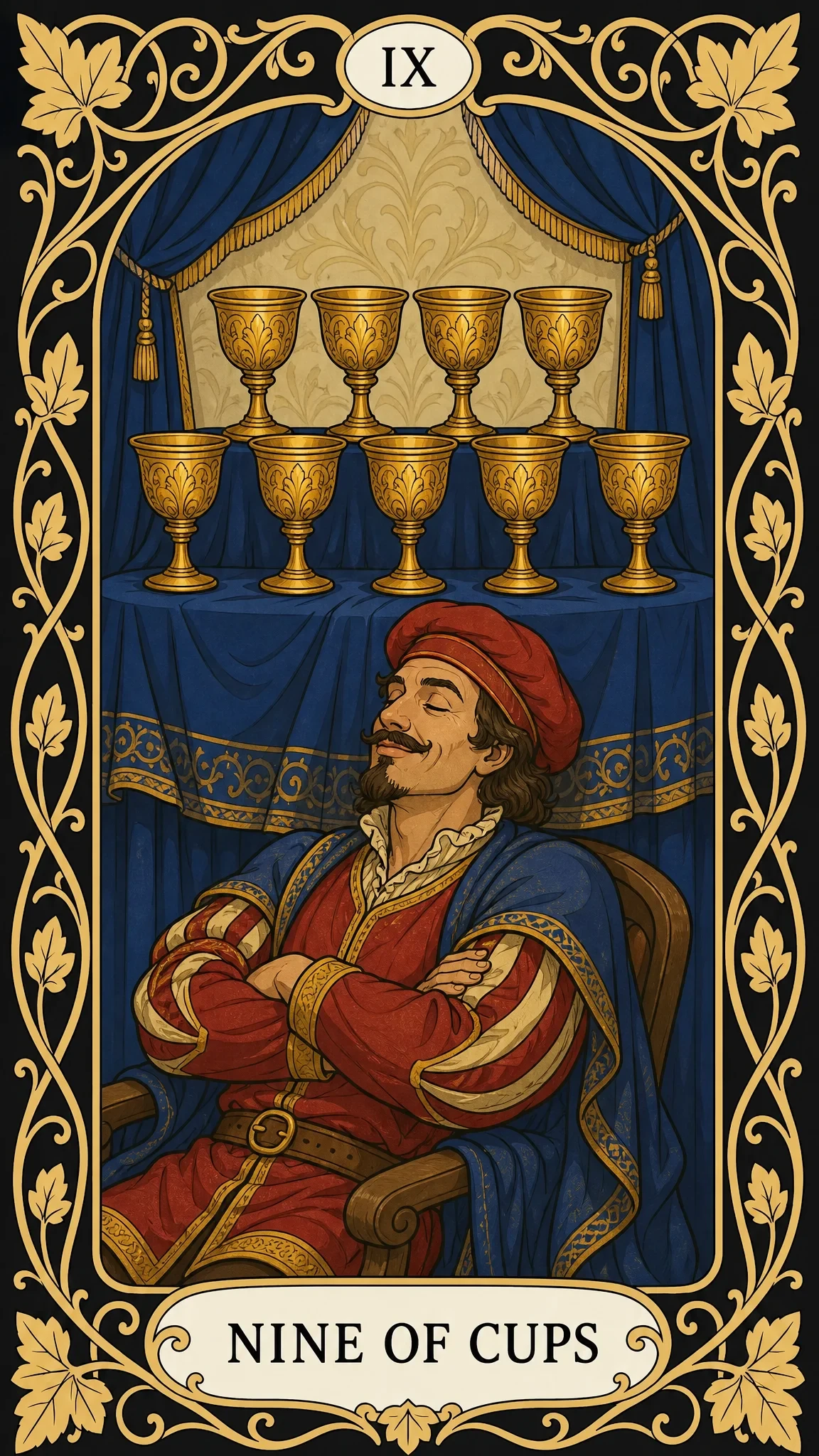
Sa ating card — isang lalaking nakapula na beret ang nakaupo sa inukit na kahoy na upuan, nakapahalukipkip, nakapikit ang mga mata at may kontentong ngiti. Sa kanyang likuran, sa mesa na may asul na mantel na may gintong gilid, sa background ng asul na kurtina, ay may siyam na gintong tasa na nakaayos nang pabilog sa dalawang hanay.
Ganito binabasa ang eksena:
- Nakapikit na mga mata at nakapahalukipkip — ang pagkakontento rito ay nakatuon sa loob, hindi sa labas: hindi kailangan ng tao na makita ng iba ang kanyang mga tasa, sapat na sa kanya na alam niya ang dami nito.
- Siyam na magkakatulad na gintong tasa sa isang hilera — hindi ito tsamba, kundi naipon at paulit-ulit na resulta: hindi lang isang matagumpay na deal, kundi sistematikong nakamit na kagalingan.
- Mayamang pulang kasuotan at gintong dekorasyon — ang materyal na kasaganaan dito ay hindi nakatago at hindi nahihiya sa sarili.
- Ang mga tasa ay nasa likod ng bida, hindi sa kanyang mga kamay — tanda na ang kasaganaan ay nangyari na at hindi na nangangailangan ng patuloy na kontrol: maaari kang tumalikod at maging maayos pa rin ang pakiramdam.
Sa itaas ng card ay ang Roman numeral na IX, sa ibaba ay ang tableta na may Ingles na pangalan na NINE OF CUPS: ang ating deck ay sumusunod sa tradisyon ng Rider-Waite, kung saan ang Nine ay nasa pangalawang huling posisyon sa suit ng Cups bago ang Ten.
Nine of Cups bilang card of the day
Ang Nine of Cups bilang card of the day ay magandang pagkakataon para sadyang magalak sa kung ano ang mayroon na: kumain ng masarap, makipagkita sa mga taong kaaya-aya, at payagan ang sarili ng maliit na luho nang walang guilt. Ang araw ay hindi para sa pagmamadali, kundi para pahalagahan ang nilakbay na landas.
Kung ang card ay lumabas na baligtad — tingnan kung ang pakitang-taong saya ba ay pumapalit sa tunay na kasiyahan at kung sinusubukan ba ng araw na takpan ng kasiyahan ang mga bagay na nangangailangan ng tapat na pag-uusap sa sarili.
Mga madalas itanong tungkol sa Nine of Cups
Ito ba ay Major o Minor Arcana?
Minor Arcana, suit ng Cups, elementong Tubig. May kabuuang 56 na Minor Arcana sa Tarot deck — 14 na card sa bawat apat na suit, at ang Nine ay nasa pangalawang huling posisyon sa suit ng Cups.
Ano ang pagkakaiba ng Nine of Cups sa Nine of Swords?
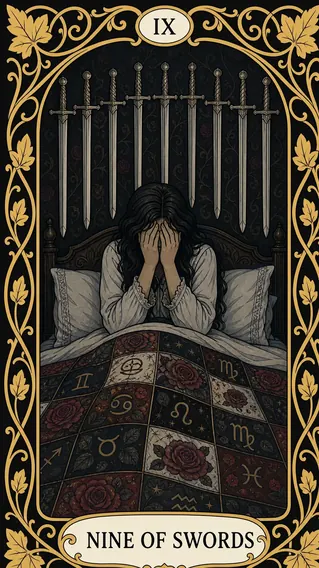
Ang parehong card ay tungkol sa panloob na estado ng tao, ngunit magkasalungat. Ang Swords ay elementong hangin, pagkabalisa at mga iniisip na hindi makatulog: ang Nine of Swords ay tungkol sa guilt at pagkabalisa na lumalaki sa dilim. Ang Cups ay elementong tubig, damdamin: ang Nine of Cups ay tungkol sa kabaligtarang estado, pagkakontento at kalmado. Kung sa isang spread ay magkatabi ang dalawang Nine, tingnan kung alin ang mas malapit sa kahulugan ng ibang cards — ito ba ay tunay na kasiyahan o pagkabalisa na nakatago sa likod ng maayos na hitsura.
Totoo bang natutupad ng Nine of Cups ang mga kahilingan?
Hindi, ang card ay hindi nangangako ng katuparan ng anumang tiyak — ang bansag na "wish card" ay hindi naglalarawan ng mekanismo, kundi ng resulta: isang estado kung saan ang ninanais ay nakuha na, o ang tao ay tunay na kontento sa kung ano ang mayroon. Ito ay pahiwatig tungkol sa mood at direksyon, hindi garantiya ng kaganapan.
Nine of Cups — oo o hindi?
Sa mga "oo/hindi" na spread, isa ito sa pinakamagandang card: madalas ay oo, lalo na kung ang tanong ay tungkol sa personal na kasiyahan sa resulta. Ngunit ang card ay hindi nagbibigay ng deadline at hindi nag-aalis ng pagsisikap — mas tama na basahin ito bilang "tama ang direksyon", hindi bilang awtomatikong katuparan ng ninanais.
Ano ang ibig sabihin ng baligtad na Nine of Cups?
Parehong ginhawa, ngunit pakitang-tao o labis: pagkakontento para lang ipakita, nabawasang kagalakan mula sa bagong nakuha, o pakiramdam ng kakulangan ng isang mahalagang bagay sa kabila ng panlabas na kagalingan. Minsan ito ay pahinga lang para tapat na tanungin ang sarili kung ito ba talaga ang kagalakang hinahanap.