What The Sun means in Tarot
The upright Sun is a situation where everything is finally visible and everything is genuinely good, without any tricks. Recognition, recovery, clarity in relationships, a successful endeavor, the return of simple joy.
An important nuance often lost in retellings: The Sun is not about luck, but about obviousness. It is a card of a result that is visible to everyone and requires no explanation. Therefore, in spreads, it often appears not when something is about to happen, but when it has already happened and only needs to be acknowledged.
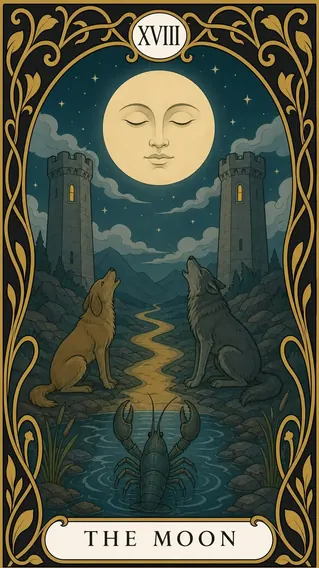
The second side of the card is simplicity. The Sun has no hidden depths: what is happening means exactly what it seems. After The Moon, where everything was double-sided, this feels like a relief, and the order of the arcana here is not accidental.
Reversed Sun: meaning
The reversed Sun is a rare case where the reversal does not change the sign of the card, but rather mutes it:
- Delayed joy. Something good will happen, but later or more quietly than expected. The most common scenario.
- Success that brings no joy. Everything worked out, but there is no pleasure: the person is too tired from the journey or achieved something they didn't actually want.
- Ostentatious shine. Less common: it is more important to look successful than to be successful; vanity instead of joy.
Neighboring cards help clarify: next to the Ten of Wands — fatigue from achievements, next to the Seven of Cups — an illusion of success, next to any Cups — simply delayed joy.
The Sun in a "yes or no" spread
In "yes/no" spreads, The Sun is the purest yes in the deck. Without conditions, without reservations, and usually faster than expected.
It answers especially confidently to questions about results, recognition, recovery, and whether one should start something. To questions about hidden things ("what was kept from me"), it answers that there is nothing hidden.
The reversed Sun in a yes/no spread is still yes, but with a delay or on a smaller scale than desired.
The Sun in relationships and feelings
In a relationship spread, the upright Sun represents openness and ease. Relationships that do not need to be hidden or explained: everything is clear to both, and both are happy. It often appears during a period when a couple comes out of the shadows — introducing each other to loved ones, moving in together, announcing plans.
In terms of feelings, it is joy and warmth without anxiety. Not the passion of The Devil or the quiet tenderness of The Star, but a simple and open "I feel good with you."
A frequent specific scenario is clarification after long uncertainty: what was tormenting you under The Moon is resolved mundanely and in the querent's favor.
The reversed Sun in relationships is warmth that exists but is muted by fatigue or daily routine; less often — a relationship for show, where the image is more important than the substance.
The Sun in work and money
In career spreads, The Sun is success that has been noticed. A project succeeded, work was appreciated, an offer was received, a promotion took place. This is a rare case where the card directly answers "yes, it will work out."
Regarding money, it speaks of stable prosperity and income that does not need to be explained or justified. Large sums are usually shown by Pentacles; The Sun is about the feeling that there is enough money and no anxiety about it.
What The Sun advises in a work spread: act openly. Its scenarios unfold well when a person speaks directly — makes themselves known, shows results, asks for what they deserve. Secrecy here hinders more than competition.
The Sun as a person: man and woman
In the "what kind of person" position, The Sun describes someone around whom it is bright and simple. They do not play games, do not act shady, and do not plot complex schemes; with them, it is clear what to expect.
The Sun-man in a spread is open, warm, noticeable; often younger or younger in their mannerisms. The Sun-woman is someone around whom things become easy, and this is not an effort on her part, but a trait.
The weak side of such people is simplicity, which is mistaken for superficiality. The Sun is not about depth, it is about clarity, and in difficult situations, it lacks endurance.
Ang Araw sa posisyon ng mga kaisipan
Sa posisyon ng mga kaisipan, ang Araw ay nangangahulugan ng malinaw na pag-iisip. Nauunawaan ng tao ang kanyang gusto, nakikita ang sitwasyon nang walang pagbaluktot, at hindi pinahihirapan ang sarili sa mga pagpipilian. Ang mga kaisipan ay magaan, walang pagkabalisa.
Kasama rin dito ang optimismo — na may basehan, hindi lang pananggalang: nakabatay ito sa kung ano ang nakikita, hindi sa kagustuhan na maging maayos ang lahat. Ang mga katabing baraha ang naglilinaw: sa tabi ng Ace of Wands, ito ay tiwala sa plano; sa tabi ng Seven of Cups, ito ay panganib na mapagkamalan ang nais bilang katotohanan.
Ano ang gagawin kung lumabas ang Araw
Ang payo ng Araw ay tila napakasimple: lumabas sa liwanag. Ipakita, sabihin, ipahayag, aminin — ang baraha ay gumagana sa pamamagitan ng pagiging bukas, at ang mga tema nito ay nawawalan ng bisa kung patuloy kang magtatago.
Ano ang dapat gawin:
- Huwag nang maghintay ng mas tamang pagkakataon. Sa Araw, dumating na ito.
- Angkinin ang resulta. Sabihin nang malakas ang tagumpay — kung hindi, mapapansin ito ng lahat maliban sa mismong tao.
- Magalak ngayon. Ang ipinagpalibang kagalakan ay direktang landas patungo sa baligtad na posisyon ng baraha.
- Huwag gawing kumplikado. Kung mukhang maayos ang lahat, sa ilalim ng Araw, karaniwan ay maayos nga ito.
At isa pa: ang Araw ay isa sa iilang baraha na walang dapat ipagbabala. Ang pangunahing panganib nito ay ang hindi mapansin ng tao ang magandang yugto habang ito ay nangyayari.
Ano ang nakaguhit sa baraha
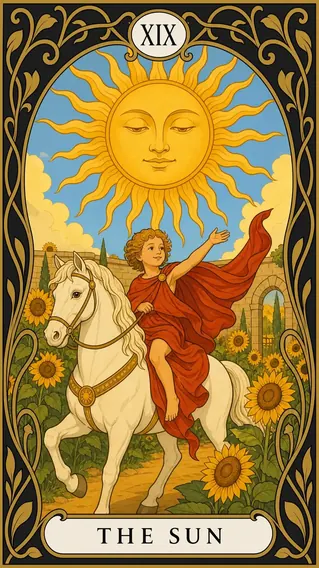
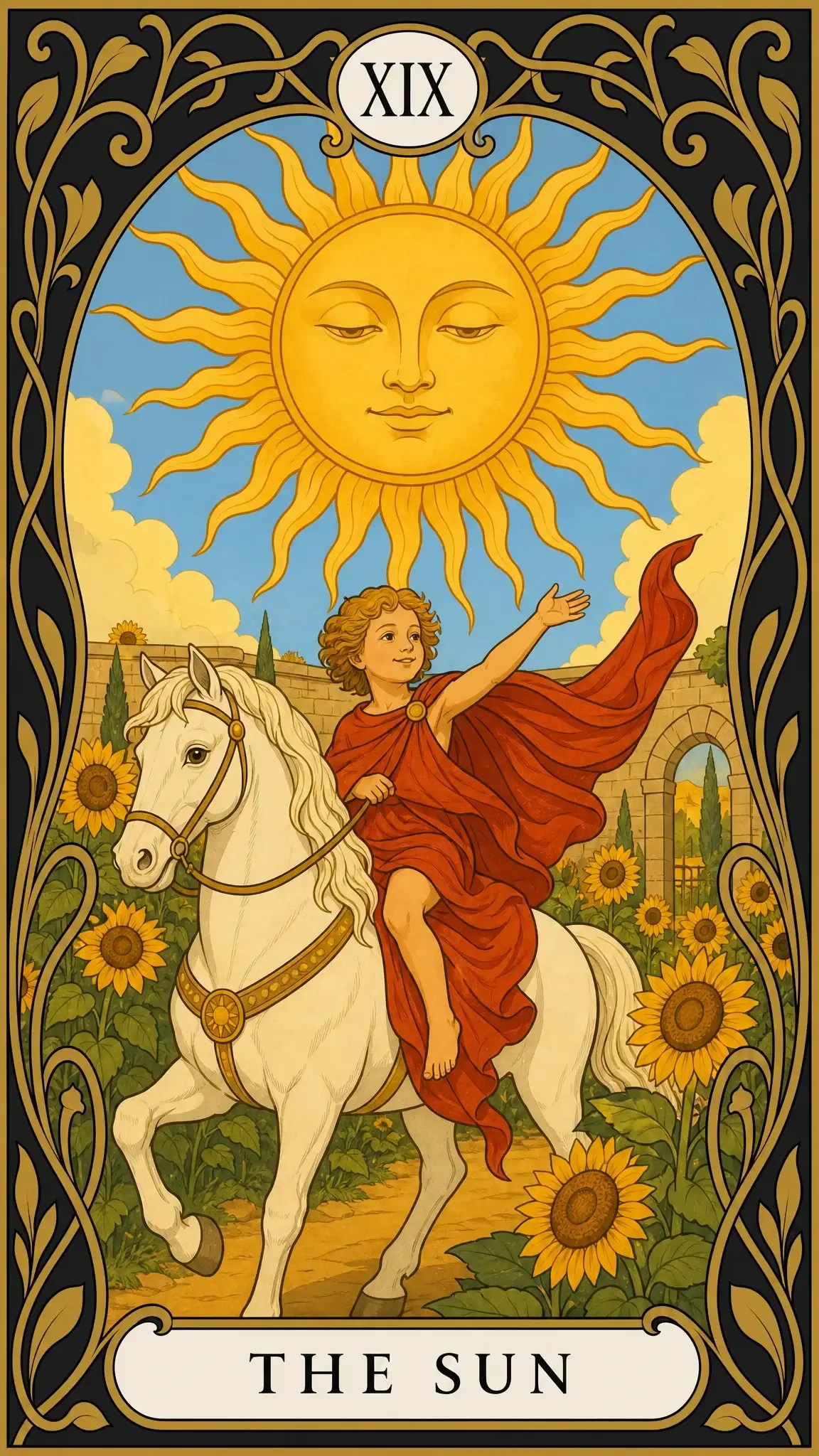
Sa ating Araw, may malaking araw na may mukha sa malinaw na langit, sa ilalim nito ay isang bata sa puting kabayo na may pulang bandila, at sa likod nila ay isang pader at mga sunflower.
Ganito binabasa ang eksena:
- Araw na may mukha — liwanag na nakatingin nang diretso: walang nakatago at walang baluktot, hindi tulad ng Buwan na nakapikit ang mga mata.
- Bata — estado na walang depensa o kalkulasyon. Ang kagalakan ng barahang ito ay hindi pinaghirapan o kailangang karapat-dapat, ito ay naroon lang.
- Puting kabayo na walang upuan at renda — paggalaw nang walang pilit at walang pagsisikap na humawak.
- Pader at mga sunflower sa likod nito — ang mga bagay na tumubo habang tinatahak ang mahihirap na arcana. Ang hardin ay naiwan na sa likod, hindi na ito babalikan.
Sa itaas ay ang Roman numeral na XIX, sa ibaba ay ang pangalang THE SUN: ang ating deck ay iginuhit sa tradisyon ng Rider-Waite, kung saan ang Araw ay sumusunod sa Buwan at bago ang Paghuhukom.
Ang Araw bilang baraha ng araw
Ang Araw bilang baraha ng araw ay isang magandang araw na walang masamang sorpresa. Maayos ang mga gawain, maayos ang mga usapan, maganda ang pakiramdam, at kusa ang saya.
Kapaki-pakinabang na mindset: gawin ang mga bagay na ipinagpaliban dahil sa kawalan ng tiwala — humiling, mag-alok, magpakita. At magpalipas ng oras sa labas kasama ang mga taong gusto mo: ang barahang ito ay walang produktibong gawain, ang tema nito ay ang mismong magandang araw.
Mga madalas itanong tungkol sa barahang Araw
Ang Araw sa Tarot — ito ba ang pinakamagandang baraha?
Isa sa pinakapaborable at marahil ang pinakamalinaw: wala itong nakatagong kahulugan o mabigat na interpretasyon. Hindi tulad ng Bituin, hindi ito nagsasalita tungkol sa estado, kundi tungkol sa nakikitang resulta — tagumpay, pagkilala, at kalinawan.
Ano ang ibig sabihin ng baligtad na Araw?
Karaniwan ay hindi kamalasan, kundi paghina: kagalakan na may pagkaantala, tagumpay sa mas maliit na antas, o tagumpay na hindi nagbibigay ng saya. Bihira — pakitang-tao, kung saan mas mahalaga ang hitsura kaysa sa katotohanan.
Ang Araw ba ay nangangahulugan ng pagbubuntis o bata?
May ganitong interpretasyon sa tradisyon — dahil sa pigura ng bata sa baraha — ngunit hindi ito direktang sinasabi ng Araw mismo. Ang konklusyon ay ginagawa base sa kabuuan ng mga baraha at sa tanong ng reading, hindi sa isang arcana lang.
Ang Araw ba ay «oo» o «hindi»?
Ang pinakatiyak na «oo» sa deck, walang kondisyon at karaniwan ay mas mabilis kaysa sa inaasahan. Ang baligtad na Araw ay sumasagot din ng «oo», ngunit may pagkaantala o sa mas maliit na sukat.
Pang-ilan itong arcana?
Ika-labinsiyam na major arcana, may Roman numeral na XIX sa baraha. Sa Rider-Waite deck, kung saan iginuhit ang atin, ang Araw ay sumusunod sa Buwan (XVIII) at bago ang Paghuhukom (XX).