What the Ten of Swords means in Tarot
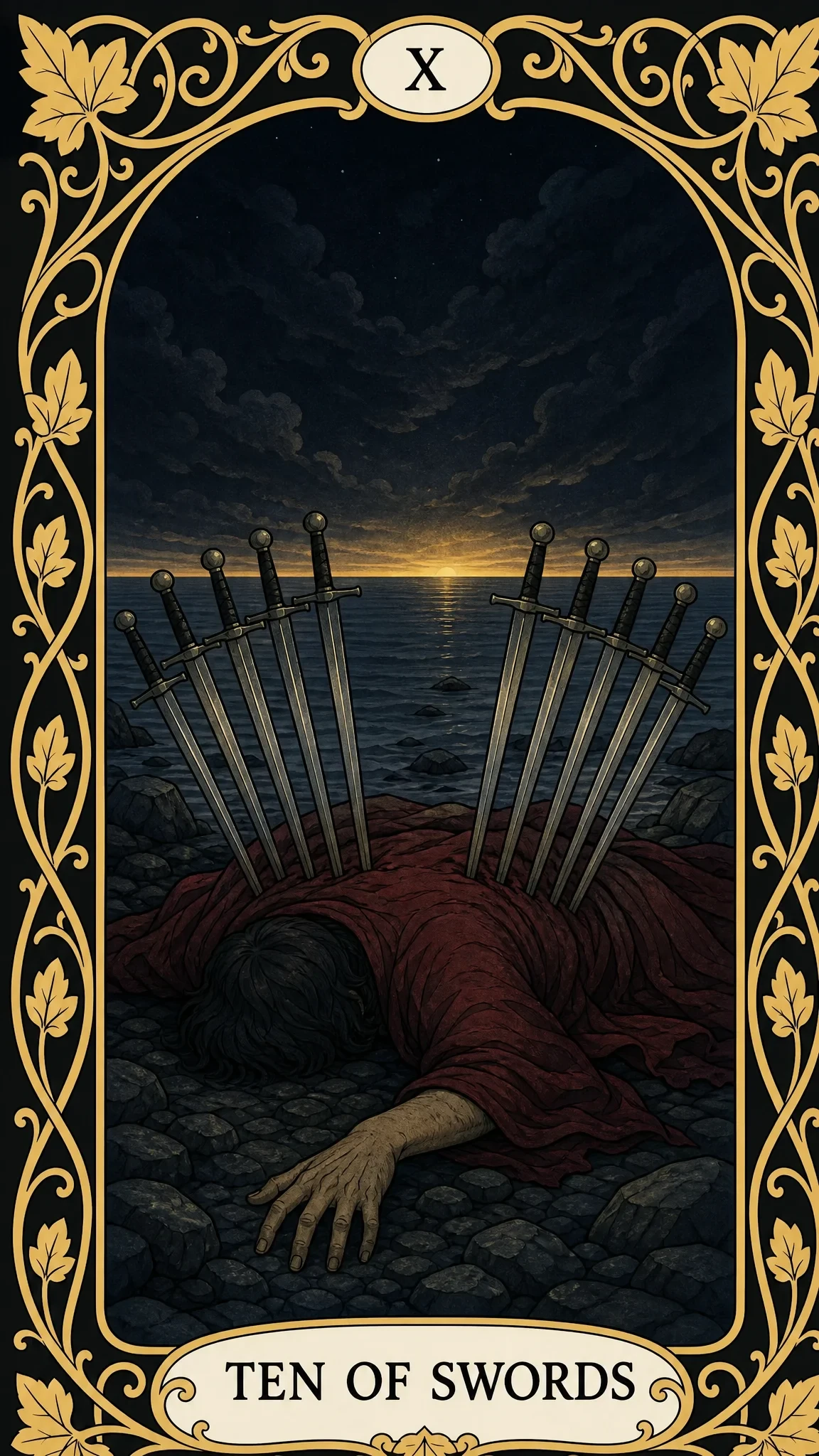
The Ten is the highest numbered card of the suit of swords, and its image is the darkest in the entire deck: a figure on the ground, ten blades in the back. But the frightening picture describes not a future event, but the state in which the situation is already at the time of the reading — specifically at the very end, not in the heat of the moment.
An important nuance often lost in retellings: the minor arcana describes an episode, not destiny. The Ten of Swords is not a diagnosis or a sentence, but a card of a specific prolonged conflict, an exhausting period, or a conversation that has finally reached its limit. It is not about life being over — it is about the end of exactly what has been draining your energy for months.
Swords in Tarot are the element of air: mind, conflict, words, not physical action. The Ten of Swords is therefore not about bodily trauma, but about the limit of patience: the point where there is no sense in holding on because there is nothing left to hold onto. The card also has a second half, which is often left unsaid: dawn is already breaking on the horizon of the drawing. The Ten is the bottom, and the bottom exists precisely to push off from.
Reversed Ten of Swords: meaning
The reversed Ten of Swords is the same limit, but without the final full stop. Usually, the spread refers to one of three options, and the question helps to choose.
- Rock bottom has been reached, but it is hard to admit. The situation has actually ended, but the person continues to hold onto it out of inertia.
- Prolonging the inevitable. The conflict or period does not end at once, but drags on — it is just as exhausting, but slower.
- First strength after a decline. The hardest part is behind, and a slow recovery begins, not yet visible from the outside.
The reversed position almost always adds time to the card: what looks like a sharp finale in the upright position is stretched out in the reversed one — either because the person is not ready to let go, or because the recovery is objectively gradual rather than a sudden leap.
Ten of Swords in a "yes or no" spread
In "yes/no" spreads, the Ten of Swords is usually read as no — but the meaning of this "no" is more important than the answer itself. The card refuses not because things will only get worse, but because what is being asked about has already come to an end: there will be no continuation in its current form.
If the question is "will this end" or "will the difficult period pass" — the answer, on the contrary, is affirmative, and often closer than it seems: the card explicitly speaks of completion.
The reversed Ten of Swords in this spread is read as "not quite yet": the end is near but has not arrived — the situation drags on because either circumstances won't let go, or the person themselves is not ready to put an end to it.
Ten of Swords in relationships and feelings
In a relationship spread, the upright Ten of Swords describes a limit: a conflict that has repeated many times and has finally exhausted itself, or the final realization that the relationship will not continue in this form. This is not a card of a single argument — it is about accumulated fatigue that has reached the point where there is nothing left to say.
In the position of feelings, the Ten of Swords is not pain as a process, but pain that has already happened and reached the bottom. Many describe this state as relief mixed with bitterness: there is no need to hold on anymore, and this makes one feel both lighter and empty at the same time.
If the spread concerns a truly difficult breakup or the loss of a close relationship — the card shows the end of the process, but does not provide a specific recipe; when the pain is acute, talking to a loved one or a specialist helps better than a spread.
The reversed Ten of Swords in relationships is an unspoken breakup: everything is already clear, but the final point has not been set, and the couple continues by inertia what has effectively ended.
Ten of Swords in work and money
In career spreads, the Ten of Swords is the end of a project, position, or work situation that was exhausting long before its formal completion: dismissal, closing of a department, leaving a toxic team. Often the card does not appear as a surprise, but as a confirmation of what the person has felt for a long time.
In money, the upright position speaks of the completion of an unsuccessful financial cycle: a debt is finally paid off, an unprofitable contract has ended, a loss-making business has been stopped. This is not a card of a "here and now" catastrophe — it is about the result of a decline that has already occurred, not about a new loss ahead.
The reversed Ten of Swords in work is a situation that has objectively exhausted itself, but the person is delaying the decision: not quitting a place that is draining them, not closing a business that has long ceased to make sense. The advice is the same as in the upright position, only with an adjustment for the timeline: it is better to make the decision before the situation makes it for you.
Ten of Swords as a person: man and woman
When the Ten of Swords appears in the "what kind of person" position, it describes not a character, but the state the person is currently in: someone who has reached their limit in some part of life — work, personal, emotional — and is holding on with their last strength or has already given up and is strangely calm because of it.
A Ten of Swords man is someone who has endured for a long time and finally stopped hiding that he is exhausted; often at this point, he becomes more honest than he was in all the previous months. A Ten of Swords woman is someone who has gone through an exhausting period and speaks about it directly, without embellishment, because she no longer has the energy to pretend.
This is not a description of a weak person — rather, someone who has finally stopped pretending that everything is fine.
ဆယ်ခုမြောက် ဓားများ (Ten of Swords) အတွေးအခေါ်အနေအထားတွင်
အတွေးအခေါ်အနေအထားတွင် ဆယ်ခုမြောက် ဓားများ (Ten of Swords) သည် "နောက်ထပ်မသွားနိုင်တော့သည့်" အခြေအနေကို ပြသနေသည်။ အတွေးများသည် ပင်ပန်းနွမ်းနယ်စေသော အကြောင်းအရာတစ်ခုတည်းကိုသာ လည်ပတ်နေပြီး၊ ဖြေရှင်းချက်မရှိတော့သလို ခံစားရကာ အရင်းအမြစ်များ လုံးဝကုန်ခမ်းသွားသည့် အခြေအနေမျိုးဖြစ်သည်။ ၎င်းသည် ခက်ခဲသော်လည်း အဆုံးမရှိသည့် အခြေအနေမဟုတ်ပါ - ၎င်းသည် စရိုက်လက္ခဏာတစ်ခုမဟုတ်ဘဲ အမြင့်ဆုံးအခြေအနေကို ဖော်ပြခြင်းဖြစ်သည်။
အကယ်၍ ဤကတ်နှင့်အတူ အခြားဓားကတ်များ ပေါ်လာပါက - စိတ်သည် ပဋိပက္ခကို ဆက်လက်လည်ပတ်နေဆဲဖြစ်သည်။ ကြယ် (The Star) သို့မဟုတ် နေ (The Sun) ကတ်များနှင့်အတူ ပေါ်လာပါက - ပင်ပန်းနွမ်းနယ်မှုများကြားမှ သက်သာရာရမည့်လမ်းစကို မြင်နိုင်စွမ်းရှိလာမည်ဖြစ်သည်။ အကယ်၍ အတွေးအခေါ်များသည် စစ်မှန်သော ပင်ပန်းနွမ်းနယ်မှု၊ စိုးရိမ်ပူပန်မှု သို့မဟုတ် ကြာရှည်စွာ စိတ်ဓာတ်ကျနေမှုနှင့် ဆက်စပ်နေပါက - ၎င်းသည် ကတ်ဖဲချခြင်းထက် ကျွမ်းကျင်သူနှင့် တိုင်ပင်သင့်သည့် အချက်ဖြစ်သည်။
ဆယ်ခုမြောက် ဓားများ (Ten of Swords) ကျလာလျှင် ဘာလုပ်သင့်သလဲ
ဤကဲ့သို့ မှောင်မိုက်သောပုံရိပ်အတွက် ကတ်၏အကြံဉာဏ်မှာ ထင်ရှားသည် - အဆုံးသတ်ကို လက်ခံပါ၊ ၎င်းကို ရွှေ့ဆိုင်းရန် မကြိုးစားပါနှင့်။ ဤကဲ့သို့သော အခြေအနေတွင် စွမ်းအင်အများစုသည် အခက်အခဲကိုယ်တိုင်အတွက်မဟုတ်ဘဲ၊ ပြီးဆုံးသွားသည့်အရာကို ဆက်လက်ဆွဲဆန့်ရန် ကြိုးစားခြင်းအတွက် ကုန်ဆုံးသွားတတ်သည်။
အမှန်တကယ် လုပ်ဆောင်သင့်သည်များမှာ-
၁။ အရာရာကို အမည်တပ်ပါ။ မေးခွန်းကို ဖွင့်ထားမည့်အစား ဆက်ဆံရေး၊ အလုပ် သို့မဟုတ် ဘဝ၏ အပိုင်းအခြားတစ်ခုခုတွင် ဘာက အဆုံးသတ်သွားသည်ကို နားလည်ပါ။
၂။ လက်ရှိအချိန်တွင် အပြစ်ရှာမနေပါနှင့်။ ဆယ်ခုမြောက် ဓားများ (Ten of Swords) သည် အဆုံးသတ်ကိုပြသောကတ်ဖြစ်ပြီး အငြင်းပွားရန်မဟုတ်ပါ။ အကြောင်းရင်းများကို ပင်ပန်းနွမ်းနယ်မှုများ ပြေပျောက်သွားသည့်အခါမှသာ သုံးသပ်သင့်သည်။
၃။ ပြန်လည်နလံထူရန် အချိန်ပေးပါ။ ချက်ချင်း "ထပြီး ဆက်လျှောက်ရန်" ကိုယ့်ကိုယ်ကိုယ် မဖိအားပေးပါနှင့် - အမြင့်ဆုံးအခြေအနေသို့ ရောက်ပြီးနောက်တွင် ထိုသို့လုပ်ဆောင်၍ မရပါ။
၄။ မိုးကုတ်စက်ဝိုင်းမှ အရုဏ်ဦးကို သတိပြုပါ။ ကတ်၏ပုံရိပ်တွင်ပင် နောက်ထပ် ပိုမိုလင်းလက်လာမည်ဟု ပါဝင်ပြီးဖြစ်သော်လည်း ၎င်းသည် ချက်ချင်းဖြစ်လာမည်မဟုတ်ပါ။
ထို့အပြင် - အကယ်၍ ကတ်သည် ရုပ်ပိုင်းဆိုင်ရာ သို့မဟုတ် စိတ်ပိုင်းဆိုင်ရာအရ အမှန်တကယ် ခက်ခဲနေချိန်တွင် ကျလာပါက - ကတ်ဖဲချခြင်းသည် ဆရာဝန် သို့မဟုတ် စိတ်ပညာရှင်နှင့် တိုင်ပင်ခြင်းကို အစားမထိုးနိုင်ပါ။ ကတ်များသည် အခြေအနေကို ကောင်းစွာဖော်ပြနိုင်သော်လည်း ကုသပေးနိုင်ခြင်းမရှိပါ။
ကတ်ပေါ်တွင် ဘာတွေပုံဖော်ထားသလဲ
ကျွန်ုပ်တို့၏ကတ်တွင် - မုန်တိုင်းထန်သော ညကောင်းကင်အောက်ရှိ မှောင်မိုက်သော ကျောက်ဆောင်ကမ်းပါးကို ပုံဖော်ထားသည်။ မိုးကုတ်စက်ဝိုင်းအနီး၊ ကျောက်တုံးကြီးများရှိသော တည်ငြိမ်သည့်ပင်လယ်ပြင်အထက်တွင် အရုဏ်ဦးတက်လာနေပြီး ရေပြင်ပေါ်တွင် နွေးထွေးသော အလင်းတန်းတစ်ခု ရှိနေသည်။ ရှေ့တန်းတွင် အနီရောင်အုပ်ထားသော ပုံရိပ်တစ်ခုသည် မှောက်လျက်လဲလျောင်းနေပြီး ဓားငါးချောင်းသည် ဘယ်ဘက်တွင်၊ နောက်ထပ်ငါးချောင်းသည် ညာဘက်တွင် စိုက်ဝင်နေသည်။
ဤမြင်ကွင်းကို အောက်ပါအတိုင်း ဖတ်ရှုနိုင်သည်-
- ဓားနှစ်တန်း (ငါးချောင်းစီ) - ၎င်းသည် အဆုံးသတ်ကိုပြသော အရေအတွက်သာဖြစ်သည်။
- အနီရောင်အဝတ်စ - အဆုံးသတ်အောက်တွင် ဖုံးကွယ်ထားသောအရာများ - ဤအမှတ်သို့ ရောက်သောအခါ အရေးမပါတော့သည့် ပဋိပက္ခ၏ အသေးစိတ်အချက်များဖြစ်သည်။
- ဖွင့်ထားသော လက်ဖဝါး - တိုက်ပွဲမဟုတ်ဘဲ လက်မြှောက်ခြင်း၏ အမူအရာဖြစ်သည်။
- မိုးကုတ်စက်ဝိုင်းမှ အရုဏ်ဦး - ဤကတ်ကို သေချာကြည့်ရှုရမည့် တစ်ခုတည်းသောအချက် - တည်ငြိမ်သောပင်လယ်နှင့် နွေးထွေးသောအလင်းရောင်သည် အဆုံးသတ်ပြီးနောက်တွင် ပုံမှန်နေ့ရက်များ ပြန်လည်စတင်မည်ကို ပြသနေသည်။
ကတ်၏အပေါ်တွင် ရောမဂဏန်း X ပါရှိပြီး၊ အောက်တွင် TEN OF SWORDS ဟု ရေးသားထားသည်။
နေ့စဉ်ကတ်အဖြစ် ဆယ်ခုမြောက် ဓားများ (Ten of Swords)
နေ့စဉ်ကတ်အဖြစ် ဆယ်ခုမြောက် ဓားများ (Ten of Swords) သည် ဘေးအန္တရာယ်အသစ်ကို ရှားရှားပါးပါးသာ ပြသလေ့ရှိသည်။ ၎င်းသည် ကြာရှည်စွာ ပင်ပန်းနွမ်းနယ်စေသော အရာများ ပြေပျောက်သွားသည့်နေ့၊ မနှစ်မြို့ဖွယ်ကိစ္စများ ပြီးဆုံးသွားသည့်နေ့ သို့မဟုတ် ခက်ခဲသောကာလတစ်ခုပြီးနောက် သက်သာရာရသည့်နေ့ကို ဖော်ပြလေ့ရှိသည်။
ထိုနေ့အတွက် အသုံးဝင်သော အကြံပြုချက်မှာ - ကိုယ့်ကိုယ်ကိုယ် ချက်ချင်း တက်ကြွနေရန် မတောင်းဆိုပါနှင့်၊ အရေးကြီးသော အလုပ်များကို မစတင်ပါနှင့်။ ၎င်းသည် အဆုံးသတ်သည့်နေ့သာ ဖြစ်သည်။ အကယ်၍ ထိုနေ့သည် အမှန်တကယ် ခက်ခဲနေပါက၊ ဤကတ်သည် အဆုံးသတ်ကို ပြသပြီး နောက်တွင် ပိုမိုလွယ်ကူလာမည်ကို သတိရပါ။
ဆယ်ခုမြောက် ဓားများ (Ten of Swords) ကတ်နှင့်ပတ်သက်သော မေးလေ့ရှိသည့်မေးခွန်းများ
ဒါက Major Arcana လား၊ Minor Arcana လား။
Minor Arcana ဖြစ်ပြီး ဓား (Swords) အမျိုးအစား၊ လေ (Air) ဒြပ်စင်ဖြစ်သည်။ Tarot ကတ်ပြားတွင် Minor Arcana ၅၆ ခုရှိပြီး တစ်ခုစီတွင် ၁၄ ခုစီပါဝင်သည်။ ဆယ်ခုမြောက် ဓားများ (Ten of Swords) သည် ဓားအမျိုးအစား၏ နောက်ဆုံးကတ်ဖြစ်သည်။
ဆယ်ခုမြောက် ဓားများ (Ten of Swords) က ဘေးအန္တရာယ်ကိုပဲ အမြဲဆိုလိုတာလား။
မဟုတ်ပါ။ ကြောက်စရာကောင်းသော ပုံရိပ်သည် အပြစ်ပေးခြင်းမဟုတ်ဘဲ အဆုံးသတ်ကိုသာ ဖော်ပြခြင်းဖြစ်သည်။ ဖြစ်ပျက်နေသောအရာများသည် အဆုံးသတ်ဆီသို့ ဦးတည်နေပြီး၊ ဤကတ်သည် ဆက်လက်တွယ်ကပ်ထားစရာ မရှိတော့သည့်အချက်ကို ပြသခြင်းဖြစ်သည်။ အကယ်၍ မေးခွန်းသည် ကျန်းမာရေး သို့မဟုတ် ခက်ခဲသောဘဝအခြေအနေနှင့် ပတ်သက်ပါက၊ ကတ်ဖဲချခြင်းသည် ဆရာဝန် သို့မဟုတ် ကျွမ်းကျင်သူနှင့် တိုင်ပင်ခြင်းကို အစားမထိုးနိုင်ပါ။
ဆယ်ခုမြောက် ဓားများ (Ten of Swords) ပြောင်းပြန်ကျခြင်းက ဘာကိုဆိုလိုသလဲ။
တူညီသောအဆုံးသတ်ပင်ဖြစ်သော်လည်း အချိန်ဆွဲနေခြင်းဖြစ်သည်။ အခြေအနေသည် အမှန်တကယ် ပြီးဆုံးသွားသော်လည်း လူက လက်မခံနိုင်သေးခြင်း သို့မဟုတ် အဆုံးသတ်သည် တစ်ပြိုင်နက်မဟုတ်ဘဲ တဖြည်းဖြည်းချင်း ဖြစ်ပေါ်လာခြင်းဖြစ်သည်။ တစ်ခါတစ်ရံတွင် ခက်ခဲသောကာလပြီးနောက် ပြန်လည်နလံထူစပြုနေခြင်းကို ဆိုလိုသည်။
ဆယ်ခုမြောက် ဓားများ (Ten of Swords) နှင့် ဆယ်ခုမြောက် ပန်တာကယ် (Ten of Pentacles) ဘာကွာသလဲ။
နှစ်ခုစလုံးသည် ဆယ်ခုမြောက်ကတ်များဖြစ်ပြီး ၎င်းတို့၏အမျိုးအစားကို အဆုံးသတ်ကြသော်လည်း အဓိပ္ပာယ်ကွာခြားသည်။ ဓား (Swords) သည် လေဒြပ်စင်ဖြစ်ပြီး ပဋိပက္ခနှင့် အတွေးအခေါ်များကို ကိုယ်စားပြုသည်။ ပန်တာကယ် (Pentacles) သည် မြေဒြပ်စင်ဖြစ်ပြီး ရုပ်ဝတ္ထုပစ္စည်းများကို ကိုယ်စားပြုသည်။ အခက်အခဲများမှ လွတ်မြောက်ခြင်းအကြောင်းဆိုလျှင် ဓားကတ်ကို၊ တည်ငြိမ်မှုနှင့် ကြွယ်ဝမှုအကြောင်းဆိုလျှင် ပန်တာကယ်ကတ်ကို ရည်ညွှန်းသည်။
ဆယ်ခုမြောက် ဓားများ (Ten of Swords) က ဟုတ်လား၊ မဟုတ်လား။
အများအားဖြင့် 'မဟုတ်' ဟု အဓိပ္ပာယ်ရသော်လည်း အဓိပ္ပာယ်မှာ ကွဲပြားသည်။ ဤကတ်သည် ဖြစ်ပျက်နေသောအရာများ ပြီးဆုံးသွားပြီဖြစ်ကြောင်း ဖြေကြားခြင်းဖြစ်သည်။ အကယ်၍ ခက်ခဲသောကာလ ပြီးဆုံးမည်လားဟု မေးပါက၊ အဖြေမှာ 'ဟုတ်' ဟု ဖြစ်သည်။