Tarot တွင် ဓားကိုးချောင်း ဆိုသည်မှာ အဘယ်နည်း
ဓားများ (Swords) သည် စိတ်၏အမျိုးအစားဖြစ်သည် - အတွေးများ၊ ငြင်းခုံမှုများ၊ ဆုံးဖြတ်ချက်များနှင့် ပြတ်သားသောစကားလုံးများ။ ဓားကိုးချောင်းသည် ဤအမျိုးအစားတွင် အခံစားရဆုံး ကတ်ဖြစ်သော်လည်း အပြင်ပန်းတွင် ဘာမှမဖြစ်ပျက်ပါ - လူတစ်ယောက်သည် ညဉ့်နက်ချိန်တွင် အိပ်ရာပေါ်၌ မျက်နှာကို လက်ဖြင့်အုပ်ကာ ထိုင်နေရုံသာဖြစ်သည်။
ချက်ချင်းပြောပြရမည့် အရေးကြီးသောအချက်မှာ - အသေးစား Arcana သည် အဖြစ်အပျက်တစ်ခုကိုသာ ဖော်ပြပြီး ကံကြမ္မာကို မဟုတ်ပါ။ ဓားကိုးချောင်းသည် ရောဂါရှာဖွေခြင်း သို့မဟုတ် နောင်နှစ်ပေါင်းများစွာအတွက် စီရင်ချက်မဟုတ်ဘဲ၊ စိုးရိမ်ပူပန်မှုက အရာရာကို လွှမ်းမိုးထားသည့် အိပ်မပျော်သောည၊ ခက်ခဲသောသီတင်းပတ် သို့မဟုတ် ကာလတစ်ခုသာဖြစ်သည်။ ဓားဆယ်ချောင်းသည် ပြန်လည်ကောင်းမွန်လာမည့် အဆုံးသတ်အကြောင်းဖြစ်ပြီး ဓားကိုးချောင်းသည် ထိုအဆုံးသတ်မတိုင်မီ စိုးရိမ်ပူပန်မှု၏ အထွတ်အထိပ်တွင် ရှိနေခြင်းဖြစ်သည်။
အသေးစား Arcana များတွင် ကိုးဂဏန်းသည် စက်ဝန်းတစ်ခုပြီးဆုံးရန် နီးကပ်နေခြင်းကို ဆိုလိုသည်။ ဓားများတွင် ဤနီးကပ်မှုသည် စိတ်၏ အမြင့်ဆုံးတင်းမာမှုအဖြစ် ခံစားရသည် - အတွေးများသည် စိုးရိမ်စရာအသစ်များကို ရှာဖွေရင်း လည်ပတ်နေပြီး အဆုံးမရှိတော့သလို ထင်ရသည်။ တည့်မတ်အနေအထားသည် စိုးရိမ်ပူပန်မှုသည် စစ်မှန်ပြီး နာကျင်ရသော်လည်း ခေါင်းထဲရှိ အရွယ်အစားသည် ပြဿနာ၏ အရွယ်အစားထက် ပိုကြီးနေတတ်သည်။ ဤကတ်သည် ဘေးအန္တရာယ်ဖြစ်လာမည်ဟု မဆိုလိုဘဲ စိတ်၏ လက်ရှိအခြေအနေကို ပြသနေခြင်းဖြစ်သောကြောင့် ဤကတ်ပါသော ဟောကိန်းကို မကောင်းသောဖြစ်ရပ်များအတွက် ကြိုတင်ဟောကိန်းအဖြစ် မယူဆသင့်ပါ။
ပြောင်းပြန် ဓားကိုးချောင်း - အဓိပ္ပာယ်
ပြောင်းပြန် ဓားကိုးချောင်းသည် တူညီသော စိုးရိမ်ပူပန်မှုဖြစ်သော်လည်း တစ်စုံတစ်ခု ပြောင်းလဲစပြုလာသည့်အချိန်ဖြစ်သည်။ များသောအားဖြင့် မေးခွန်းကိုယ်တိုင်က အရိပ်အမြွက်ပေးသည်။
- စိုးရိမ်ပူပန်မှု စတင်လျော့ပါးလာခြင်း။ အဆိုးဆုံးအမှတ်ကို ကျော်ဖြတ်ပြီးပြီ၊ အတွေးများသည် တစ်နေရာတည်းတွင် လည်ပတ်နေခြင်းမှ တဖြည်းဖြည်း ရပ်တန့်လာသည်။
- တိတ်ဆိတ်မှုကို ရပ်တန့်ရန် ဆုံးဖြတ်ခြင်း။ တစ်ယောက်တည်း ခံစားနေရသည့်အရာကို နောက်ဆုံးတွင် တစ်စုံတစ်ဦးအား (လုပ်ဖော်ကိုင်ဖက်၊ သူငယ်ချင်း၊ ကျွမ်းကျင်သူ) ပြောပြလိုက်ခြင်းသည် သက်သာရာရစေမည့် ပထမဆုံးခြေလှမ်းဖြစ်သည်။
- စိုးရိမ်ပူပန်မှု ပိုမိုနက်ရှိုင်းသွားခြင်း။ အပြင်ပန်းတွင် တည်ငြိမ်နေသော်လည်း အိပ်မပျော်ခြင်းနှင့် အတွေးများ လည်ပတ်နေခြင်းမှာ ဆက်လက်ရှိနေပြီး ပြောပြရန် ရပ်တန့်သွားခြင်းဖြစ်သည်။
ပိုမိုလေးနက်သော အဓိပ္ပာယ်မှာ - တစ်ခါတစ်ရံ ပြောင်းပြန်အနေအထားသည် စိုးရိမ်ပူပန်မှုမှာ ကြာရှည်စွာရှိနေပြီး ဘဝ၏ ပုံမှန်နောက်ခံအခြေအနေ ဖြစ်လာသည်ကို ဆိုလိုသည်။ အကယ်၍ ဟောကိန်းက ဤအခြေအနေကို ဖော်ပြနေပါက ကတ်များတွင် အဖြေရှာမည့်အစား ဆရာဝန် သို့မဟုတ် စိတ်ပညာရှင်နှင့် တိုင်ပင်သင့်သည်။
«ဟုတ် သို့မဟုတ် မဟုတ်» ဟောကိန်းတွင် ဓားကိုးချောင်း
«ဟုတ်/မဟုတ်» ဟောကိန်းများတွင် ဓားကိုးချောင်းကို များသောအားဖြင့် မဟုတ် ဟု ဖတ်ရှုသည်။ ကတ်သည် စိုးရိမ်ပူပန်မှုက အမှန်တရားကို ဖုံးကွယ်ထားသည့် အခြေအနေကို ပြသသည် - ည ၃ နာရီတွင် အတွေးများဖြင့် ဆုံးဖြတ်ချက်ချခြင်းသည် မနက်မိုးလင်းလျှင် ပြောင်းလဲသွားနိုင်ချေများသည်။
အကယ်၍ မေးခွန်းက «ဒီလိုအခြေအနေမျိုးမှာ ဆုံးဖြတ်ချက်ချသင့်သလား» ဟုဆိုလျှင် အဖြေမှာ ငြင်းပယ်ခြင်းဖြစ်ပြီး ၎င်းသည် အလုပ်၏ရလဒ်အကြောင်းမဟုတ်ဘဲ ဆုံးဖြတ်ချက်ချရန် အချိန်မဟုတ်သေးကြောင်း ဆိုလိုသည်။ စိုးရိမ်ပူပန်မှုသည် အန္တရာယ်များကို ချဲ့ကားပြောဆိုတတ်သောကြောင့် ဆုံးဖြတ်ချက်ချရန် မသင့်တော်ပါ။
ဤဟောကိန်းတွင် ပြောင်းပြန်အနေအထားသည် «ပြောရန် စောလွန်းသေးသည်» ဟု ဆိုလိုသည်။ အဖြေရှာရန် စိုးရိမ်ပူပန်မှု လျော့ပါးသွားသည်အထိ စောင့်ဆိုင်းသင့်သည်။
ဆက်ဆံရေးနှင့် ခံစားချက်များတွင် ဓားကိုးချောင်း
ဆက်ဆံရေးဟောကိန်းတွင် တည့်မတ် ဓားကိုးချောင်းသည် ပဋိပက္ခကို မဟုတ်ဘဲ ပဋိပက္ခပတ်လည်ရှိ စိုးရိမ်ပူပန်မှုကို ဖော်ပြသည် - လုပ်ဖော်ကိုင်ဖက်က ချစ်ခြင်းမေတ္တာ လျော့နည်းသွားမည်ကို ကြောက်ရွံ့ခြင်း၊ အထောက်အထားမရှိဘဲ သံသယဝင်ခြင်း၊ စကားလုံး သို့မဟုတ် အကြည့်တစ်ခု၏ အဓိပ္ပာယ်ကို အဆုံးမရှိ ပြန်လည်တွေးတောခြင်း။ ဤကတ်သည် အမှန်တကယ်ဖြစ်ပျက်ခဲ့သည်ကို မဟုတ်ဘဲ စိုးရိမ်ပူပန်မှုက အခြေအနေကို မည်မျှလွဲမှားစေသည်ကို ပြသသည်။
ခံစားချက်အနေအထားတွင် ဓားကိုးချောင်းသည် အပြစ်ရှိသလို ခံစားရခြင်းကို မကြာခဏ ညွှန်ပြသည် - တစ်စုံတစ်ခု ပြောမိခြင်း သို့မဟုတ် မပြောမိခြင်းအတွက် မိမိကိုယ်ကို အပြစ်တင်နေခြင်းဖြစ်သည်။ တစ်ခါတစ်ရံတွင် စစ်မှန်သော အကြောင်းရင်းရှိသော်လည်း တစ်ခါတစ်ရံတွင်မူ ကြောက်ရွံ့မှုသက်သက်သာ ဖြစ်သည်။
ဆက်ဆံရေးတွင် ပြောင်းပြန် ဓားကိုးချောင်းသည် စိုးရိမ်ပူပန်မှုများကို အသံထွက်ပြောဆိုလာခြင်းကို ဆိုလိုသည် - တစ်ယောက်တည်း ညတိုင်း စဉ်းစားနေမည့်အစား တိုက်ရိုက်မေးမြန်းရန် ဆုံးဖြတ်ခြင်းဖြစ်သည်။ ၎င်းသည် ခက်ခဲသော စကားပြောဆိုမှုဖြစ်သော်လည်း သက်သာရာရစေသည်။
အလုပ်နှင့် ငွေကြေးတွင် ဓားကိုးချောင်း
အလုပ်အကိုင်ဟောကိန်းတွင် ဓားကိုးချောင်းသည် မဖြစ်လာသေးသော ရလဒ်အတွက် စိုးရိမ်ပူပန်မှုဖြစ်သည် - စီမံကိန်းပျက်မည်ကို ကြောက်ရွံ့ခြင်း၊ အကဲဖြတ်မှုညံ့မည်ကို စိုးရိမ်ခြင်း၊ အလုပ်ပြုတ်မည်ကို ကြောက်ခြင်းတို့ဖြစ်သည်။ ဤကတ်သည် အကြီးအကဲ သို့မဟုတ် ဖောက်သည်၏ ဆုံးဖြတ်ချက်မတိုင်မီ ညများတွင် စိတ်ကူးယဉ်၍ အဆိုးဆုံးကို တွေးတောနေခြင်းကို ဖော်ပြသည်။
ငွေကြေးတွင် တည့်မတ်အနေအထားသည် အနာဂတ်အသုံးစရိတ် သို့မဟုတ် အကြွေးအတွက် စိုးရိမ်ပူပန်မှုဖြစ်ပြီး လက်တွေ့ပမာဏထက် ပိုမိုချဲ့ကားတွေးတောနေခြင်းဖြစ်သည်။ ဤကတ်သည် ပြဿနာ၏ အရွယ်အစားအကြောင်းမဟုတ်ဘဲ ငွေကြေးအပေါ် စိုးရိမ်ပူပန်မှုက အခြေအနေကို အေးဆေးစွာ အကဲဖြတ်ရန် တားဆီးနေခြင်းဖြစ်သည်။
အလုပ်နှင့် ငွေကြေးတွင် ပြောင်းပြန် ဓားကိုးချောင်းသည် နောက်ဆုံးတွင် အခြေအနေကို ရင်ဆိုင်ရန် ဆုံးဖြတ်ခြင်းဖြစ်သည် - စာရင်းများဖွင့်ခြင်း၊ အကြီးအကဲနှင့် စကားပြောခြင်း၊ မနှစ်မြို့ဖွယ် စကားပြောဆိုမှုကို မရှောင်လွှဲတော့ခြင်း။ စိုးရိမ်ပူပန်မှုသည် လက်တွေ့အခြေအနေထက် ပိုမိုကြီးမားနေတတ်သည်။
လူတစ်ယောက်အနေဖြင့် ဓားကိုးချောင်း - အမျိုးသားနှင့် အမျိုးသမီး
ဓားကိုးချောင်းသည် «မည်သို့သောသူနည်း» ဟူသော အနေအထားတွင် ကျလာပါက စရိုက်လက္ခဏာတစ်ခုလုံးကို မဟုတ်ဘဲ လက်ရှိအခြေအနေကို ဖော်ပြသည် - အခြားသူများထံမှ ဖုံးကွယ်ထားသော ပြင်းထန်သည့် စိုးရိမ်ပူပန်မှုကို ခံစားနေရသူဖြစ်သည်။ အပြင်ပန်းတွင် တည်ငြိမ်နေသော်လည်း ညဘက်တွင် အတွေးများဖြင့် အိပ်မပျော်သူဖြစ်သည်။
ဓားကိုးချောင်း အမျိုးသား - စိုးရိမ်ပူပန်မှုကို မပြသဘဲ တိတ်ဆိတ်စွာ ခံစားလေ့ရှိသူဖြစ်ပြီး အခြားသူများက သူအဆင်ပြေနေသည်ဟု ထင်မှတ်စေသည်။ ဓားကိုးချောင်း အမျိုးသမီး - အခြေအနေထက် ပိုမို၍ မိမိကိုယ်ကို အပြစ်တင်တတ်ပြီး အကူအညီပေးသည့်တိုင် လက်ခံရန် ခက်ခဲသူဖြစ်သည်။
ဤဖော်ပြချက်သည် ရောဂါရှာဖွေခြင်း သို့မဟုတ် အမြဲတမ်းစရိုက်လက္ခဏာမဟုတ်ဘဲ လက်ရှိအခြေအနေသာဖြစ်သည်။ စိုးရိမ်ပူပန်မှု၏ အရင်းအမြစ်ကို ရှင်းလင်းလိုက်သည်နှင့် သို့မဟုတ် အကူအညီရရှိသည်နှင့် ထိုသူသည် ပုံမှန်အခြေအနေသို့ ပြန်လည်ရောက်ရှိသွားမည်ဖြစ်သည်။ အနီးတွင် အကူအညီနှင့် စကားပြောဆိုခြင်းကို ဆိုလိုသော ကတ်များ (ဥပမာ - ခွက်သုံးလုံး၊ ကြယ်) ရှိပါက အကူအညီ ရောက်ရှိနေပြီဟု ဆိုလိုသည်။
Nine of Swords in the thoughts position
In the thoughts position, the Nine of Swords describes a state of mind almost literally: obsessively looping the same scenario, most often the worst one. Thoughts don't come one by one, but in a swarm, and it's usually impossible to cope with them by willpower alone — which is why the card's image is about night, not day: in the dark and silence, it is hardest to control this flow.
If other Sword cards appear nearby in the spread, the anxiety is likely related to a specific thought or conflict that can be named. Next to the Moon, the anxiety feels more like a vague, unformed premonition without a clear cause. In both cases, the card does not say that the anxiety is justified by facts — it only says that the person is currently in it.
What to do if the Nine of Swords appears
The card's advice is simple, but that is exactly why it is hardest to follow at night: do not take conclusions made in a state of anxiety seriously until morning. The Nine of Swords is a card of the moment when thoughts distort the scale of what is happening, not a card of an accurate diagnosis of the situation.
What is worth doing in essence:
- Postpone the decision until morning. A thought that seems like a catastrophe at 3 AM almost always looks different during the day.
- Speak the anxiety out loud or write it down. Thoughts that spin silently seem bigger than the same thoughts spoken or put on paper.
- Do not stay alone with this. Call a loved one — not for a solution, but simply so you don't have to think alone.
- Check facts separately from feelings. Anxiety is good at painting the worst-case scenario and bad at calculating its probability — it is worth intentionally checking one against the other.
Separately and directly: if anxiety and insomnia are not one-off but last for weeks, interfering with sleep, eating, or working — a Tarot spread does not cure such a state and does not replace a visit to a doctor or therapist. The card can name the feeling a person is living with, but a specialist, not a deck of cards, helps to cope with prolonged anxiety and insomnia.
What is depicted on the card
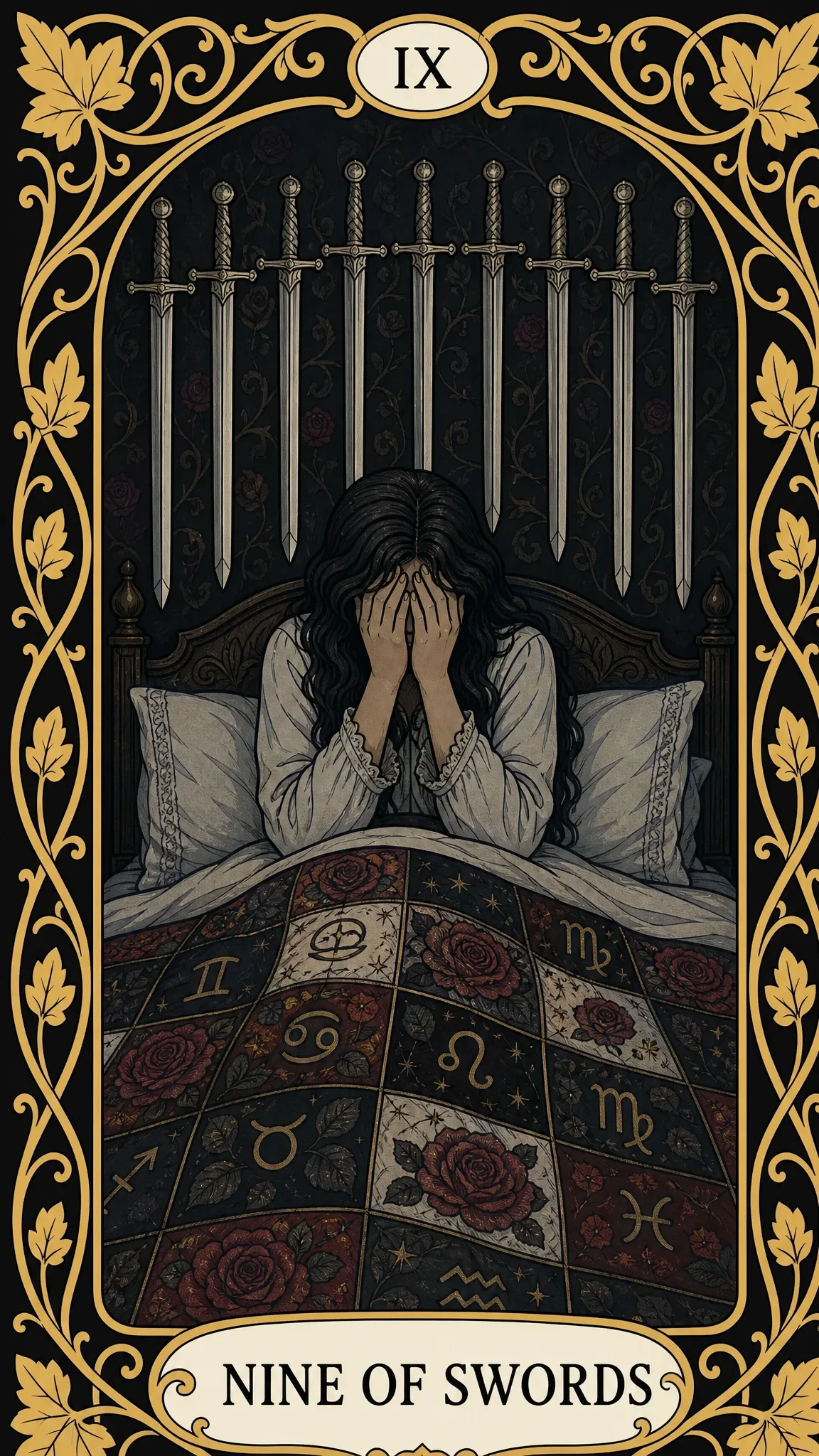
On our card, a woman in a white nightgown sits on a bed, covering her face with both palms; long dark hair falls over her shoulders. Above the headboard, nine swords hang in a row on a dark wall with their points upward. The body is covered with a quilted blanket with a pattern of dark red roses and golden zodiac signs — Taurus, Gemini, Cancer, Leo, Virgo, Pisces, and others woven between the flowers.
The scene is read as follows:
- Nine swords on the wall — the anxieties themselves haven't gone anywhere: they hang right where they were, in a neat row. None are raised or brandished — the threat is not acting right now; it exists only as a thought about it.
- Face covered by hands — the person is not looking at the reality around them, but remains alone with an internal picture of what is happening, which may differ greatly from what is actually hanging on the wall.
- Blanket with zodiac signs and roses — a lived-in, warm, arranged world: the bed, the house, and everyday life haven't gone anywhere, despite the anxiety. This contrast between the cozy bed and the row of swords overhead is the essence of the card: the danger is mostly in the head, not in the room.
- Sitting, not lying down pose — the anxiety woke the person in the middle of the night, not letting them sleep until morning.
At the top of the card is the Roman numeral IX, at the bottom is a plaque with the English name NINE OF SWORDS.
Nine of Swords as the card of the day
As the card of the day, the Nine of Swords is a signal that anxious thoughts will be louder today than the actual reasons for them. The day is not suitable for dealing with all problems at once, but for separating what really requires attention from what just seems urgent in a state of anxiety.
If the card appears reversed, the day may bring the first relief: a conversation that was postponed, or simply a calmer night after several difficult ones. If the anxiety is too strong on this day and interferes with functioning, it is wiser to talk to a loved one or a doctor rather than trying to cope with it alone.
Frequently asked questions about the Nine of Swords card
Is it a Major or Minor Arcana?
Minor Arcana, suit of Swords, element of Air. There are 56 Minor Arcana cards in a Tarot deck in total — 14 cards for each of the four suits, and the Nine of Swords describes not fate, but a state of anxiety at a specific moment, closer to the end of the cycle of cards in this suit.
How does the Nine of Swords differ from the Nine of Cups?
Both cards are nines, but in meaning, they are almost opposites. The Nine of Swords (Air) is about exhausting anxiety and thoughts that exaggerate a problem. The Nine of Cups (Water) is about satisfaction and fulfilled desires, one of the most auspicious cards in the deck. If the spread is about worry and insomnia, it's about swords; if it's about contentment and joy, it's about cups.
Is the Nine of Swords a yes or no?
More often no, but it's not about the event itself, but the state in which the decision is made: anxiety is currently distorting the scale of what is happening. It is more useful not to rush with an answer, but to return to the question when your head is calmer.
What does the reversed Nine of Swords mean?
The same anxiety, but at a stage of change: it is either beginning to recede, or the person is finally deciding to talk about it. Less often, the anxiety goes inward and continues silently, no longer showing externally.
If anxiety and insomnia do not go away for a long time, will a spread with this card help?
No, and it is important to say this directly. A spread can name a feeling — intense anxiety, exhausting night thoughts — but it does not cure chronic anxiety and insomnia. If the state lasts for weeks and interferes with life, you should consult a doctor or therapist rather than looking for an answer in the cards.