What the Page of Swords means in Tarot
The Page of Swords is a minor card of the most "airy" suit in the deck: Swords represent thought, word, truth, and conflict, and their element is air—fast, changeable, and cutting when necessary. In the hierarchy of court cards of the suit, the Page is the most inexperienced, so their sword is raised not for battle, but for defense: they keep the weapon ready because they don't yet know what the next gust of wind will bring and prefer to be prepared in advance.
An important nuance often lost in retellings: the minor arcana describes not a whole character or fate, but a specific moment — a conversation, news, or a sudden idea that catches you off guard and requires an immediate reaction. While the higher Swords cards speak of the results of a dispute or the price of principles, the Page is about the very second when something makes you alert and forces you to gather your thoughts.
The upright position is read as a burst of curiosity and attentiveness: a desire has arisen to get to the truth, ask a direct question, or look into a topic that previously seemed unimportant. The second layer of meaning is the same as for pages of other suits: a messenger bringing news. With Swords, this news is not necessarily pleasant, but it is usually accurate — something you really need to know, even if it is uncomfortable to learn.
Reversed Page of Swords: meaning
The reversed Page of Swords is the same sharpness of mind, but directed the wrong way. There are three common readings, and the question of the spread suggests which one is closer.
- Curiosity turns into suspicion. Looking for hidden meaning where there is none, and vigilance works in vain, without a real reason.
- Words turn into a weapon. Sharpness, sarcasm, nitpicking — what started as honesty sounds like an attack.
- Information is used dishonestly. Gossip, rumors, omissions, retelling other people's words in a way they were not said.
There is also a softer reading: sometimes the reversed Page of Swords is not malicious intent, but fatigue from constant vigilance. Being on alert every minute is exhausting, and the mind at some point simply becomes overloaded with incoming information.
Page of Swords in a "yes or no" spread
In "yes/no" spreads, the Page of Swords is most often read as yes, but look closer first — the card supports the desire to figure things out, ask a question, and check the facts, rather than guaranteeing a specific outcome. If the question is "is it worth finding out the truth" or "should I ask directly," the answer is affirmative, and often one short conversation decides the matter.
If the question is about the result of a conflict or dispute ("will I win," "will I prove I'm right"), the Page of Swords does not answer this: it is about gathering information, not about the outcome of a clash. For such a question, other cards are needed in the spread, most often neighboring higher Swords.
The reversed position in this spread is closer to no, because there is not enough data yet: the information is distorted, incomplete, or intentionally hidden.
Page of Swords in relationships and feelings
In a relationship spread, the upright Page of Swords describes the beginning of communication based on an interesting conversation: sympathy that grows not from romantic gestures, but from the fact that it is easy and interesting to talk, argue, and exchange opinions with the person. This is a card of lively curiosity about each other, not ready-made depth.
In the position of feelings, the Page of Swords is noticeably straightforward: they ask uncomfortable questions out loud, say what they think, sometimes without the necessary softness — not out of malice, but because for them, honesty is more important than tact. For an established relationship, this card is a signal to clarify what has been left unsaid: to discuss what has been put off for a long time, to ask directly instead of guessing.
Reversed Page of Swords in relationships — nitpicking, a harsh word said without thinking, or distrust that results in checking messages and attempts to catch a partner in insincerity.
Page of Swords in work and money
In career spreads, the Page of Swords is new information that changes the balance of power: an unexpected detail at an interview, checking facts before signing a contract, or starting a small investigation or analysis. The card well describes the role of a person who notices what others have missed and is not afraid to say it out loud.
In money, the Page of Swords rarely speaks of a sum — more often about an important detail in the terms: a clause in a contract that is easy to overlook, a commission that was not warned about, or fine print that is worth re-reading twice. The practical advice of the card is not to be lazy and figure out the details right now, before it becomes a problem later.
Reversed Page of Swords at work — rumors about changes that have not yet been confirmed, rushing to conclusions before the facts are fully gathered, or a heated conversation where one clarifying question would have sufficed.
Page of Swords as a person: man and woman
A court card describes not the gender of a person in a spread, but their manner of behavior — the Page of Swords appears just as well for a man or a woman if the style of behavior corresponds to this energy: observant, quick-tongued, and not afraid to tell the truth to one's face. The context of the question and neighboring cards usually suggest the person's gender, not the grammatical gender of the name.
A male Page of Swords is someone who asks uncomfortable questions first, notices inconsistencies in other people's words, and is not shy about pointing them out out loud, sometimes before it is appropriate. A female Page of Swords is someone who is the first to recognize that something is wrong and speaks about it directly, without choosing softer words.
A common trait for both: tact is not the strongest side of this archetype — they can hurt with their directness without meaning to. However, it is rare to remain in the dark next to such a person: if something important is happening, they will be one of the first to say it.
ဓား၏ စာမျက်နှာ (Page of Swords) - အတွေးအခေါ်ပိုင်းဆိုင်ရာ အနေအထား
အတွေးအခေါ်ပိုင်းဆိုင်ရာ အနေအထားတွင် ဓား၏ စာမျက်နှာ (Page of Swords) သည် အသစ်အဆန်း သို့မဟုတ် လျှို့ဝှက်ချက်များကို ရှာဖွေနေသည့် စိုးရိမ်စိတ်များပြီး သတိရှိသော စိတ်ကို ကိုယ်စားပြုသည်။ အတွေးများသည် အသေးစိတ်အချက်အလက်များဆီသို့ အလျင်အမြန် ပြောင်းလဲနေပြီး မညီမညာဖြစ်နေသည့် အချက်အလက်များကို ပေါင်းစပ်ရန် ကြိုးစားနေသည်။
ဤအခြေအနေသည် ခွဲခြမ်းစိတ်ဖြာမှုအတွက် အထောက်အကူပြုသော်လည်း စိတ်ငြိမ်းချမ်းမှုအတွက်မူ အထောက်အကူမပြုပါ။ အမြဲတမ်း သတိဝီရိယရှိနေသော စိတ်သည် လျင်မြန်စွာ ပင်ပန်းနွမ်းနယ်တတ်သည်။ အခြားသော ဓားကတ်များနှင့်အတူ ပေါ်လာပါက စိုးရိမ်စိတ်များ ပိုမိုပြင်းထန်လာနိုင်ပြီး၊ ဖလား (Cups) သို့မဟုတ် ပန်တာကယ် (Pentacles) ကတ်များနှင့်အတူ ပေါ်လာပါက အသေးစိတ်အချက်အလက်များကို ဂရုစိုက်သည့် သာမန်သတိရှိမှုအဖြစ် ပြောင်းလဲသွားနိုင်သည်။
ဓား၏ စာမျက်နှာ (Page of Swords) ကျလာပါက ဘာလုပ်သင့်သလဲ
ကတ်၏ အကြံဉာဏ်မှာ ရိုးရှင်းပါသည်- သိလိုစိတ်ကို ထိန်းထားပါ၊ သို့သော် ၎င်းကို သံသယစိတ်အဖြစ် မပြောင်းလဲပါနှင့်။ ဓား၏ စာမျက်နှာ (Page of Swords) သည် အမှန်တရားကို ရှာဖွေလိုသည့်အခါတွင် မှားယွင်းမှုနည်းပါးသော်လည်း၊ သတိဝီရိယလွန်ကဲပြီး အရာအားလုံးကို ခြိမ်းခြောက်မှုဟု မြင်လာသည့်အခါတွင် အမှားများ စတင်တတ်သည်။
လက်တွေ့လုပ်ဆောင်သင့်သည်များမှာ-
- မလုပ်ဆောင်မီ အချက်အလက်များကို စစ်ဆေးပါ။ ဤကတ်၏ ပထမဆုံးအမြင်သည် ထက်မြက်သော်လည်း အမြဲတမ်း ပြည့်စုံသည်မဟုတ်ပါ - ချက်ချင်းတုံ့ပြန်မည့်အစား အရင်စုံစမ်းပါ။
- တိုက်ရိုက်ပြောပါ၊ သို့သော် အချိန်အခါကို ရွေးချယ်ပါ။ ဤကတ်၏ ရိုးသားမှုသည် အားသာချက်တစ်ခုဖြစ်သော်လည်း မလိုအပ်ဘဲ ကြမ်းတမ်းစွာ ပြောဆိုခြင်းမျိုး မလုပ်သင့်ပါ။
- သတိရှိခြင်းနှင့် တိုက်ခိုက်ရန် အသင့်ဖြစ်နေခြင်းကို ခွဲခြားပါ။ သတိထားနေခြင်းသည် ပထမဆုံး စတင်တိုက်ခိုက်ခြင်း မဟုတ်ပါ။
- စိတ်ကို အနားပေးပါ။ ပတ်ဝန်းကျင်ကို အမြဲတမ်း စောင့်ကြည့်နေခြင်းသည် ရုပ်ပိုင်းဆိုင်ရာ လှုပ်ရှားမှုကဲ့သို့ပင် ပင်ပန်းစေသည်။
အကယ်၍ သတိထားမှုသည် စိုးရိမ်ပူပန်မှု သို့မဟုတ် အားလုံးကို သံသယဝင်သည့်စိတ်အဖြစ် ပြောင်းလဲသွားပါက၊ တစ်ယောက်တည်း ဖြေရှင်းရန် ကြိုးစားမည့်အစား ချစ်ရသူ သို့မဟုတ် ကျွမ်းကျင်သူနှင့် တိုင်ပင်ဆွေးနွေးခြင်းက ပိုမိုထိရောက်ပါသည်။
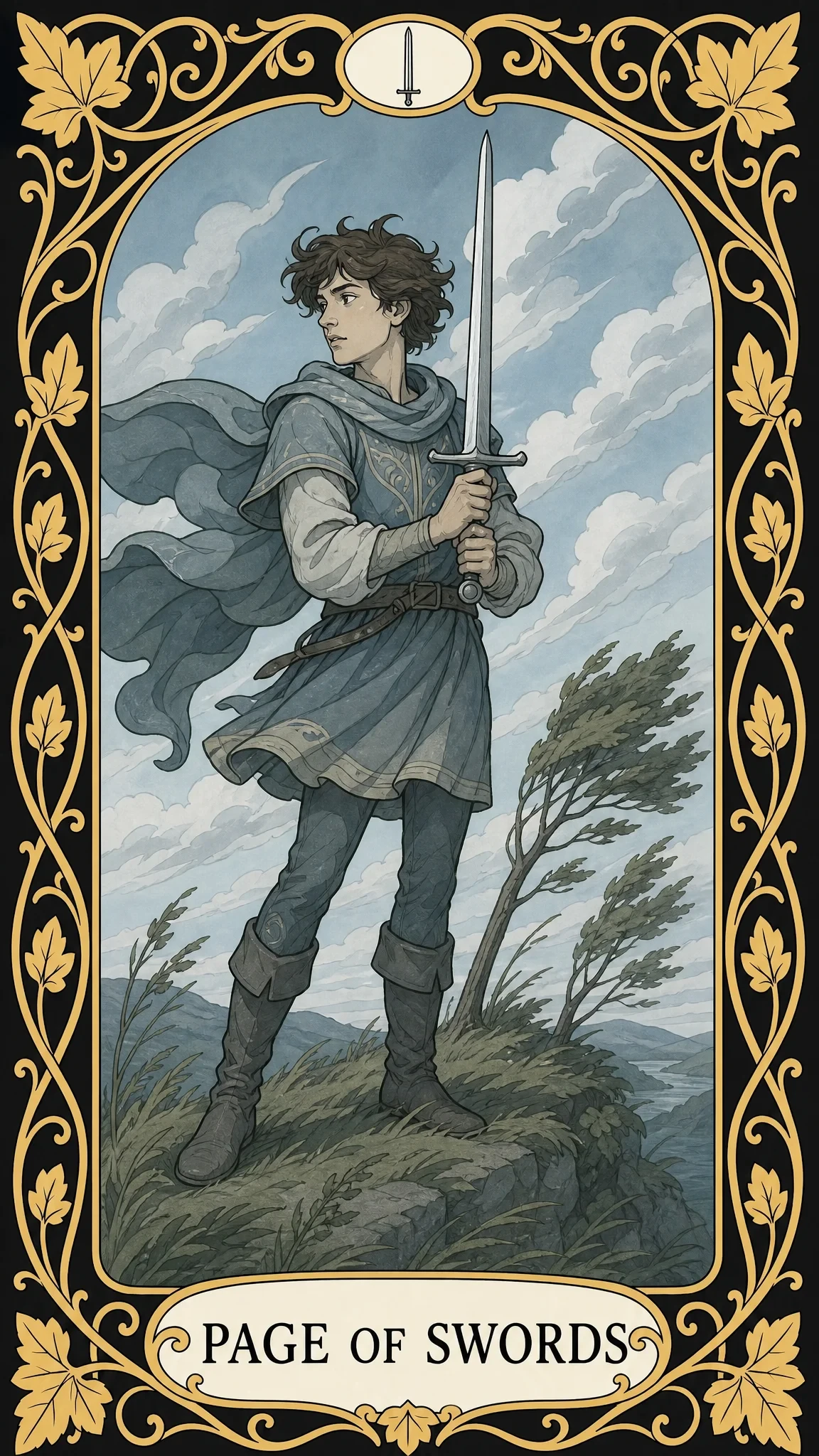
ကတ်ပေါ်တွင် ဘာတွေပုံဖော်ထားသလဲ
ကျွန်ုပ်တို့၏ ကတ်တွင် မြစ်နှင့် တောင်ကုန်းများကို မြင်တွေ့နိုင်သည့် မြက်ခင်းပြင်ပေါ်တွင် ရပ်နေသော လူငယ် စာမျက်နှာ (Page) တစ်ဦးကို တွေ့ရသည်။ လေတိုက်ခတ်မှုကြောင့် သူ၏ အနက်ရောင် ကောက်ကွေးနေသော ဆံပင်များ လွင့်နေပြီး အပြာရောင်နှင့် အစိမ်းရောင် ရောစပ်ထားသော ရှည်လျားသည့် ပဝါသည် လေထဲတွင် လွင့်နေသည်။ သူ၏ဘေးတွင် လေတိုက်ခတ်မှုကြောင့် ကိုင်းညွတ်နေသော တစ်ပင်တည်းသော သစ်ပင်ရှိသည်။ သူသည် တစ်ဖက်သို့ လှည့်နေပြီး ကတ်၏ အပြင်ဘက်ကို ကြည့်နေကာ ဓားကို ဒေါင်လိုက် ကိုင်ထားသည်။ ၎င်းသည် တိုက်ခိုက်ရန်အတွက် မဟုတ်ဘဲ အသင့်အနေအထားဖြင့် ကိုင်ထားခြင်းဖြစ်သည်။
အသေးစိတ်အချက်အလက်များမှာ-
- လေနှင့် ကိုင်းညွတ်နေသော သစ်ပင် - လေဓာတ် (Air element) ၏ သဘောသဘာဝဖြစ်သည့် ပြောင်းလဲမှုနှင့် အမြဲတမ်း လှုပ်ရှားနေမှုကို ပြသည်။
- လွင့်နေသော ပဝါ - စိတ်လှုပ်ရှားမှုနှင့် မငြိမ်မသက်ဖြစ်နေသော အတွေးများကို ကိုယ်စားပြုသည်။
- ဓားကို ဒေါင်လိုက်ကိုင်ထားခြင်း - တိုက်ခိုက်လိုစိတ်မဟုတ်ဘဲ သတိရှိမှုကို ပြသည်။
- အပြင်ဘက်ကို ကြည့်နေခြင်း - အာရုံစိုက်မှုသည် အပြင်ဘက်သို့ ရောက်နေပြီး ပတ်ဝန်းကျင်ကို အမြဲစောင့်ကြည့်နေခြင်းဖြစ်သည်။
- မြစ်နှင့် တောင်ကုန်းများကို မြင်ရသည့် မြက်ခင်းပြင် - ရှင်းလင်းသော အမြင်ကို ကိုယ်စားပြုသည်။
ကတ်၏ အပေါ်ဘက်တွင် ရောမဂဏန်းအစား ဓား၏ သင်္ကေတကို တွေ့ရသည်။ အောက်ဘက်တွင် PAGE OF SWORDS ဟု ရေးသားထားသော ဆိုင်းဘုတ်ရှိသည်။
နေ့စဉ်ကတ်အဖြစ် ဓား၏ စာမျက်နှာ (Page of Swords)
ဓား၏ စာမျက်နှာ (Page of Swords) သည် နေ့စဉ်ကတ်အဖြစ် ကျလာပါက သင် အချိန်အတော်ကြာ ရွှေ့ဆိုင်းထားသော မေးခွန်းကို တိုက်ရိုက်မေးမြန်းရန် သို့မဟုတ် ခန့်မှန်းနေမည့်အစား အချက်အလက်များကို စစ်ဆေးရန် အခွင့်အရေးကောင်းဖြစ်သည်။ ဤနေ့သည် အသေးစိတ်အချက်အလက်များကို နားလည်ရန်၊ စာရွက်စာတမ်းများကို ပြန်ဖတ်ရန်နှင့် မရှင်းလင်းသည်များကို မေးမြန်းရန်အတွက် သင့်လျော်သည်။
ဤစွမ်းအင်၏ အခြားတစ်ဖက်ကို သတိပြုရန် လိုအပ်သည် - ပထမဆုံးအမြင်ဖြင့် ချက်ချင်းတုံ့ပြန်ခြင်း သို့မဟုတ် ကောလာဟလများကို အမှန်တရားဟု မယူဆပါနှင့်။ ဤနေ့အတွက် အသုံးဝင်သော သဘောထားမှာ သတိရှိရန်ဖြစ်သော်လည်း တွေ့သမျှလူတိုင်းနှင့် ငြင်းခုံရန် အသင့်မဖြစ်ပါနှင့်။
ဓား၏ စာမျက်နှာ (Page of Swords) ကတ်နှင့် ပတ်သက်၍ မကြာခဏ မေးလေ့ရှိသော မေးခွန်းများ
ဒါက Major Arcana လား၊ Minor Arcana လား။
Minor Arcana ဖြစ်ပြီး ဓား (Swords) အမျိုးအစား၊ လေဓာတ် (Air) ဖြစ်သည်။ ဖဲထုပ်ထဲတွင် Minor Arcana ၅၆ ခုရှိပြီး တစ်ခုစီတွင် ၁၄ ကတ်စီ ပါဝင်သည်။ စာမျက်နှာ (Page) သည် ထိုအမျိုးအစား၏ အငယ်ဆုံးသော ကတ်ဖြစ်သည်။
ဓား၏ စာမျက်နှာ (Page of Swords) နှင့် ပန်တာကယ်၏ စာမျက်နှာ (Page of Pentacles) ဘာကွာသလဲ။
နှစ်ကတ်စလုံးသည် အငယ်ဆုံးသော ကတ်များဖြစ်ပြီး သင်ယူမှုအဆင့်ကို ကိုယ်စားပြုသည်။ သို့သော် အမျိုးအစားက စိတ်ဝင်စားမှုကို ပြောင်းလဲစေသည်။ ဓား၏ စာမျက်နှာ (Page of Swords) သည် အချက်အလက်အသစ်များ၊ မေးခွန်းများနှင့် စိတ်ကူးသစ်များဖြင့် စိတ်လှုပ်ရှားတတ်ပြီး သူ၏ လက်နက်မှာ စိတ်ဖြစ်သည်။ ပန်တာကယ်၏ စာမျက်နှာ (Page of Pentacles) သည် လက်တွေ့ကျသောအရာများ - ၎င်းသည် မည်သို့အလုပ်လုပ်သလဲ၊ တန်ဖိုးမည်မျှရှိသလဲ၊ လက်ဖြင့် ဘာလုပ်နိုင်သလဲဆိုသည်ကို စိတ်ဝင်စားပြီး သူ၏ လက်နက်မှာ မြေဓာတ်ဖြစ်သည်။ ပထမကတ်က သတင်းစကားကို ယူဆောင်လာပြီး ဒုတိယကတ်က အစီအစဉ်ကို ယူဆောင်လာသည်။
ဓား၏ စာမျက်နှာ (Page of Swords) ပြောင်းပြန်ကျခြင်းက ဘာကို ဆိုလိုသလဲ။
ထက်မြက်သော စိတ်ရှိသော်လည်း မှားယွင်းသောနေရာတွင် အသုံးပြုနေခြင်းဖြစ်သည်။ အကြောင်းမဲ့ သံသယဝင်ခြင်း၊ ကြမ်းတမ်းသော စကားလုံးများ၊ ကောလာဟလများ သို့မဟုတ် အချက်အလက်များကို လွဲမှားစွာ ပြောဆိုခြင်းတို့ ဖြစ်နိုင်သည်။ တစ်ခါတစ်ရံတွင် ၎င်းသည် မကောင်းသော ရည်ရွယ်ချက်မဟုတ်ဘဲ အမြဲတမ်း သတိရှိနေရခြင်းကြောင့် ပင်ပန်းနွမ်းနယ်နေခြင်းသာ ဖြစ်နိုင်သည်။
ဓား၏ စာမျက်နှာ (Page of Swords) သည် ဟုတ်/မဟုတ် ဆိုလိုသလား။
ဟုတ်သည်ဟု ဆိုနိုင်သော်လည်း "အရင်ဆုံး သေချာအောင် ကြည့်ပါ" ဟူသော သတိပေးချက်နှင့်အတူ ဖြစ်သည်။ ဤကတ်သည် အမှန်တရားကို ရှာဖွေလိုစိတ်ကို ထောက်ခံသော်လည်း အငြင်းပွားမှု သို့မဟုတ် ပဋိပက္ခ၏ ရလဒ်ကို အာမမခံပါ။ အကယ်၍ မေးခွန်းက အမှန်တရားကို သိလိုခြင်းဖြစ်ပါက ကောင်းသော်လည်း၊ တိုက်ခိုက်မှု၏ ရလဒ်ဖြစ်ပါက အခြားကတ်များကိုပါ ထပ်မံကြည့်ရှုရန် လိုအပ်သည်။
ဓား၏ စာမျက်နှာ (Page of Swords) သည် ပဋိပက္ခကို ဆိုလိုသလား။
မဖြစ်မနေ မဟုတ်ပါ။ ဤကတ်သည် ပဋိပက္ခထက် သတိရှိမှုနှင့် ရိုးသားမှုကို ပိုမိုဆိုလိုသည်။ ဓားကို ကိုင်ထားသော်လည်း တိုက်ခိုက်ရန် အသင့်အနေအထားသာ ဖြစ်သည်။ အကယ်၍ အနီးတွင် အခြားသော ဓားကတ်များ ကျလာပါက ပဋိပက္ခဖြစ်နိုင်သော်လည်း၊ ဤကတ်တစ်ခုတည်းကမူ ဂရုစိုက်မှုနှင့် တိုက်ရိုက်ပြောဆိုမှုကိုသာ ဆိုလိုသည်။