Що означає Рицар Мечiв у Таро
Рицар Мечiв — придворна карта масті Мечi, і вона в першу чергу про швидкість думки, що переходить відразу в дію. Якби це була людина в розмові, Рицар Мечiв — той, хто першим знаходить контраргумент і вимовляє його вголос, не чекаючи, поки договорить співрозмовник.
Важливе застереження, яке стосується будь-якого молодшого аркана: карта описує епізод, а не характер на все життя, як це роблять старші аркани. Вона про конкретну суперечку, рішення або короткий ривок цього тижня, а не про те, яким людина буде завжди. Рицар Мечiв — це не «ви такий різкий по життю», а «ось з якою швидкістю і напором зараз потрібно діяти» або «ось хто увірвався в ситуацію і що він із собою приніс».
По суті карта описує сплеск розумової та вольової енергії: бажання розрубати вузол одним рухом, сказати прямо те, що інші обходять стороною, перемогти суперечкою або швидкістю реакції. Стихія повітря тут читається буквально — швидко, гостро, іноді без пощади до чужих почуттів. Рицар Мечiв рідко зупиняється, щоб перевірити, чи не зачепить його напір когось по дорозі: в колоді за обережність і такт відповідають інші карти, не Рицар.
Перевернутий Рицар Мечiв: значення
Перевернутий Рицар Мечiв — той же напір, але він або б'є повз ціль, або обертається проти самої людини. Зазвичай розклад зводиться до одного з трьох варіантів.
- Агресія без причини. Різкість, яка шукає привід, а не вирішує реальну проблему — суперечка заради суперечки, конфлікт, в якому вже ніхто не пам'ятає, з чого все почалося.
- Слова сказані раніше, ніж варто було. Різка репліка, лист, відправлений з гарячу, рішення, озвучене до того, як його встигли обміркувати — і тепер доводиться розгрібати наслідки.
- Натиск виснажив самого носія. Занадто довга швидкість на межі виснажує: дратівливість, нервове перенапруження, відчуття, що воюєш вже з усіма підряд.
Різниця з прямим положенням проста: пряма карта — про точний, виправданий удар, перевернута — про удар, який наносять не туди або не вчасно.
Рицар Мечiв у розкладі «так чи ні»
У розкладах «так/ні» Рицар Мечiв зазвичай читається як рішуче так — але з умовою: діяти потрібно швидко і прямо, без довгих узгоджень. Карта не про компроміс і не про ідеальний дипломатичний варіант; вона про те, що прямий шлях спрацює краще окольного.
Якщо питання звучить як «чи варто висловитися прямо» або «чи варто діяти швидко» — відповідь скоріше позитивна, але без гарантії, що обійдеться без тертя: Рицар Мечiв не про те, що всі залишаться задоволені, а про те, що зволікання обійдеться дорожче.
Перевернуте положення в цьому розкладі зміщує відповідь до «так, але не так різко» — ідея вірна, але обраний тон або момент тільки все зіпсують.
Рицар Мечiв у стосунках та почуттях
У розкладі на стосунки прямий Рицар Мечiв — це пряме пояснення, яке давно назріло: розмова без еківоків, чесне «нам потрібно поговорити», визнання або розрив, сказані без підготовки, зате без недомовок. Карта добре описує момент, коли мовчати стає гірше, ніж сказати незручну правду.
У позиції почуттів Рицар Мечiв — це скоріше ясність, ніж тепло: людина точно знає, чого хоче, і не має наміру ходити колами. Це може читатися як захоплююча прямота на старті стосунків або як холоднувата різкість, якщо карта описує вже існуючу пару.
Є й зворотний бік: той же напір легко перетворюється на нетактовність — сказати правду не означає сказати її м'яко, а Рицар Мечiв про м'якість не дбає. Важливий нюанс, який губиться в переказах: він не хоче ранити спеціально, просто швидкість думки у нього обганяє турботу про те, як слово прозвучить.
Перевернуте положення у стосунках — це сварка, що почалася з нічого, або різкість, за яку потім соромно; або, навпаки, важлива розмова, яку відкладають, щоб не бути занадто прямим.
Рицар Мечiв у роботі та грошах
У кар'єрних розкладах Рицар Мечiв — це рішучі переговори, коротка і жорстка розмова з начальством, суперечка, яку виграють за рахунок швидкості реакції та точних аргументів. Карта добре описує ситуації, де перемагає той, хто першим і найчіткіше сформулював позицію.
У грошах Рицар Мечiв — це швидке, ризиковане рішення: укласти угоду без довгого торгу, піти на конфлікт через гроші, тому що далі тягнути дорожче. Сусідні карти покажуть, чи окупиться швидкість: з Тузом Мечiв або Сонцем — точний і вдалий хід, з П'ятіркою Мечiв або Вежею — перемога, яка обходиться занадто дорого.
Перевернуте положення в роботі — це конфлікт, який спалахнув через поспіх або невірно обраний тон: різкість там, де потрібна була витримка, і тепер доводиться відновлювати стосунки з колегами або партнерами.
Рицар Мечiв як людина: чоловік і жінка
Коли Рицар Мечiв випадає в позиції «що за людина», це опис типажу, а не буквальний натяк на вік або стать. Це той, хто з'являється в ситуації як розрядник напруги: приносить ясність, пряме питання або пряму відповідь — там, де інші роками ходили навколо теми.
Чоловік-Рицар Мечiв — різкий, розумний, нетерплячий до чужої повільності; говорить те, що думає, і не завжди пом'якшує формулювання. Жінка-Рицар Мечiв — та, хто першою називає проблему своїм ім'ям і не боїться вступити в суперечку, якщо вважає себе правою.
У цього типажу є зворотний бік: поруч з ним легко відчути себе зачепленим — не тому, що він хотів образити, а тому, що тактовність не входить в його набір інструментів. Хороший союзник у сутичці або в суперечці, не завжди — в розмові, де потрібна делікатність.
Knight of Swords in the mindset position
In the mindset position, the Knight of Swords represents a state where a decision has already been made instantly, and the mind is occupied not with doubt, but with formulating what to say and how to do it faster. Thought outpaces feeling: the argument comes first, and then how it will sound to another person.
Sometimes it's a useful clarity – it's time to stop weighing and call things by their names. Sometimes it's nervous militancy, when a person is mentally preparing for an argument that hasn't happened yet. Neighboring cards help distinguish: next to the Ace of Swords or the Sun, it's more sober determination; next to the Five of Swords or the Tower, it's anxious readiness for a fight.
What to do if the Knight of Swords appears
The card's advice is direct: act quickly and speak directly, but don't confuse honesty with rudeness. The Knight of Swords rarely fails with reaction speed – he fails by forgetting to choose his words before saying them.
What's worth doing in essence:
- Formulate the main point in one sentence. If a thought requires five paragraphs of justification – it's not yet ready to be expressed sharply.
- Give yourself a pause before sending. One minute between "wrote" and "sent" often changes the tone of the message, but not the decision.
- Separate an argument about the matter from an argument for the sake of winning. The first is worth seeing through, the second is better stopped before it involves extra people.
- Check who will be affected by the sharpness. A quick decision is no reason to forget about those it concerns.
And separately: if the situation concerns a serious conflict, health, or breakup – a sharp step is not always the best advice. The cards show the energy of the moment, but a considered decision still rests with the person.
What is depicted on the card
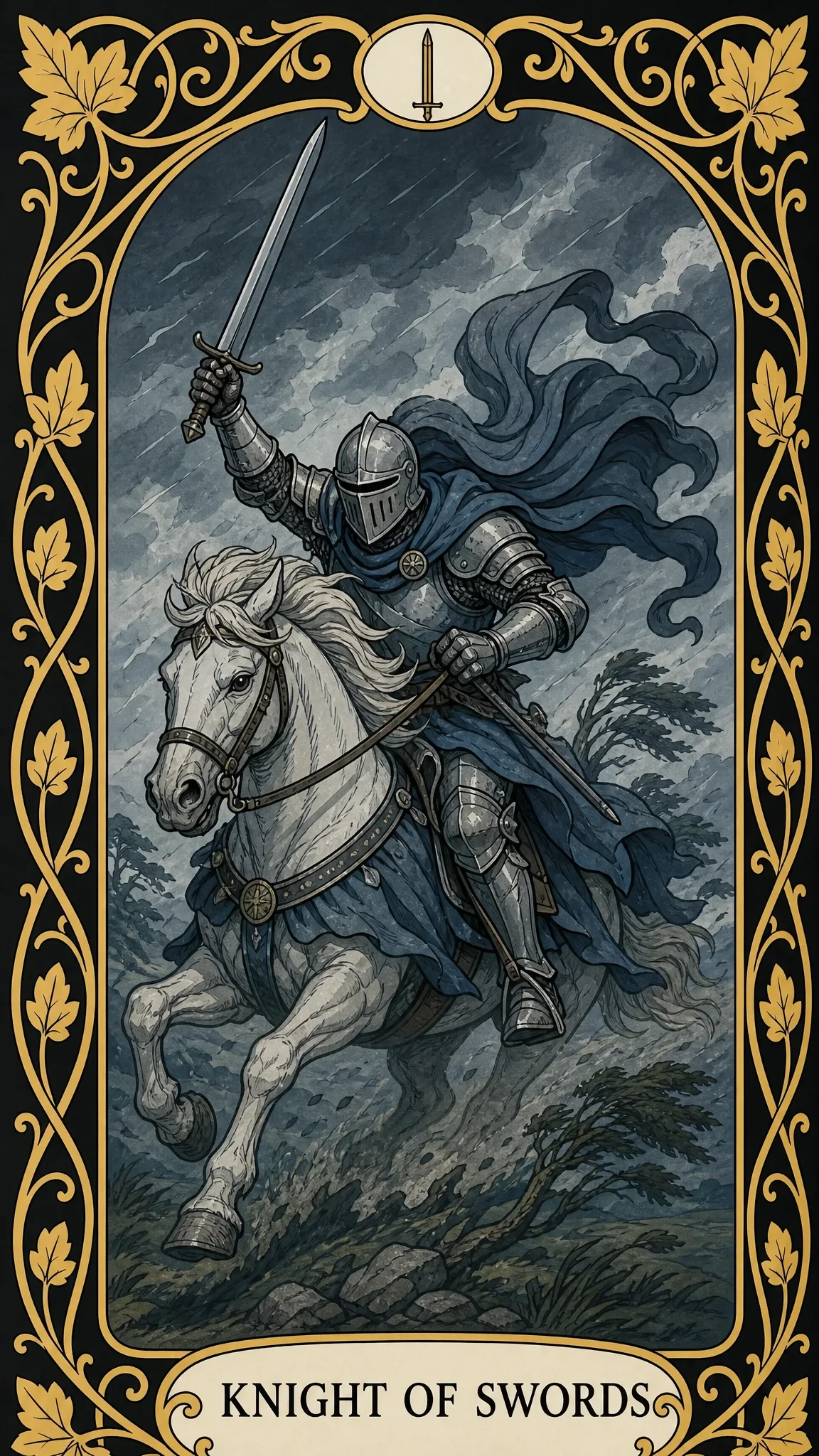
On our card, the Knight of Swords is a warrior in silver armor with a fully closed visor, riding a light gray horse galloping sharply through a thunderstorm. The sword in his raised hand is pointed vertically upwards, his dark blue cloak streams almost horizontally in the wind, the sky is streaked with diagonal rain lines, and the trees on the right are bent almost to the ground by a gust of wind.
The scene reads as follows:
- The horse at full gallop – unlike the rearing horse of the Knight of Wands, here the force is not gathering but flying forward: movement, not a burst at the starting point. Swords are the element of air, and the horse literally cuts through the air in front of it.
- Closed visor – the face is not visible: in this card, speed and direction of the strike are more important than who delivers it.
- Sword raised strictly upwards – not a defense or a side strike, but readiness to strike from the hip at any moment: the decision has been made, execution is pending.
- Thunderstorm and bent trees – environmental resistance that does not stop the Knight of Swords: he is not rushing into calm, but directly into the bad weather, and this also characterizes the suit in its own way.
At the top of the card is an oval medallion with a sword image, a sign of belonging to the suit; at the bottom is a plaque with the English name KNIGHT OF SWORDS.
Knight of Swords as a card of the day
The Knight of Swords as a card of the day signals not to postpone a direct conversation or a quick decision that has already been brewing: say what you think, respond immediately, rather than spending a week composing the wording. It is a day when speed and directness work for a person more than cautious diplomacy.
A useful attitude for such a day: say the main thing – yes, but don't turn every phrase into an attack. It's worth choosing one issue where clarity is important, resolve it briefly and to the point, rather than scattering sharpness at everyone. And keep in mind that not everyone around is ready for such a pace – what is normal speed for the Knight of Swords may sound like an attack to the interlocutor.
Frequently asked questions about the Knight of Swords card
Is it a Major or Minor Arcana?
Minor Arcana, a court card of the Swords suit, element of Air. In a Tarot deck, there are 56 Minor Arcana – 14 cards in each of the four suits, and the Knight is one of the four court ranks within the Swords suit.
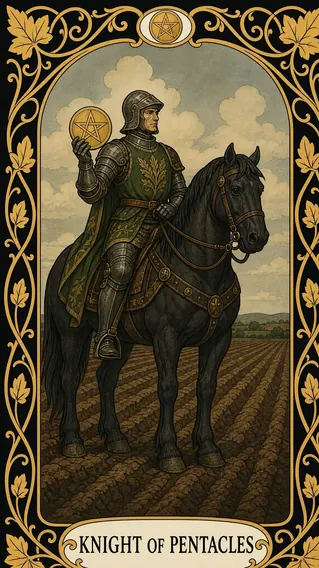
How does the Knight of Swords differ from the Knight of Pentacles?
Both are court cards at the rank of Knight, but their elements are opposite. Swords – element of air, speed of thought and word: the Knight of Swords is about quick decisions, directness, and drive. Pentacles – element of earth, slow and steady movement: the Knight of Pentacles is about methodical approach and perseverance without haste. If the Knight of Swords appears in a reading, the emphasis should be on speed and directness, not on thoroughness.
Is the Knight of Swords a yes or no?
More likely yes, but with the condition to act quickly and directly, without lengthy согласования. The card doesn't promise that there won't be friction – it's about the fact that delay in this situation will cost more.
What does the reversed Knight of Swords mean?
The same drive, but it misses the target: aggression without real reason, harsh words spoken in the heat of the moment, or exhaustion from maintaining speed at the limit for too long. Another option is an important direct conversation that is deliberately postponed.
Is the Knight of Swords in relationships about conflict?
Not necessarily about conflict, but definitely about directness: an honest conversation without beating around the bush, a confession or decision made without preparation. Whether this is good or bad depends on whether the other person is ready for such speed – the card itself does not promise care about the softness of formulations.