What the Emperor means in Tarot
The upright Emperor is a situation where order is needed: rules, deadlines, areas of responsibility. It appears where there is enough creativity and desire, but no stability.
An important nuance often lost in retellings: the Emperor's power is primarily responsibility. He is not someone who commands for the pleasure of commanding; he is the one who is responsible for the result, and therefore has the right to decide. That is why in spreads, the card often appears not about a boss, but about the need to take responsibility yourself.
The second side of the card is protection. The Emperor builds walls and maintains boundaries: in his stories, a person is either protected by frameworks or suffers from their absence. This is precisely why he is uncomfortable for people who struggle with boundaries.
Reversed Emperor: meaning
The reversed Emperor is usually read in one of three ways:
- Rigidity and tyranny. Rules for the sake of rules, control without meaning, power that suppresses. The most common variant.
- Irresponsibility. The opposite pole: the one who should decide does not; the structure crumbles, and everyone does what they want.
- Conflict with authority. A dispute with a boss, father, or system — with whoever sets the rules.
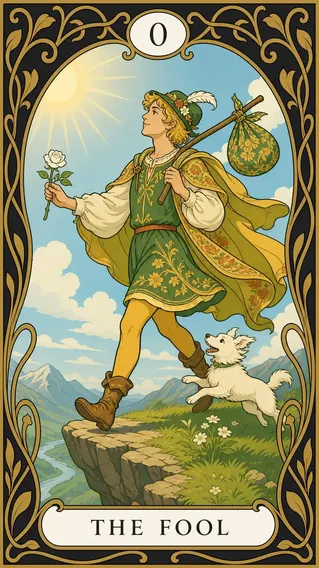
Neighboring cards help to choose: next to the Five of Wands — a power struggle, next to the Eight of Swords — restrictive rules, next to the Fool — rebellion against order.
The Emperor in a "yes or no" spread
In "yes/no" spreads, the Emperor answers yes, but with a condition: according to the rules and on time. He does not favor improvisation and does not like requests for exceptions.
Especially confidently, the card answers questions about work, documents, long-term obligations, and everything that requires discipline. It answers negatively to questions about an easy and quick path.
The reversed Emperor in a yes/no spread is no: either someone else's rigidity or a lack of structure where it is needed will get in the way.
The Emperor in relationships and feelings
In a relationship spread, the upright Emperor means reliability and certainty. Relationships with clear agreements, where it is known who is responsible for what and where everything is heading. It often points to the official side: marriage, mutual obligations, joint investments.
In the position of feelings, the Emperor describes a restrained but solid attachment. He does not express feelings with words and gestures — he expresses them through actions and consistency.
A separate common plot is a relationship where one person is noticeably older, more experienced, or holds a stronger position. As long as this suits both, the card is favorable.
The reversed Emperor in relationships means control and pressure, or, conversely, a partner who avoids any responsibility.
The Emperor in work and money
In career spreads, the Emperor is one of the strongest cards. A leadership position, a promotion, your own business, a built system. He favors everything related to management, law, finance, and long-term projects.
In money, the card speaks of stability: regular income, savings, control over expenses. It rarely brings sudden profit, but it almost never allows for failures.
What the Emperor advises in a work spread: bring order and formalize. His plots win where there is a plan, deadlines, and fixed agreements, and fall apart where everything is held together by verbal promises.
The Emperor as a person: man and woman
In the "what kind of person" position, the Emperor describes someone who takes responsibility and makes decisions. Firm, consistent, demanding — first of himself, then of others.
The Emperor-man in a spread is reliable, often older, with status; he does not make empty promises and does not tolerate sloppiness. The Emperor-woman is someone who maintains the structure, leads, and knows how to say "no".
The weak point of such people is that it is difficult for them to be soft and difficult to admit mistakes: in their coordinate system, this looks like a loss of support.
The Emperor in the thoughts position
In the thoughts position, The Emperor represents planning and calculation. The person thinks systematically: stages, deadlines, risks, and accountability. Emotions are rarely present in these thoughts.
This also includes thoughts about control: what can be foreseen, what needs to be insured, and where to play it safe. A hallmark of this card is the desire for certainty. Neighboring cards clarify: next to the Ace of Pentacles, it is a business plan; next to the Eight of Swords, it is control that has turned into anxiety.
What to do if you draw The Emperor
The Emperor's advice is to take responsibility and set boundaries. Do not wait for someone else to organize things; organize them yourself.
What you should actually do:
- Set deadlines. Anything without a deadline will not move with this card.
- Define boundaries. What you will do and what you won't; what hours you are available; what is off-limits.
- Put it in writing. Contracts, plans, and distribution of responsibilities.
- Check if you've gone too far. The Emperor is good up to the point where order begins to stifle life.
And separately: if the card appears regarding a conflict with a boss or father, its advice is not to "submit," but to "understand where your area of responsibility lies and hold it."
What is depicted on the card
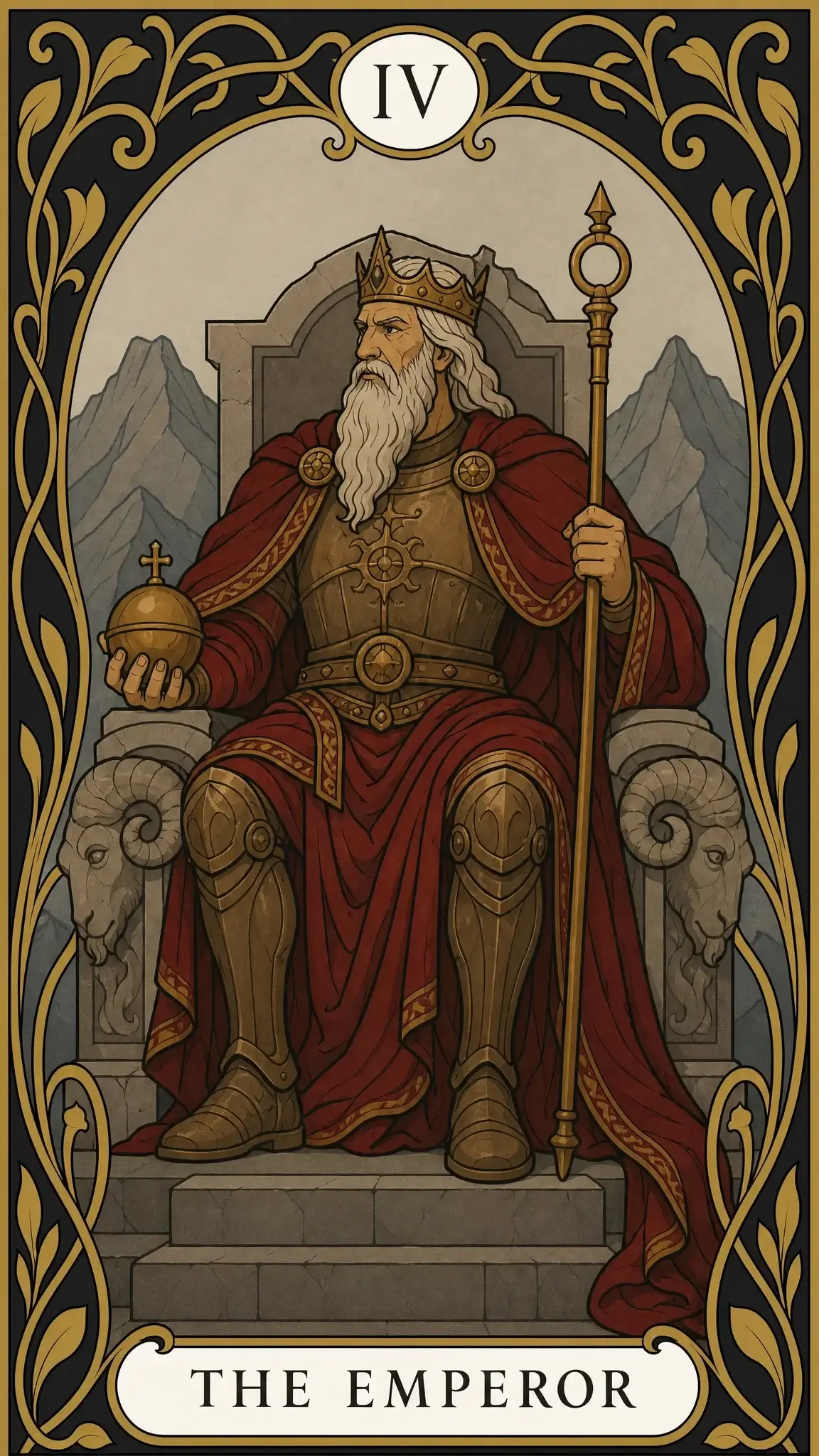
On our Emperor card, there is a ruler on a stone throne with ram's heads, wearing armor under a red robe, holding a scepter. Behind him are bare cliffs, and below is a narrow river.
The scene is interpreted as follows:
- Stone throne — stability that cannot be moved or rearranged.
- Armor under the robe — readiness to defend. The Emperor is always in a defensive state, even when not at war.
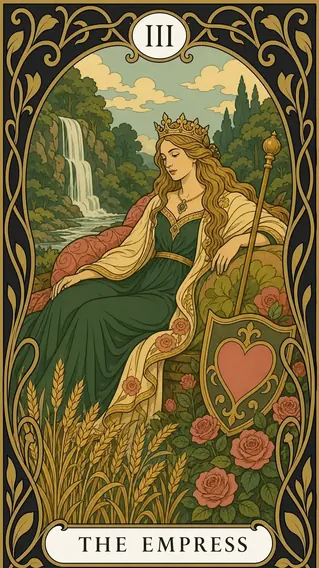
- Bare cliffs — the opposite of The Empress's garden: nothing grows here on its own; everything is maintained through effort.
- Thin river — feelings that exist in this card but occupy little space.
At the top is the Roman numeral IV, and at the bottom is the English name THE EMPEROR: our deck is drawn in the Rider-Waite tradition, where The Emperor is the fourth arcanum, immediately following The Empress.
The Emperor as the card of the day
The Emperor as the card of the day means a workday filled with tasks that require focus: paperwork, discussions with management, planning, and responsibility.
Useful mindset: make a list and follow it without getting distracted; say "no" to anything that doesn't fit. It is a good day for business decisions and organizing paperwork — and a bad one for spontaneity and creative exploration.
Frequently asked questions about The Emperor card
What does The Emperor mean in Tarot?
Structure, responsibility, and power taken along with its consequences. It appears where rules, deadlines, and boundaries are needed. In spreads, it often points not to a boss, but to the need to take responsibility yourself.
What does a reversed Emperor mean?
Two opposite poles: rigidity and control without meaning, or conversely, a refusal of responsibility where there is no one to decide and the structure falls apart. It can also indicate a conflict with someone who sets the rules.
Does The Emperor mean a specific man?
It can, but not necessarily. In the position of a person, it describes someone who takes charge and makes decisions, regardless of gender. Often this is a manager, father, or a partner in a stronger position.
Is The Emperor a good card for relationships?
It speaks of reliability and certainty: agreements are clear, and obligations are met. There is little warmth and lightness in it — those are described by the Cups and The Empress. For questions about the seriousness of intentions, this is a favorable card.
Which arcanum number is this?
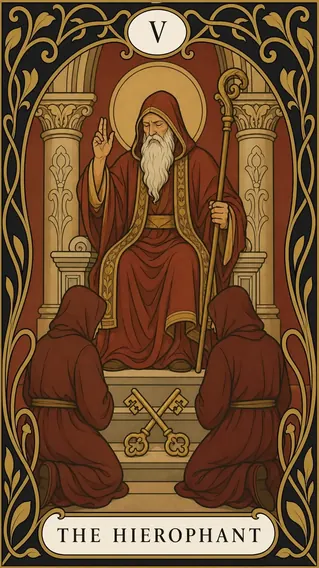
The fourth Major Arcanum, with the Roman numeral IV on the card. In the Rider-Waite deck, which our deck is based on, The Emperor comes after The Empress (III) and before The Hierophant (V).