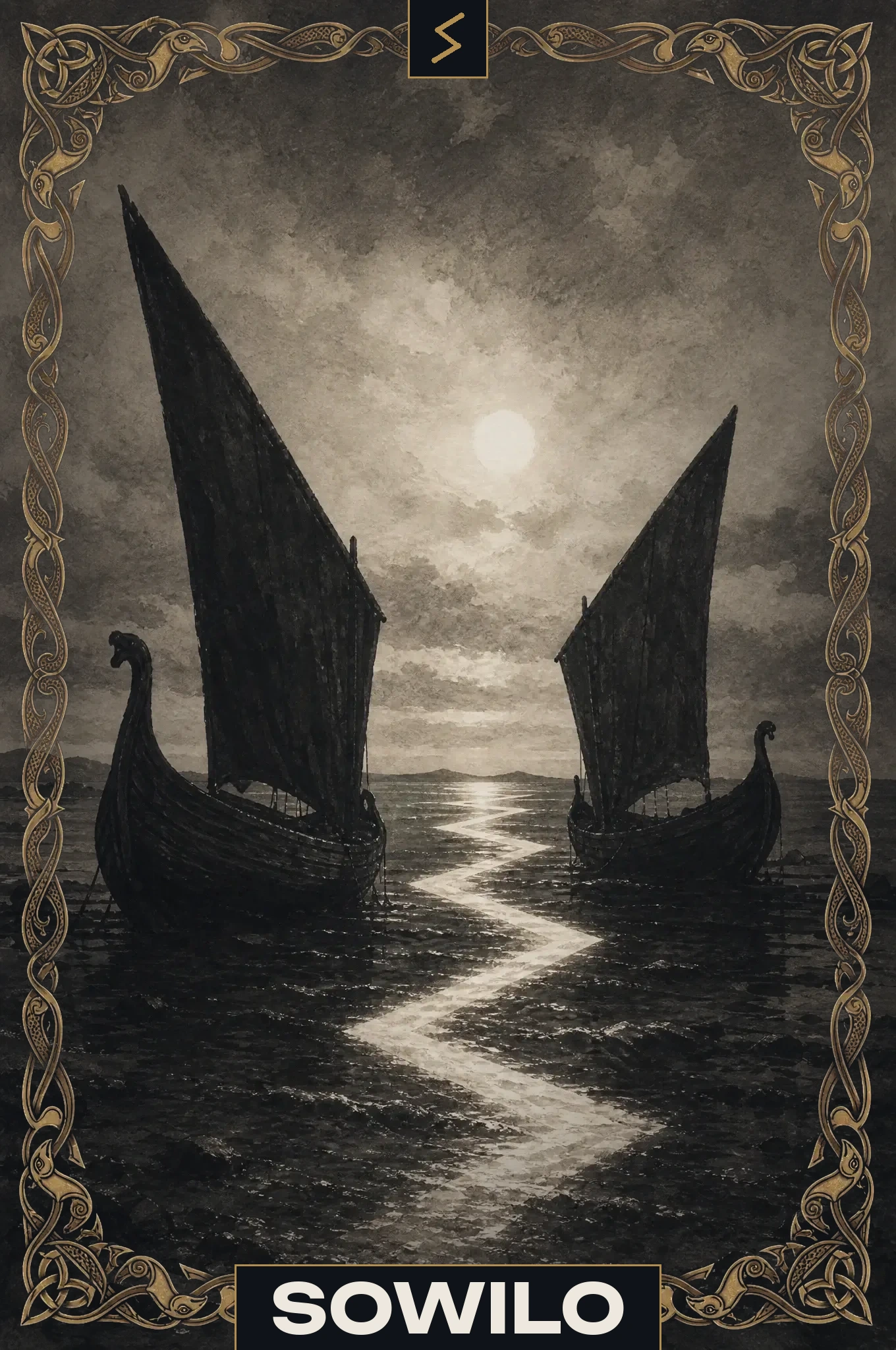
What Rune Sowilo Means
Sowilo is the rune of the sun, and its meaning is more straightforward than most Futhark signs: it's about the light that has finally broken through, and the work that has finally paid off. For a seafarer, the sun was a guide on the open sea; for a farmer, it was what ripened the grain. Therefore, Sowilo is read not as "luck," but as a logical outcome: what was supposed to happen has happened.
The second layer of meaning is clarity. Sowilo dispels fog, both literally and figuratively: it answers the question of where to go when one has been wandering for a long time. This is how it differs from runes of joy like Wunjo—Sowilo isn't about comfort, but about direction and a surge of energy.
It is one of the most unequivocally bright runes in the row. In a spread, it rarely requires clarification: where Sowilo stands, the effort is visible to others, not hidden in the shadows.
How Sowilo Looks and How to Draw It Correctly
The symbol for Sowilo is ᛋ: two diagonal strokes going zigzag from top to bottom, like a broken lightning bolt or a sunbeam shattering into reflections on water. On our card, the rune is depicted this way—as a zigzag of the sun's path on the water between two sails, and the sign is read by the reflections, not the outline of the object.
Sowilo is written in one movement from top to bottom: the first stroke goes diagonally in one direction, the second—towards it, without lifting the line. There is no separate rule for the "top" and "bottom" branches, as with Fehu or Algiz.
Sowilo is rotationally symmetrical: if you turn it one hundred and eighty degrees, you get the same symbol. This is a rare property among the runes in the row, and it is directly related to its meaning—the sun's path cannot be reversed; it is always the same.
Sowilo in the Upright Position
Sowilo answers the question about the outcome as directly as the sun answers "Is it day or night?" It says: the goal is achieved, the effort is rewarded, the path was followed correctly. It is the rune of victory in a competition, a successful thesis defense, a won case, recognition that came not by chance, but deservedly.
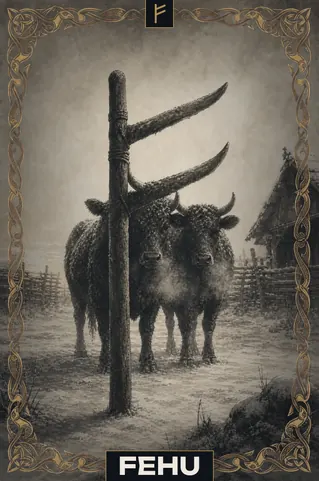
Second meaning—energy and uplift. A person for whom Sowilo falls usually has enough strength to finish what they started: it often answers the question "Do I have enough energy?" with a "yes." It is the rune of the final sprint, not the start—this is how it differs from Fehu, which is about the beginning of resources.
There is a warning within the light itself: strong sun blinds. Sowilo sometimes indicates not that the decision is correct, but that it seems too obviously correct—and then the question requires a more sober view than this rune alone provides.
Why Sowilo Has No Reversed Position
Unlike fifteen runes in the row, Sowilo physically has no reversed form: the symbol is symmetrical about its center, and Sowilo rotated one hundred and eighty degrees looks exactly the same as the upright one. Inventing a separate "reversed meaning" for it would be dishonest to the tradition—it would mean describing a position that the symbol does not distinguish.
The tradition reads the difficult variant of this rune differently—not through reversal, but through its surroundings. If heavy runes lie next to Sowilo in a spread—Hagalaz, Nauthiz, Isa—the solar meaning is not canceled, but muted: victory is postponed, there is light, but it is obscured. This is called reversed reading: the rune itself doesn't change, but the context in which it stands does.
There is also a second, "shadow" reading that experienced interpreters use without physical reversal: an excess of sun is blinding light, overconfidence, victory paid for by burnout. It's worth remembering this when Sowilo appears several times in a row or in a position that clearly indicates fatigue: the rune's strength sometimes means there's too much of it, not too little.
Sowilo in Relationships and Feelings
In a relationship spread, Sowilo speaks of clarity: feelings that don't need deciphering. It rarely answers the question "Does he love me?" evasively—if the rune falls on a partner, it more often signifies an open, unconcealed attitude that is not ashamed to be shown in public.
Sowilo also describes relationships that have reached a new level after a difficult period: reconciliation after a quarrel, recognition after a long silence, a moment when two people finally see each other clearly. It is a rune that often appears after Hagalaz or Isa in the same spread—like the very sun that appeared from behind the clouds.
There is also a cautionary note: too bright a light hinders seeing flaws. Sowilo sometimes indicates infatuation that blinds and prevents one from noticing what should be noticed. In such a context, it is better to read it together with neighboring runes, rather than as the sole answer.
Sowilo in Work and Money
For questions about career and business, Sowilo is one of the most favorable runes in the row: it signifies a completed project, a won tender, a successful presentation, recognition from management. Where Fehu speaks of money coming in, Sowilo speaks of recognition of labor, and often this is more important than the amount itself.
In a spread asking "should I continue?" Sowilo almost always answers affirmatively if the question concerns the final stage: finishing, not starting over. It is poorly suited for advice on how to start a business—this rune is about the finish, not the start.
There is one nuance worth keeping in mind: Sowilo describes a result visible to others—for example, a promotion that colleagues will notice. If inner peace in work is more important to a person than visibility, it's worth looking at the neighboring runes in the spread: Sowilo itself speaks specifically of success in plain sight.
Sowilo—Yes or No
Sowilo is one of the most confident "yes" in the deck. If the question concerns the finale, the outcome, victory in an argument or competition—the rune answers affirmatively almost without exception.
Caution is warranted in one case: if the question is "Am I seeing the situation correctly?" Sowilo might not indicate the correctness of the decision, but that the decision seems too obvious. Blinding light is not always clarity.
In spreads about relationships and health, Sowilo answers more gently: not so much a direct "yes," but rather "recovering," "becoming clearer." Here, it should be read together with its neighbors, not as a final verdict.
If Sowilo Appears in a Spread
The position where Sowilo falls determines what kind of light it refers to. In the past position, it means the situation was already based on real success—not random luck, but a deserved result worth remembering. In the present position—that the moment of clarity and uplift has already arrived, even if the person hasn't noticed it yet. In the future position, Sowilo almost always promises a finale worth striving for: victory, recognition, completion with a good outcome.
If Sowilo is the first rune in a spread, it sets the tone for the entire spread as a story of deserved success, even if Hagalaz or Nauthiz are encountered along the way. If Sowilo is the last rune, it's the most favorable spread possible: no matter how the story began, it ends in light.
If Sowilo appears several times in a row in the same spread, tradition advises not to rejoice prematurely: excessive light is read as a warning about overconfidence, not as doubled luck.
Combinations of Sowilo with Other Runes
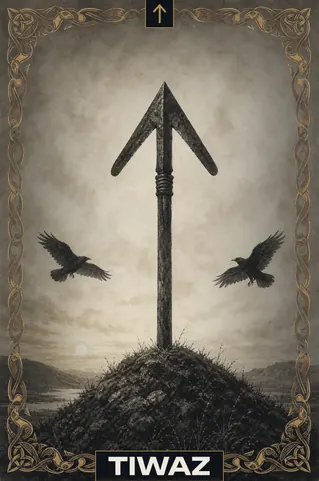
Sowilo and Teiwaz — a fair victory: success achieved by the rules, not by a shortcut, a won bet or court case.
Sowilo and Fehu — profit that everyone sees: money along with recognition, success that others will know about.
Sowilo and Wunjo — triumph: a celebration for a victory, joy that you want to share with loved ones.
Sowilo and Hagalaz — light after the storm: success that came right after a difficult period, and a warning not to lose vigilance.
Sowilo and Isa — a pause before the final push: the result is already visible, but the moment for it has not yet come, you need to hold on.
Sowilo and Algiz — a protected victory: success that has someone and something to defend it, a stable result, not a random one.
Sowilo and Nauthiz — a hard-won success: a victory achieved through difficulties, all the more valuable because it was not easy.
Sowilo as a symbol: amulet, tattoo, and charm
Sowilo is one of the most recognizable runes in jewelry: the zigzag of a sunbeam is read as a sign of victory and rising strength, and in tradition, it was worn by those who embarked on a difficult journey or competition — warriors, seafarers, those who had to prove their cause.
It is important to understand the duality of this sign honestly: Sowilo does not bring victory to those who did not act — it marks and enhances the result of already invested labor. In this sense, it is closer to a reward than a promise.
In modern practice, Sowilo is often found on rings, pendants, and as an element of temporary tattoos before an important event — an exam, competition, performance. Thanks to its symmetry, it is impossible to apply it "the wrong way": no matter how you turn it, the sign remains itself.
All of this is part of cultural tradition, not a way to influence events. The runic sign should be perceived as a reminder to stay the course, not as a substitute for your own efforts.
Frequently asked questions about the Sowilo rune
What does the Sowilo rune mean in simple terms?
A deserved victory and clarity after a period of uncertainty. The easiest way to remember it is: Sowilo is not "you'll get lucky," but "what you worked on has finally worked out."
Does Sowilo really have no inverted position?
Yes, the rune's inscription is rotationally symmetrical: an inverted Sowilo looks exactly the same as a direct one. A difficult interpretation is read not through inversion, but through neighboring runes in the spread — a heavy environment dampens the solar meaning without canceling it.
Is Sowilo a money rune?
Indirectly. It is responsible not for direct money inflow, like Fehu, but for recognition of labor — a bonus, a promotion, a won tender. Often, what others see is more important than the result itself.
Is Sowilo in a relationship spread a good sign?
Yes, it usually signifies clarity in feelings: something that doesn't need to be guessed. But it's worth remembering that too bright a light blinds — sometimes Sowilo indicates infatuation that prevents you from seeing flaws.
How to distinguish the Sowilo rune from the Sig rune in Scandinavian symbolism?
In the classic Elder Futhark, it is the same rune ᛋ — Sowilo. Differences in writing (single or double zigzag) relate to later runic alphabets and inscription variants, not to a separate meaning.
Sowilo came up last in the spread — what does that mean?
The most favorable option: no matter how the spread's story began, it ends with light and a deserved outcome. If difficult runes were nearby, Sowilo at the end is read as "made it, despite the difficulties."