What the Rune Eihwaz Means
Eihwaz is the rune of the horse, or more precisely, of what happens between the horse and the person riding it. In the economy of the Nordic peoples, the horse was not a luxury but a working force: it carried, plowed, and bore them into battle and on long journeys. The relationship with it was built not on command, but on understanding — a stubborn horse cannot be held by force, you need to work with it.
Therefore, the meaning of Eihwaz is broader than "journey." It is the rune of harmony between two sides moving towards a common goal: the rider and the horse, business partners, two people who trust each other to lead and be led in turn. Where there is this harmony, speed and ease appear, unattainable alone.
In a reading, Eihwaz often answers not "what will happen," but "with whom and how will you get there" — through whom the path will open and whether this companion can be trusted.
How Eihwaz Looks and How to Draw It Correctly
The inscription of Eihwaz is ᛖ: two vertical strokes-stands and two diagonals converging between them at a common apex at the top. The stands are the legs, the apex is the place where the lines meet and form a point directed upwards.
Eihwaz is written from bottom to top: first the left stand, then the right, then both diagonals to the center, closing the point at the top. The check for correctness is simple — the apex points upwards, not downwards; if you rotate the sign, the point will go to the base, and this is already a different position of the rune.
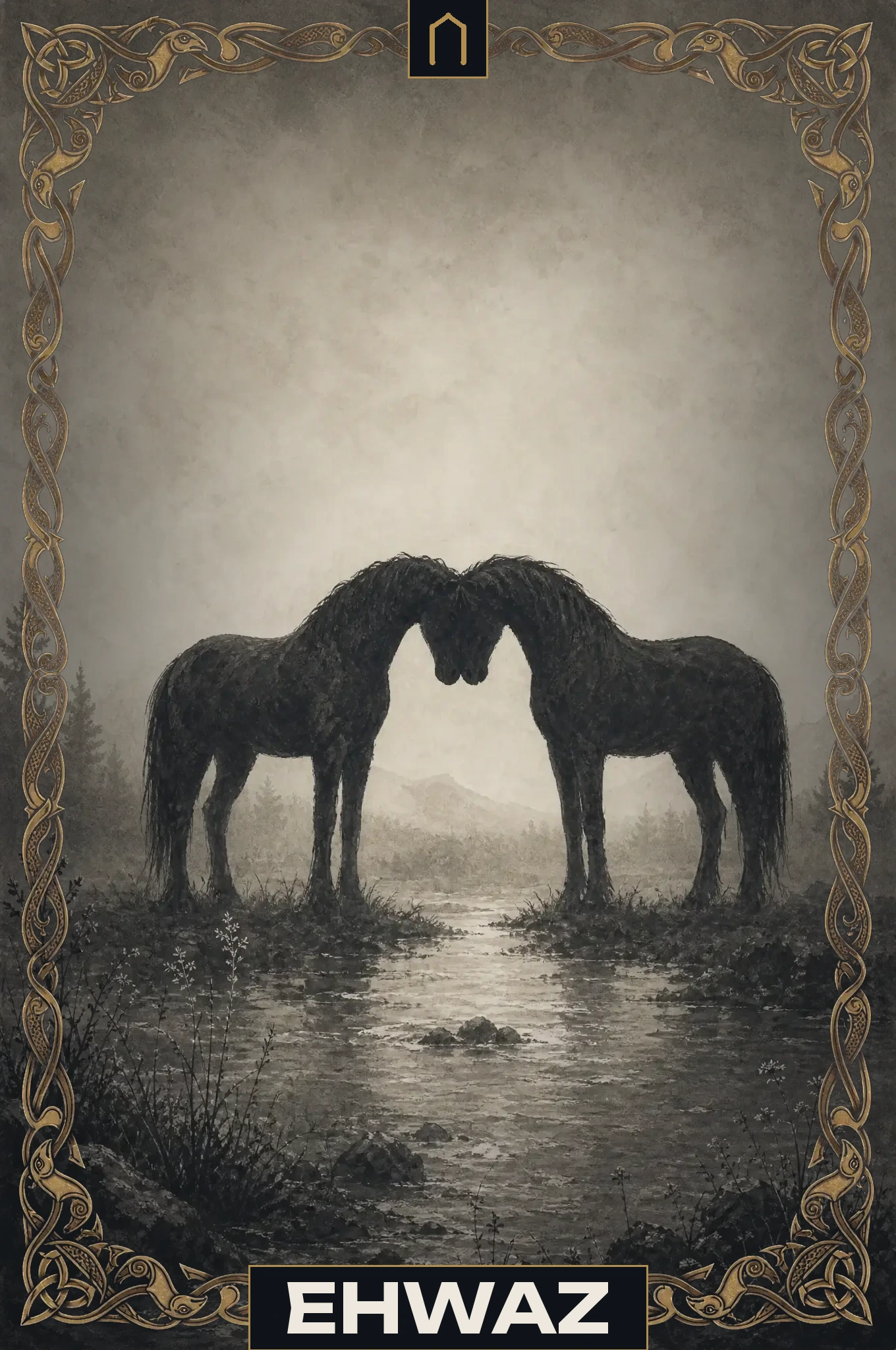
On our card, Eihwaz is two horses bowing their heads to each other: their necks and muzzles converge and give the sign a roof, and the animals' legs stand as straight as the rune's stands. The scene literally shows what the sign is made of: two supports and a meeting point at the top, where the trust of two becomes visible.
Eihwaz Upright
Upright Eihwaz is one of the most favorable runes for any question about movement. It says: the path is open, and there is someone nearby with whom it is easier to walk it. This can be a literal road — moving, traveling, changing jobs or residence — or it can be a partnership in which the parties have finally found a common rhythm.
The second meaning of upright Eihwaz is trust, earned by deeds, not words. A horse obeys not the one who shouts, but the one who behaves predictably; thus, the union described by this rune is based on both parties knowing what to expect from each other.
There is a caveat. Eihwaz is a rune of process, not of the finale: it promises movement, not arrival. If completing runes are nearby in the reading, the path will soon lead to a result; if not, it is still about the road, not the destination.
Eihwaz Reversed
Reversed Eihwaz is discord in a tandem. The horse and rider have stopped understanding each other: one pulls, the other resists, and the movement either slows down or stops altogether. Most often, this rune indicates not a rupture, but precisely a lack of coordination — the parties are still together, but no longer united.
In practice, this is read through several typical situations. The first is a partner who is not pulling their share of the load: promised and did not deliver, let down at an important moment. The second is distrust, due to which a decision is postponed where action was taken without hesitation before. The third is a literal delay on the road: a postponed trip, a canceled move, a breakdown en route.
Reversed Eihwaz does not always speak of the end of a union — often it is about the tandem needing to renegotiate who leads and who follows. If runes of loss are nearby, one should look more closely at the companion; if runes of growth are nearby, the delay is temporary.
Eihwaz in Relationships and Feelings
In a relationship reading, Eihwaz is a rune of equality that is rare in its clarity. It describes a couple where both lead in turn: today one makes a decision and pushes forward, tomorrow — the second, and no one feels constantly led. This is a relationship built on the fact that you can trust your partner with the direction.
To a question about feelings, upright Eihwaz answers: you are on the same path with them. Not necessarily passion — rather a feeling that you have a reliable companion with whom it is easier to go through life than alone. Often this rune appears for those considering moving, cohabitation, or a joint venture with a partner.
Reversed Eihwaz in relationships speaks of desynchronization: one pulls one way, the other — another, and there is no common tempo. Sometimes this means literal distance — a partner moves away, lives in two cities — and sometimes simply a different idea of where to go together.
Eihwaz in Work and Money
In business readings, Eihwaz is the rune of partnership and teamwork. An upright Eihwaz answers well to questions about joint ventures, hiring, mergers, and negotiations: it indicates that parties will work well together and that business will progress faster as a pair than alone. This is also the rune of changing locations – moving offices, relocation, business trips, or changing jobs for growth.
For industries literally connected with movement – transportation, logistics, tourism, delivery – Eihwaz reads almost profile-specific: business will move, cargo or clients will arrive.
A reversed Eihwaz in work-related questions points to an unreliable partner or contractor: deadlines are missed, promises are not kept, cargo or projects get stuck en route. It advises not to break the union immediately, but to re-align – who was supposed to do what, and why it didn't happen. Sometimes a reversed Eihwaz simply postpones a move or deal to a more favorable time.
Eihwaz – Yes or No
Upright Eihwaz is a yes, especially if the answer depends not only on you but on the coordination with someone else: a partner, colleague, or travel companion. The rune suggests that together you will achieve more than individually.
Reversed Eihwaz is a no, but not yet. Most often, it indicates not impossibility, but that the tandem is not ready: trust has not yet been built, the partner has not confirmed their part, the moment for movement has not arrived.
If the question is about a journey where there is no companion and none is needed, Eihwaz should be interpreted more broadly – as readiness to move in general, whether there are the strength and circumstances for a change of place or course right now.
If Eihwaz Appears in a Reading
The position in the spread significantly changes the interpretation of Eihwaz. In the past position, it indicates that the current situation grew out of a union or a change of location that happened earlier – a move, a meeting, a job change that set the direction. In the present position, it signifies that trust between parties is being tested right now. In the future position, Eihwaz promises movement: a journey, partnership, a change that is yet to come.
Eihwaz as the first rune in a spread reads as 'you are already on your way' – the process has begun, even if it's not yet noticeable. Eihwaz as the last rune means 'you will arrive, but not alone': the outcome depends on who you traveled with.
If the question is not about a journey or relationships at all, Eihwaz should be understood as advice to trust a proven method or person, rather than starting anew from scratch.
Combinations of Eihwaz with Other Runes
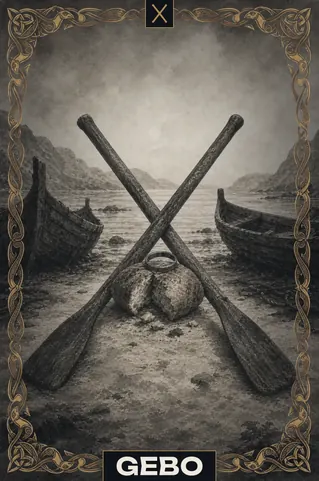
Eihwaz and Gebo – Trust formalized as a union: a partnership agreement, engagement, or official confirmation of what has already developed between two people.
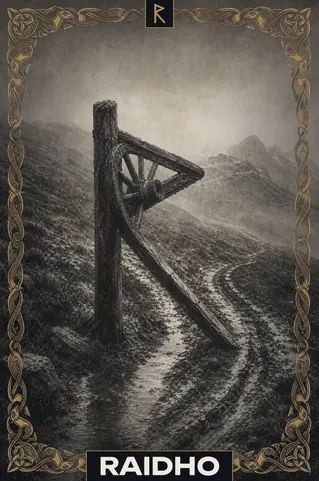
Eihwaz and Raidho – Double movement: a literal journey, trip, or relocation, where Eihwaz provides the companion, and Raidho provides the path itself.
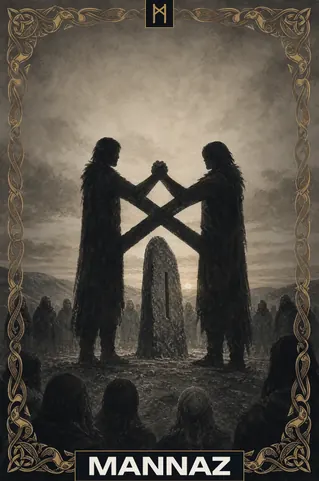
Eihwaz and Mannaz – Partnership within a team: not a pair, but a coordinated group where everyone knows their place.
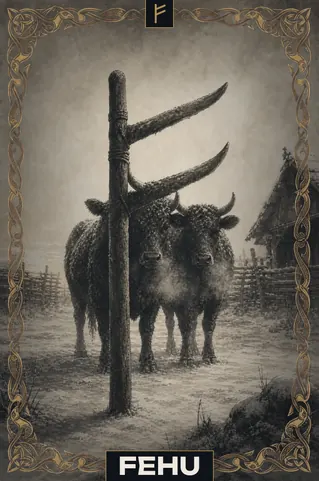
Eihwaz and Fehu – A paid move or a deal with money at stake: purchasing transport, partnership for profit.
Eihwaz and Hagalaz – Movement interrupted by an external circumstance: a breakdown, cancellation, an event beyond your control.
Eihwaz and Nauthiz – A forced move or a union out of necessity, not free choice.
Eihwaz and Wunjo – An easy, joyful journey: a trip for pleasure, a partnership that feels comfortable.
Eihwaz as a Symbol: Talisman, Tattoo, and Amulet
Eihwaz was traditionally applied to things associated with travel and joint ventures: harnesses, wagons, or items taken on a journey. In modern practice, this symbol is often chosen before moving, a long trip, or starting a partnership – as a reminder that the journey is easier when not undertaken alone.
It is also chosen as a symbol of trust – as a tattoo or pendant for two people entering into a joint venture or relationship who wish to signify this coordination as a value.
It's important to understand: Eihwaz does not find you a companion and does not guarantee that the journey will be smooth. It is part of cultural tradition, not a way to influence events – the symbol rather confirms the intention to move cohesively than creates it.
The reversed form is rarely used as a personal symbol: the symbol of trust and movement is worn upright, directed forward and upward.
Frequently Asked Questions About the Rune Eihwaz
What does the rune Eihwaz mean in simple terms?
Trust and coordination between two people moving towards a common goal, like a rider and a horse. The easiest way to remember it: Eihwaz is not about the journey itself, but about who you travel with.
Is Eihwaz the rune of travel?
Yes, but not only in the literal sense. It also relates to moving and trips, and changes of place in business – changing jobs, relocation – but its main emphasis is still on the partnership that makes movement possible.
What does reversed Eihwaz mean?
Discord in the tandem: the partner isn't pulling their weight, trust is broken, the journey has slowed down or stopped. This isn't always the end of the union – it's often just a signal to renegotiate who leads and who follows.
Is Eihwaz in a relationship reading a good sign?
Yes, if the question is about equality and joint movement: the rune indicates that both partners take turns leading and know how to trust each other. It speaks less of passionate romance – its domain is reliability and a shared rhythm.
How to distinguish upright Eihwaz from reversed?
By the direction of the point. In the upright rune, the two diagonals meet with the point upwards between the legs; if the symbol is turned, the point goes downwards towards the base – this is the reversed position.
Eihwaz appeared first in the spread – what does this mean?
That the process has already begun, even if it's not yet externally noticeable. In the first position, this rune reads as 'you are already on your way,' and the question is more about who is walking beside you.