What the Five of Cups means in Tarot
The upright Five of Cups is not a great tragedy, but a specific disappointment: a plan that seemed reliable fell through, a relationship ended, or hard work didn't yield results. The three overturned cups on the card are what is truly lost, and the figure's gaze is directed at them.
An important nuance often lost in retellings: there are two more cups on the card, whole and full, but they are standing behind the figure. The Five of Cups is not about everything being lost, but about a state where it is physically impossible to see that. It describes a moment of grief, not its end: sooner or later, the gaze will lift, and what remains will become visible on its own.
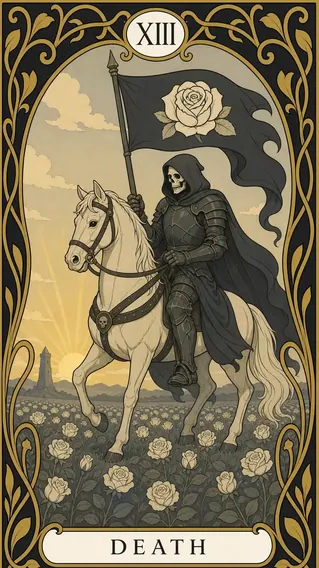
The Suit of Cups and the element of Water set the tone: the card is not about facts of the external world, but about the feeling inside—about what happens to a person when something doesn't work out. As a Minor Arcana card, it does not inflate the loss to the scale of destiny (that would be closer to Death or the Tower): it is about a specific episode—one conversation, one missed chance, one mistake, rather than the whole life.
Reversed Five of Cups: meaning
The reversed Five of Cups is the moment when the gaze finally looks away from what was spilled. There are three common interpretations, chosen based on the question of the spread:
- True acceptance. Grief has run its natural course, and the strength has appeared to look at what remains: two whole cups, a bridge across the river, a house on the other shore.
- Hasty closure. The reversed position sometimes means not processed, but bypassed grief—the person is in a hurry to "move on" without allowing themselves to fully experience the loss.
- Return of old pain. Less commonly, a loss thought to be long-forgotten resurfaces unexpectedly.
It is impossible to distinguish these options by one card alone—look at the neighboring cards and answer honestly: has the feeling truly passed, or has it just been pushed aside?
The Five of Cups in a "yes or no" spread
In a "yes or no" spread, the Five of Cups is usually read as likely no, with a clarification that is more important than the answer itself: the refusal is temporary and heavily colored by the emotion of the moment, making it difficult to judge clearly.
If the question is "should I make a decision now"—the answer is negative: you need to process the emotion first, then decide. If the question is "will I eventually manage to cope and see a way out"—the answer is likely positive, just not immediately.
The reversed position softens the answer to "yes, but not as quickly as you would like": there is a way forward, it just requires time to let go of what was lost, rather than skipping that step.
The Five of Cups in relationships and feelings
In a relationship spread, the upright Five of Cups is the pain of things not working out: a breakup, unfulfilled expectations, disappointment in a partner who didn't live up to trust. The card doesn't name the reason for the rift—it is about the focus on the loss, not its nature.
In the position of feelings, it is grief mixed with regret or guilt: "if only I had acted differently," "why didn't I notice sooner." The emotion is real, and it requires time, not a quick fix to the problem.
The reversed Five of Cups in relationships is the beginning of acceptance: the person still remembers the loss but is already capable of seeing those who are nearby now, rather than just mourning those who are gone. If the spread is about a new relationship after a breakup, it is a good sign—but not a reason to rush things.
The Five of Cups in work and money
In career spreads, the card represents a missed opportunity or a project that didn't finish as expected: the wrong contract, the wrong position, invested time that didn't pay off. The three overturned cups here are specific losses: a client, a deal, a reputation in the moment.
In money, the Five of Cups points to an expense that is regretted or lost income that cannot be recovered. The card's advice is pragmatic: calculate the real loss rather than catastrophizing it, and look at what resources—those two whole cups—are still available for the next step.
The reversed position is a signal that it is time to exit the loss-counting mode and build a new plan based on what remains, rather than what is no longer there.
The Five of Cups as a person: man and woman
When the Five of Cups appears in the "what kind of person" position, it does not describe the entire character, but a snapshot: someone currently going through a phase of disappointment or grief—over work, relationships, or plans. Such a person may seem detached, withdrawn, and not ready for new commitments.
A Five of Cups man is someone who keeps their feelings to themselves and is in no hurry to discuss them, even if clearly upset. A Five of Cups woman is someone who honestly talks about the loss aloud but lingers in this state for a long time, returning to the conversation about it again and again.
This is not a description of a weak or passive person—it is a description of a specific phase that everyone goes through, and it does not last forever.
Five of Cups sa posisyon ng kaisipan
Sa posisyon ng kaisipan, ang card ay nagpapahiwatig ng paulit-ulit na pag-iisip sa mga bagay na hindi nagtagumpay: pag-uulit sa isip ng usapang hindi naging maayos o desisyong pinagsisisihan. Ang atensyon ay nakatuon sa natapon, sa halip na sa kung ano ang buo pa.
Minsan, ito ay tamang panahon para pag-isipan ang pagkakamali upang hindi na ito maulit. Ngunit kung ang Five of Cups ay katabi ng mga Swords card, ito ay tungkol sa pagka-fixate na nakakapagod at humahadlang sa pag-usad — sa ganitong pagkakataon, dapat mong sadyang ituon ang iyong atensyon sa mga bagay na gumagana pa rin.
Ano ang dapat gawin kung lumabas ang Five of Cups
Ang payo ng Five of Cups ay simple sabihin ngunit mahirap gawin: pahintulutan ang iyong sarili na magluksa, at pagkatapos ay lumingon sa dalawang natitirang tasa. Hindi mo maaaring laktawan ang unang bahagi — ang pinigilang pighati ay halos palaging bumabalik nang mas matindi.
Ano ang dapat gawin:
- Tukuyin nang eksakto ang pagkawala. Huwag sabihing "lahat ay masama," kundi maging tiyak: ano ang hindi nagtagumpay at bakit ito mahalaga.
- Bigyan ang sarili ng panahon sa pagluluksa, nang hindi nagtatakda ng petsa kung kailan "dapat nang mag-move on."
- Tumingin sa kung ano ang natira. Mga resources, tao, opsyon — bihira silang mawala nang lubusan kasabay ng pagkawala.
- Huwag gumawa ng desisyon sa gitna ng matinding emosyon — huwag makipaghiwalay nang tuluyan o iwanan ang proyekto habang sariwa pa ang sakit.
At malinaw na paalala: ang Tarot reading ay hindi kapalit ng pagharap sa pighati at hindi ito psychological help. Ang card ay mahusay na naglalarawan ng pakiramdam, ngunit hindi ito gamot. Kung ang kondisyon ay hindi nawawala sa loob ng ilang linggo at nakakaabala sa pagkain, pagtulog, at pagtatrabaho — oras na para kumunsulta sa psychologist o therapist, sa halip na humanap ng sagot sa mga card.
Ano ang nakaguhit sa card
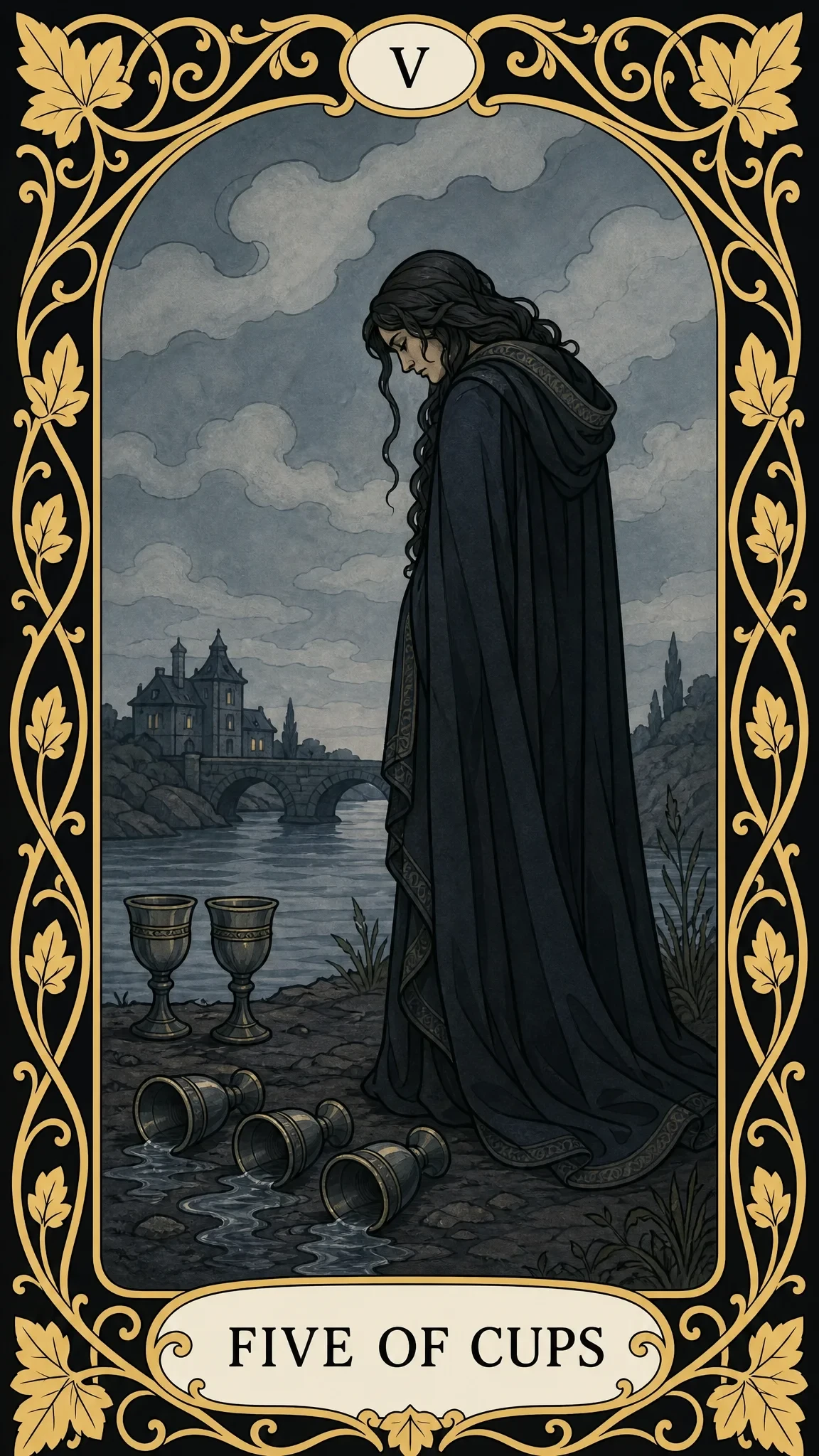
Sa ating Five of Cups ay may babaeng pigura na nakasuot ng madilim, halos itim na kapa na may gintong gilid, nakatayo sa mabatong pampang ng ilog. Nakayuko ang kanyang ulo, mahaba at madilim ang buhok na tumatakip sa kanyang mukha — nakatingin siya sa ibaba, hindi sa paligid.
Ganito binabasa ang eksena:
- Tatlong tumaob na tasa ang nakahiga sa lupa sa harap niya, ang madilim na likido ay dumadaloy patungo sa tubig — ito ang pinagtutuunan ng kanyang tingin, at ang mga bagay na hindi na maibabalik.
- Dalawang tasa ang nakatayo sa kanyang likuran, buo at puno — hindi niya ito nakikita dahil nakatalikod siya sa mga ito. Ito marahil ang pinakatumpak na detalye ng buong card: ang mga natira ay pisikal na nasa likod niya, at kailangan lang niyang lumingon.
- Bato na tulay sa ibabaw ng ilog at bahay na may mga ilaw sa bintana sa kabilang pampang — ang daan pasulong ay umiiral na, hindi na kailangang itayo muli, kailangan lang itong lakaran.
- Kulay-abong langit na nababalot ng ulap — ang emosyonal na background ng card: mabigat, ngunit hindi bagyo, masamang panahon na walang sakuna.
Sa itaas ng card ay ang Roman numeral na V, sa ibaba ay ang pangalang FIVE OF CUPS: ang ating deck ay iginuhit sa tradisyon ng Rider-Waite, kung saan ang card na ito ang ikalima sa suit ng Cups.
Five of Cups bilang card of the day
Ang Five of Cups bilang card of the day ay isang babala na huwag mag-fixate. Ang araw ay maaaring magsimula sa maliit na pagkadismaya: hindi sumagot, hindi nagtagumpay, hindi ayon sa plano. Ang panganib ay wala sa mismong pangyayari, kundi sa paggugol ng buong araw sa pag-uulit nito sa iyong isip.
Kapaki-pakinabang na mindset para sa araw na ito: mapansin ang pagkadismaya, huwag itong itanggi, ngunit sadyang ilipat ang atensyon sa mga bagay na nagtagumpay o available pa rin sa araw na iyon. Ang dalawang buong tasa sa card ay isang literal na paalala na suriin kung ano ang natira bago magluksa sa mga natapon.
Mga madalas itanong tungkol sa Five of Cups
Ito ba ay Major o Minor Arcana?
Ang Five of Cups ay isang Minor Arcana, suit ng Cups, elementong Tubig. May kabuuang 56 na Minor Arcana sa Tarot deck — 14 sa bawat isa sa apat na suit, at ang Five of Cups ay isa sa mga ito.
Ano ang pagkakaiba ng Five of Cups sa Five of Swords?
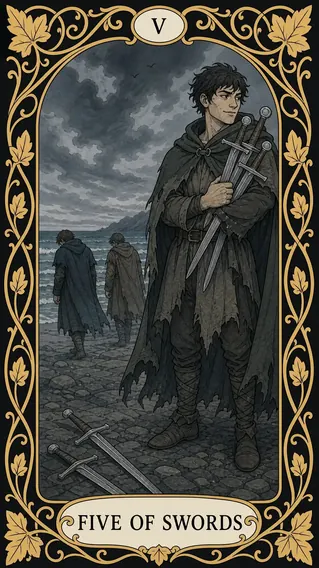
Parehong card ang tumutukoy sa mabigat na pakiramdam, ngunit magkaiba ang uri. Ang Five of Swords ay tungkol sa tunggalian na may malinaw na talunan at mapait na damdamin pagkatapos ng tagumpay sa anumang paraan. Ang Five of Cups ay hindi tungkol sa pakikipagbanggaan sa iba: ito ay pighati at pagkadismaya sa loob ng isang tao, nang walang kasalanan ng iba at walang nagwagi.
Ang Five of Cups ba ay nangangahulugang depresyon?
Inilalarawan ng card ang pagluluksa at pagkadismaya bilang emosyon ng sandali, hindi bilang medikal na diagnosis. Ang Tarot reading ay hindi makakapag-diagnose o makakapag-alis ng depresyon. Kung ang mabigat na pakiramdam ay tumatagal ng ilang linggo at nakakaabala sa normal na buhay, oras na para kumunsulta sa espesyalista, sa halip na humanap ng paliwanag sa mga card.
Ano ang ibig sabihin ng baligtad (reversed) na Five of Cups?
Karaniwan ay isa sa tatlong opsyon: natapos na ang pagluluksa at dumating na ang tunay na pagtanggap; nalampasan ang pighati nang hindi ito lubos na nararanasan; o biglang bumalik ang sakit na akala ay matagal nang nalampasan. Ang mga katabing card ang makakatulong upang makilala ang mga ito.
Ang Five of Cups ba ay isang masamang card?
Hindi, mas mabigat ito, ngunit hindi mapanira. Inilalarawan nito ang isang partikular na pagkadismaya at ang una, pinakamatinding yugto nito — hindi walang katapusang kasawian. Sa card, sa tabi ng tatlong natapong tasa ay may dalawa pang buo: malinaw na ipinapakita ng card na ang pagkawala ay hindi ang buong larawan.