Что означает Шестёрка жезлов в Таро
Шестёрка жезлов — это момент, когда усилие наконец увидели: хвалят, замечают, дают понять, что старания были не зря. Масштаб у карты не как у Колесницы или Солнца — не смена судьбы, а конкретное признание за конкретное дело: закрытую сделку, сданный экзамен, законченный проект, публичную похвалу от того, чьё мнение важно.
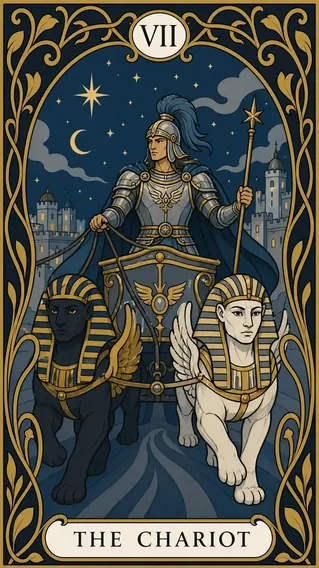
Важный нюанс, который стоит проговорить сразу: карта требует, чтобы усилие действительно было. Шестёрка жезлов не про везение и не про подарок судьбы, а про заслуженный результат, который наконец заметили. Если рядом в раскладе лежат карты труда — например, Восьмёрка пентаклей или Колесница — это подтверждает: успех вырос из работы, а не свалился случайно.
🔴 Как и любой младший аркан, эта карта — про эпизод, а не про судьбу целиком. Она не обещает, что признание останется навсегда или что за одной победой автоматически последует вторая: что будет дальше, покажут соседние карты.
Перевёрнутая Шестёрка жезлов: значение
Перевёрнутая Шестёрка жезлов чаще всего говорит не о поражении, а о признании, которое не состоялось так, как хотелось. У неё несколько типичных прочтений, и выбрать помогает контекст расклада.
- Работу заметили не те и не так. Усилие было настоящим, а отклика не случилось — начальник не сказал спасибо, аудитория не отреагировала, ожидаемой похвалы не прозвучало.
- Успех есть, но сам человек его не признаёт. Классический синдром самозванца: результат хороший, а внутри — ощущение, что «просто повезло» или «любой бы справился».
- Слишком сильная зависимость от одобрения. Человек делает не то, что важно ему, а то, за что похвалят; без внешней оценки теряется опора.
- Чужой труд присвоен. Реже, но встречается: победу приписали не тому, кто её действительно сделал.
Разница с прямым положением простая: прямая карта — про совпадение усилия и признания, перевёрнутая — про их разрыв.
Шестёрка жезлов в раскладе «да или нет»
В раскладах «да/нет» Шестёрка жезлов почти всегда отвечает да — но с уточнением: если усилие уже вложено. Карта не про удачу с нуля, она про результат вложенного труда, поэтому вопрос «получится ли, если я ничего не буду делать» она не поддерживает.
Перевёрнутое положение смягчает ответ до «да, но позже и без фанфар»: само дело может решиться, а вот признания, аплодисментов, публичного одобрения в этот раз не будет. Это стоит учитывать в вопросах вида «заметят ли меня», «оценят ли по достоинству» — перевёрнутая карта здесь отвечает скорее отрицательно.
Шестёрка жезлов в отношениях и чувствах
В раскладе на отношения прямая Шестёрка жезлов описывает пару, которую видят и которой гордятся — публичное признание союза: помолвку, о которой узнали все, примирение, о котором заговорили близкие, партнёра, которым не стыдно похвастаться. Это карта отношений, которые не прячут.
В позиции чувств она читается как гордость и приятная уверенность: человека выбрали, оценили, предпочли другим — и это ощущается как заслуженное, а не случайное везение.
Перевёрнутая Шестёрка жезлов в отношениях — чувство, что стараешься для партнёра, а отклика не получаешь: усилия остаются незамеченными внутри пары, даже если снаружи всё выглядит благополучно. Второй вариант — ревность к чужой публичной паре, желание такого же признания, которого пока нет у себя.
Шестёрка жезлов в работе и деньгах
В карьерных раскладах Шестёрка жезлов — это повышение, публичная похвала руководителя, успешная презентация, выигранный тендер, проект, который наконец завершили и о котором узнала вся команда. Карта хорошо описывает именно момент объявления результата, а не саму работу над ним.
В деньгах — доход, полученный за конкретное узнаваемое усилие: премия, гонорар, закрытая сделка, а не пассивный или случайный заработок. Соседние карты покажут масштаб: рядом с Тройкой пентаклей — командное признание, рядом с Тузом жезлов — начало новой волны интереса к человеку.
Перевёрнутое положение здесь — задержанная премия, повышение, которое откладывают, или признание, которое досталось не тому, кто фактически сделал работу. Совет карты в этом случае простой: фиксировать своё авторство заранее, а не полагаться на то, что справедливость восстановится сама.
Шестёрка жезлов как человек: мужчина и женщина
Когда Шестёрка жезлов выпадает в позиции «что за человек», она описывает не характер целиком, а текущую роль: это тот, кто прямо сейчас на виду и на подъёме, кому симпатизируют и кого поддерживают без лишних споров.
Мужчина-Шестёрка жезлов — уверенный в себе, харизматичный, естественно оказывается в центре внимания и не стесняется этого; окружающие ему доверяют и охотно признают его правоту. Женщина-Шестёрка жезлов — заметно успешная, её достижения видны без напоминаний, а авторитет получен, а не назначен сверху.
Это не оценка личности навсегда, а снимок момента: человек сейчас находится на волне признания, и это стоит учитывать при чтении расклада, а не превращать в постоянный ярлык.
Six of Wands in the position of thoughts
In the position of thoughts, the Six of Wands signifies attention directed towards how others perceive you. A person contemplates the future reaction: how will they respond to the news, will the effort be noticed, will they say thank you. Often these are pleasant expectations, but sometimes it's an anxious dependence on external approval, when one's own assessment of the result ceases to matter without external confirmation.
Neighboring cards will suggest which option is closer: next to confident Wands cards – healthy anticipation of deserved praise, next to Swords or reversed cards – an obsessive thought about "what if they don't notice."
What to do if the Six of Wands appears
The card's advice is simple: allow yourself to accept recognition, don't downplay it. Many, at the moment of success, first look for a reason to say "it's nothing" or "I just got lucky" – thereby devaluing what was truly deserved.
What is worth doing in essence:
- Separate the result from the applause. Praise is pleasant, but the card is fundamentally about the completed task – keep your focus there, not just on the audience's reaction.
- Name those who helped. If a team or a specific person was involved in the success, acknowledging them aloud doesn't diminish your own merit.
- Don't chase repeated approval at any cost. One success doesn't have to immediately become a habit of constantly proving yourself anew.
- Use the moment, don't just enjoy it. Recognition is a good time to ask for what you've been putting off: a raise, a new task, trust.
If recognition doesn't come, and the waiting becomes exhausting – it's a reason to talk to someone who can give honest feedback, rather than guessing the reasons alone.
What is depicted on the card
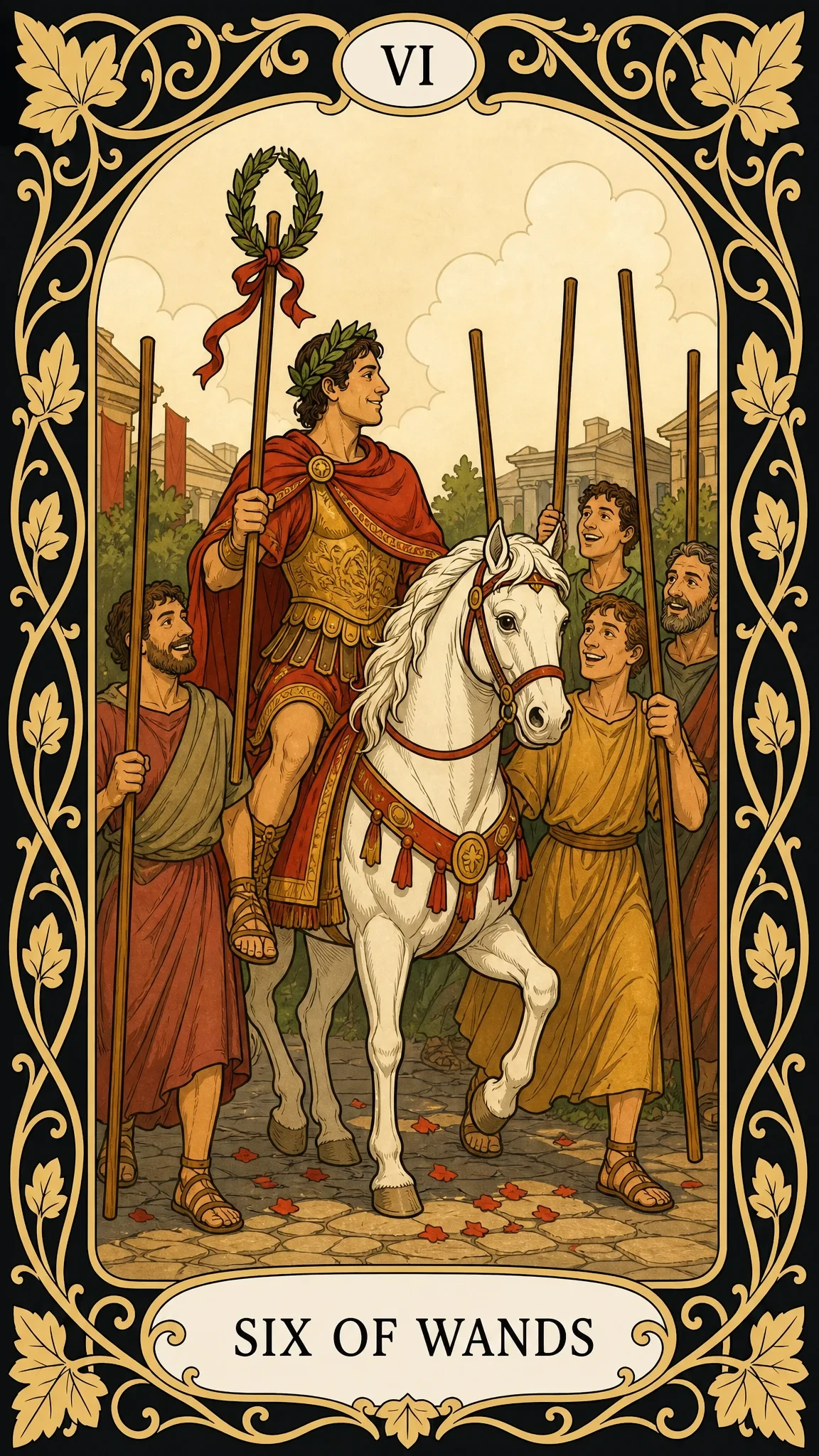
Our Six of Wands depicts a triumphant procession in the spirit of an ancient Roman general: a young rider in golden armor and a scarlet cloak, with a laurel wreath on his head, rides a white horse through a crowd of comrades. In his hand, he holds a tall wand, crowned with a laurel wreath with a red ribbon – and this is the only wreath on a wand in the entire scene. The comrades around carry five simple staffs without decorations, one per person: a total of six wands on the card.
The scene is read as follows:
- The rider in the center – the one whose effort is recognized first, the face of victory.
- The white horse – the confidence and ease with which recognition is accepted, without strain or struggle.
- The wreath only on his wand – recognition is addressed: victory has a name, and the crowd knows whose it is.
- The five simple staffs of those walking alongside – those without whom the procession would not have happened. They are nearby and noticeable, but the laurels are not theirs today: the card is as much about someone else's recognized success as it is about your own.
- The scarlet cloak and golden armor – status and visibility: the person on this card is seen from afar, they cannot hide, and there is no need to.
At the top of the card is the Roman numeral VI, and at the bottom – the English name SIX OF WANDS: the suit of Wands in our deck retains the traditional numbering of the Minor Arcana.
Six of Wands as a card of the day
The Six of Wands as a card of the day usually heralds a day when a small effort receives a response: someone publicly acknowledges your work, good news arrives regarding something long done, you manage to perform or show results in front of others.
A useful mindset for such a day: accept praise without immediately saying "oh, it's nothing special," but also don't dwell on it all day to the detriment of other tasks. If recognition didn't happen – don't consider it a failure of the day: the card speaks of the probability of a response, not a guarantee, and the outcome still depends on the specific situation.
Frequently asked questions about the Six of Wands card
Is it a Major or Minor Arcana?
A Minor Arcana of the suit of Wands, element of Fire. There are 56 Minor Arcana in the Tarot deck – 14 cards in each of the four suits – and the Six of Wands is one of them.
How does the Six of Wands differ from the Six of Cups?
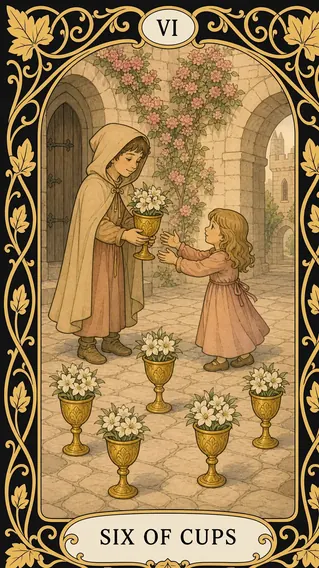
Both cards are about the sixth stage of their suit, but the themes are different. The Six of Wands looks forward and outward: public recognition, success that others see. The Six of Cups looks backward and inward: nostalgia, childhood memories, a warm personal past without an audience. One is about the stage, the other – about memory.
Is the Six of Wands always public success?
Not necessarily in the sense of worldwide fame, but the element of "someone recognized and appreciated it" is almost always important. It could be one person whose opinion matters, not a crowd – the essence of the card is the response to effort, not the scale of the audience.
What does the reversed Six of Wands mean in work?
Most often – delayed recognition: a bonus or promotion is postponed, and credit is given to someone other than the person who actually did the work. Less often – the devaluation of one's own success by the person themselves. The card's advice in this position is to document your authorship in advance, rather than waiting for justice to be restored on its own.
Is the Six of Wands in a reading a yes or no?
More likely yes, if it's about a task to which effort has already been applied. The card does not support expecting success out of thin air. In the reversed position, the answer softens to "yes, but without immediate recognition and possibly later than desired."