Present Continuous(現在進行形)は、英語で「今まさに起きている動作」(I am reading — 私は本を読んでいる)や「現在進行中の期間」を表す時制です。公式は am / is / are + 動詞の -ing形 です。このページでは、表を使ったルール解説、-ingの綴り、否定文・疑問文、時を表す語句、状態動詞、Present Simpleとの違い、そして理解を深めるための10問の練習問題を用意しました。
理解度チェック:12問×10パターン、各回答後に解説。
トレーナーを開くPresent Continuousとは
Present Continuous(現在進行形、Present Progressiveとも呼ばれます)は、英語の現在進行中の時制です。これは進行中の動作を示します。すでに始まっていて、まだ終わっておらず、今まさに、あるいは現在進行中の期間に行われていることを表します。
日本語には「進行形」という独立した時制はありません。「毎日読んでいる」も「今まさに読んでいる」も同じように聞こえます。英語では、これらはPresent Simple(現在形)とPresent Continuous(現在進行形)という2つの異なる時制になります。そのため、自分に問いかけるべき重要な質問は、「習慣なのか、それとも今進行中のプロセスなのか?」ということです。
- Look! It is raining. — 見て!雨が降っている。(今まさに)
- I am talking on the phone right now. — 今、電話で話しているところです。
- She is studying for her exams this week. — 今週は試験勉強をしている。(一時的な状況)
Present Continuous:作り方 — am, is, are + -ing
Present Continuousは、現在形のbe動詞(am, is, are)と、-ingが付いた動詞の2つのパーツで構成されます。どのbe動詞を選ぶかは主語によって決まります。日常会話や友人へのメールでは、I'm, she's, we're, they'reのように短縮形がほとんどです。
am / is / are がない -ing形は述語になりません。She playing tennis は間違いです。is が足りません。
| 主語 | 例文 |
|---|---|
I am · I'm | I am reading a book.私は本を読んでいます。 |
he / she / it is · she's | She is playing tennis.彼女はテニスをしています。 |
you / we / they are · they're | They are watching TV.彼らはテレビを見ています。 |
-ingの付け方ルール
ほとんどの場合、動詞に -ing を付けるだけです。しかし、綴りが変わる3つのケースがあります。テストで最も間違いやすいポイントです。
Present Continuousの否定文と疑問文
この時制の「文法的な役割」はすべて am / is / are が担い、-ingが付いた動詞は変化しません。否定文では be動詞の後に not を置き、疑問文では be動詞を主語の前に 出します。do や does はここでは不要です。それらは Present Simple で使われます。
I 'm not working today.
What are you doing?
Present Continuousが使われるとき
- 発話の瞬間の動作 — 話している今まさに起きていること。
Listen! Somebody is playing the piano. - 一時的な状況 — 今日、今週、今月など、ある期間続いているが、恒常的ではないこと。
My dad is working from home this month. - 変化や傾向 — 徐々に変化していること。
The weather is changing. The days are becoming shorter. - 近い未来の予定 — すでに決まっていること(チケット購入済み、約束済みなど)。
I am meeting John tomorrow. We are flying to Paris next week. - 不満を表す習慣 — always, constantly を伴い、話し手が不満に思っていること。
He is always complaining! — 彼はいつも文句ばかり言っている!
Present Continuousの時を表す語句:now, at the moment, Look!
時を表す語句は、どの時制を使うべきかを示唆します。Look!, Listen!, Be quiet! といった感嘆詞も、今まさに起きていることへの注意を促すため、進行形の合図となります。
状態動詞:Present Continuousで使われない動詞
一部の動詞は動作ではなく、感情、意見、知識、所有といった状態を表します。状態にはプロセスがないため、これらの動詞(状態動詞)は、「今」の話であっても通常は進行形にしません。
これらの動詞の一部には、動作を表す別の意味があり、その場合は進行形が可能です:
- I think this film is boring. — この映画は退屈だと思う(意見)。 / She is thinking about her answer. — 彼女は答えを考えている(プロセス)。
- He has a big family. — 彼は大家族だ(所有)。 / He is having lunch. — 彼は昼食をとっている(動作)。
- I see a bird on the roof. — 屋根の上に鳥が見える(知覚)。 / I am seeing the doctor tomorrow. — 明日医者に診てもらう(予定)。
| グループ | 動詞 |
|---|---|
| 感情と欲求 | like, love, hate, want, need, prefer |
| 思考と知識 | know, understand, believe, remember, forget, mean |
| 知覚 | see, hear, smell, taste |
| 所有 | have (持つ), own, belong |
| その他の状態 | be, seem, cost, contain |
Present SimpleとPresent Continuousの違い
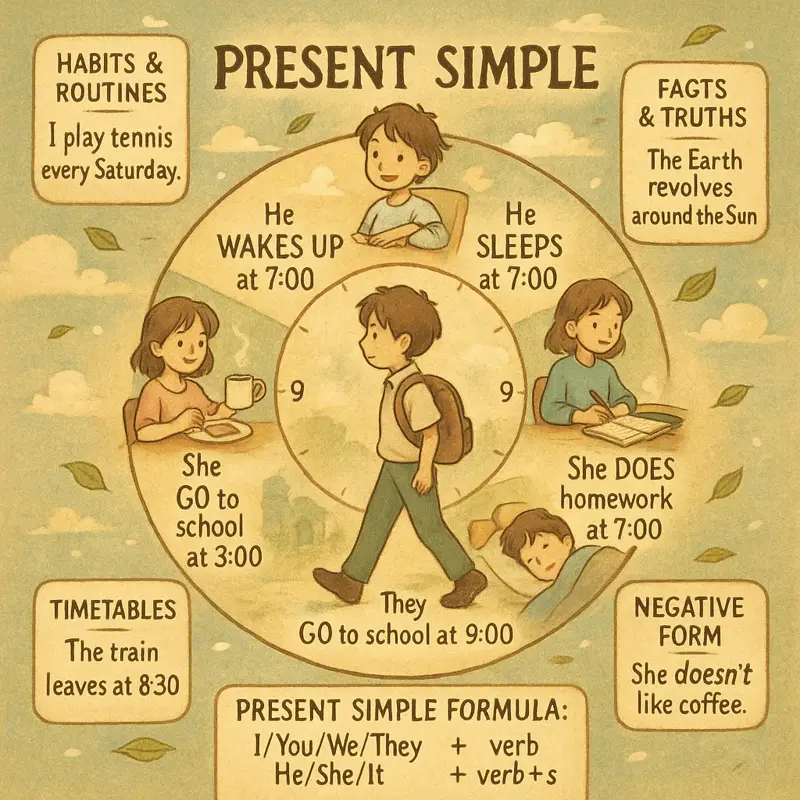
Present Simpleは、習慣、スケジュール、事実など、一般的に起きていることを伝えます。Present Continuousは、今、あるいは一時的に起きていることについてです。比較してみましょう:I walk to school every day(習慣)と Today I am walking to school with my friend(今日の出来事)。
時制を選ぶには、順番に3つの質問を自分に投げかけてみてください:
- 状態動詞か(know, like, want, have = 持つ)? → Present Simple。
- 習慣を表す語句があるか(every day, usually, often, on Mondays)または事実か? → Present Simple。
- 動作が今進行中か、一時的か、または予定か(now, Look!, this week, tomorrow)? → Present Continuous。
| Present Simple | Present Continuous |
|---|---|
| 表現するもの | |
| 習慣、繰り返し、スケジュール、事実 | 発話の瞬間の動作、一時的な状況、変化、予定 |
| 作り方 | |
| V / V‑s do / does | am / is / are + V‑ing |
| 時を表す語句 | |
| every day, usually, often, always, never, on Mondays | now, at the moment, Look!, Listen!, today, this week |
| 例文 | |
| He drinks coffee every morning. | Today he is drinking tea. |
| 否定文と疑問文 | |
| He doesn't drink milk. Does he drink milk? | He isn't drinking milk. Is he drinking milk? |

例文の解説:括弧を埋める
例1. Listen! という合図
問題: Listen! The neighbours ___ (argue) again.
ステップ1. 「Listen!」 — 今聞こえることに耳を傾けるよう言われている。つまりPresent Continuous。
ステップ2. 主語 the neighbours — 複数形(彼ら) → are。
ステップ3. Argue は -e で終わる:-e が取れる → arguing。
答え: Listen! The neighbours are arguing again.
例2. 習慣と -es の語尾
問題: Tim ___ (study) French twice a week.
ステップ1. Twice a week — 定期的な動作、習慣 → Present Simple。
ステップ2. 主語 Tim — 「彼」なので、-s が必要。
ステップ3. Study は子音 + y で終わる:y が i に変わり、-es を付ける。
答え: Tim studies French twice a week.
例3. 否定文での状態動詞
問題: I ___ (not / know) where my bag is.
ステップ1. 「今」の話のように思えて am not knowing と書きたくなる。
ステップ2. しかし know は状態動詞(知識)であり、進行形にはしない。
ステップ3. I を使った Present Simple の否定文:do not → don't + 動詞の原形。
答え: I don't know where my bag is.
例4. Present Continuousの疑問文
問題: ___ (they / dance) now?
ステップ1. Now — 発話の瞬間の動作 → Present Continuous。
ステップ2. 疑問文では be動詞が主語の前に来る。they なので are。
ステップ3. Dance → -e が取れる → dancing。
答え: Are they dancing now? — Yes, they are. / No, they aren't.
Present Continuousのよくある間違い
-
be動詞を忘れる:*She reading a book.*
am / is / are がないと述語になりません:She is reading a book.
-
be動詞を間違える:*They is singing.*
I — am, he / she / it — is, you / we / they — are:They are singing.
-
-ing の綴りを間違える:*runing*, *writeing*, *lieing*.
短母音の後は子音を重ねる(running)、-e を取る(writing)、-ie を -y に変える(lying)。
-
状態動詞を進行形にする:*I am wanting a new bike.*
Want, know, like, need などの状態動詞は Present Simple のまま:I want a new bike.
-
習慣を進行形で言う:*I am going to school every day.*
Every day は Present Simple の合図:I go to school every day.
-
do / does で疑問文・否定文を作る:*Do you reading? She doesn't playing.*
進行形では am / is / are だけが機能します:Are you reading? She isn't playing.
Present Continuousに関する質問と回答
Present Continuousとは簡単に言うと?
現在進行形のことです。今まさに起きていることや、現在進行中の期間に行われていて、まだ終わっていない動作について話すときに使います。例:I am reading — 私は読んでいる(今、進行中)。
Present Continuousはどうやって作る?
公式:主語 + am / is / are + 動詞の -ing形。Am は I、is は he, she, it、are は you, we, they と使います。否定文では am / is / are の後に not を付け、疑問文では am / is / are を主語の前に出します。
Present Continuousの時を表す語句は?
Now, right now, at the moment, at present, today, this week, these days、そして感嘆詞の Look! や Listen!。未来の予定には tonight, tomorrow, next week など。
Present SimpleとPresent Continuousの違いは?
Present Simpleは習慣、スケジュール、事実(every day, usually, often)。Present Continuousは今、あるいは一時的に起きていること(now, at the moment, this week)。She plays the piano — 彼女はピアノが弾けるし、定期的に弾く。She is playing the piano — 今まさに弾いている。
Present Continuousで使われない動詞は?
状態動詞:感情(like, love, hate, want, need)、思考(know, understand, believe, remember)、知覚(see, hear)、所有(have = 持つ, own, belong)、その他 seem, cost。正しくは I know であり、I am knowing ではありません。
Present Continuousを未来について使える?
はい、近い未来の予定であれば使えます:We are moving to a new flat next month。通常、tonight, tomorrow, next week などの時を表す語句が近くにあります。それがないと「今」の話として理解されます。
Present Continuousは何年生で習う?
通常、小3〜4で初めて習い、中1〜3で Present Simple との比較を詳しく復習します。このページのルールはどの学年でも使えます。