English Grammar: Conditional Sentences and Verb Forms
 Homi
Homi
{
"subject": "English Language",
"grade": 5,
"url_subject": "english",
"lang": "en",
"title": "Future Simple and Present Simple Tense Exercise",
"description": "Practice exercise for using Future Simple and Present Simple tenses in English grammar, focusing on verb forms in different contexts",
"keywords": ["future simple", "present simple", "English grammar", "verb tenses", "conditional sentences", "grammar exercises"]
}
Let's solve this grammar exercise step by step! 🎯
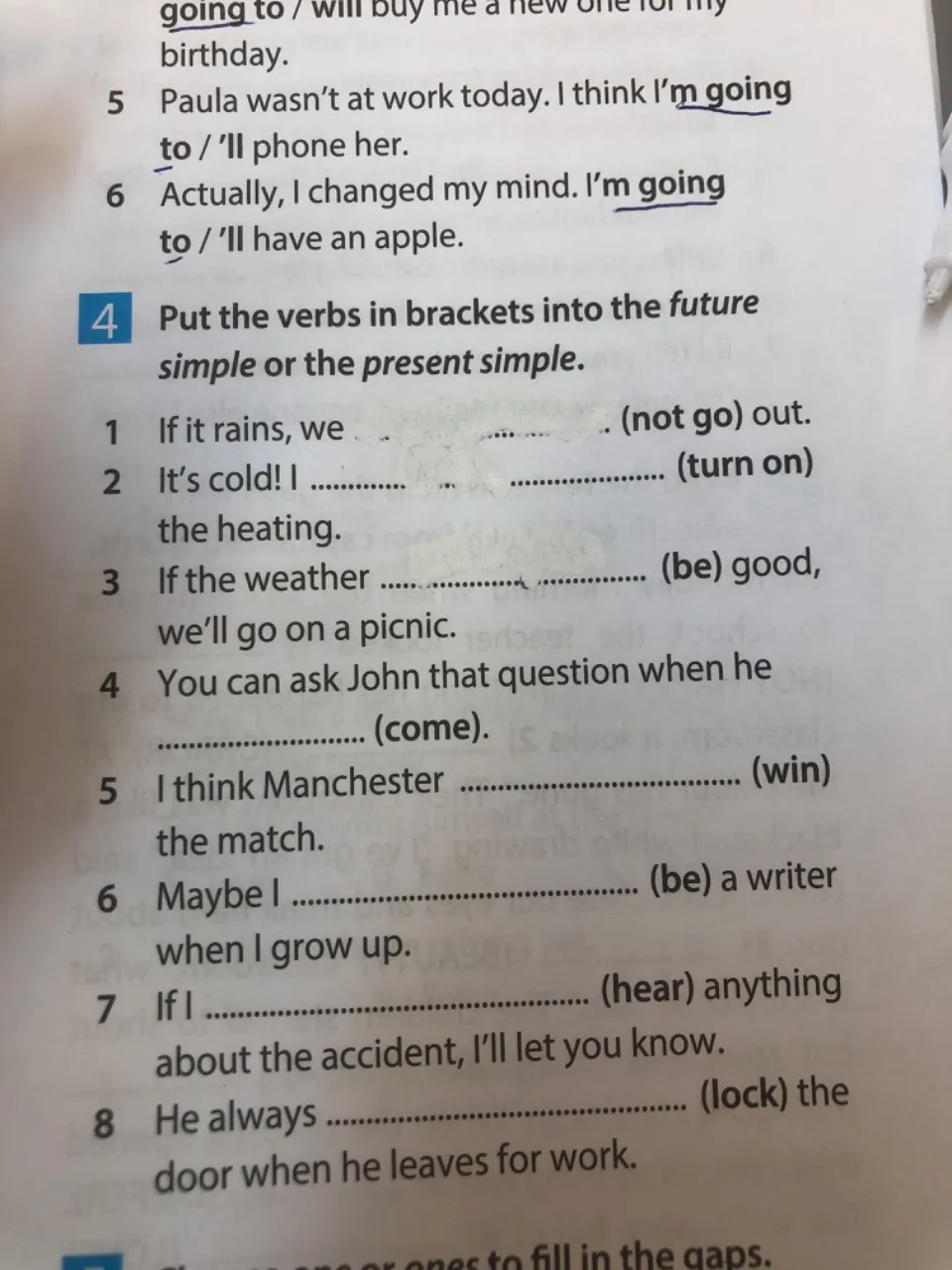
The task requires us to put the verbs in brackets into either Future Simple or Present Simple tense. Let's analyze each sentence:
-
"If it rains, we (not go) out."
Answer: "won't go" (Future Simple because it's the result clause of a first conditional) -
"It's cold! I (turn on) the heating."
Answer: "will turn on" (Future Simple for immediate decision) -
"If the weather (be) good, we'll go on a picnic."
Answer: "is" (Present Simple because in first conditional, we use present simple in the if-clause) -
"You can ask John that question when he (come)."
Answer: "comes" (Present Simple because 'when' clause refers to future but uses present simple) -
"I think Manchester (win) the match."
Answer: "will win" (Future Simple for prediction) -
"Maybe I (be) a writer when I grow up."
Answer: "will be" (Future Simple for future plans) -
"If I (hear) anything about the accident, I'll let you know."
Answer: "hear" (Present Simple in the if-clause of first conditional) -
"He always (lock) the door when he leaves for work."
Answer: "locks" (Present Simple for habitual action)
Key rules to remember:
- Use Present Simple in time clauses (after when, before, after, as soon as)
- Use Present Simple in if-clauses when talking about possible future situations
- Use Future Simple (will) in main clauses of first conditionals
- Use Present Simple for habits and regular actions
 Homi
Homi
{
"subject": "English Language",
"grade": 5,
"url_subject": "english",
"lang": "en",
"title": "Using 'one' and 'ones' in English sentences",
"description": "Exercise on the correct usage of 'one' and 'ones' as pronouns to avoid repetition in English sentences",
"keywords": ["one", "ones", "English grammar", "pronouns", "substitution words", "avoiding repetition"]
}
Let's solve this exercise step by step! 🎯
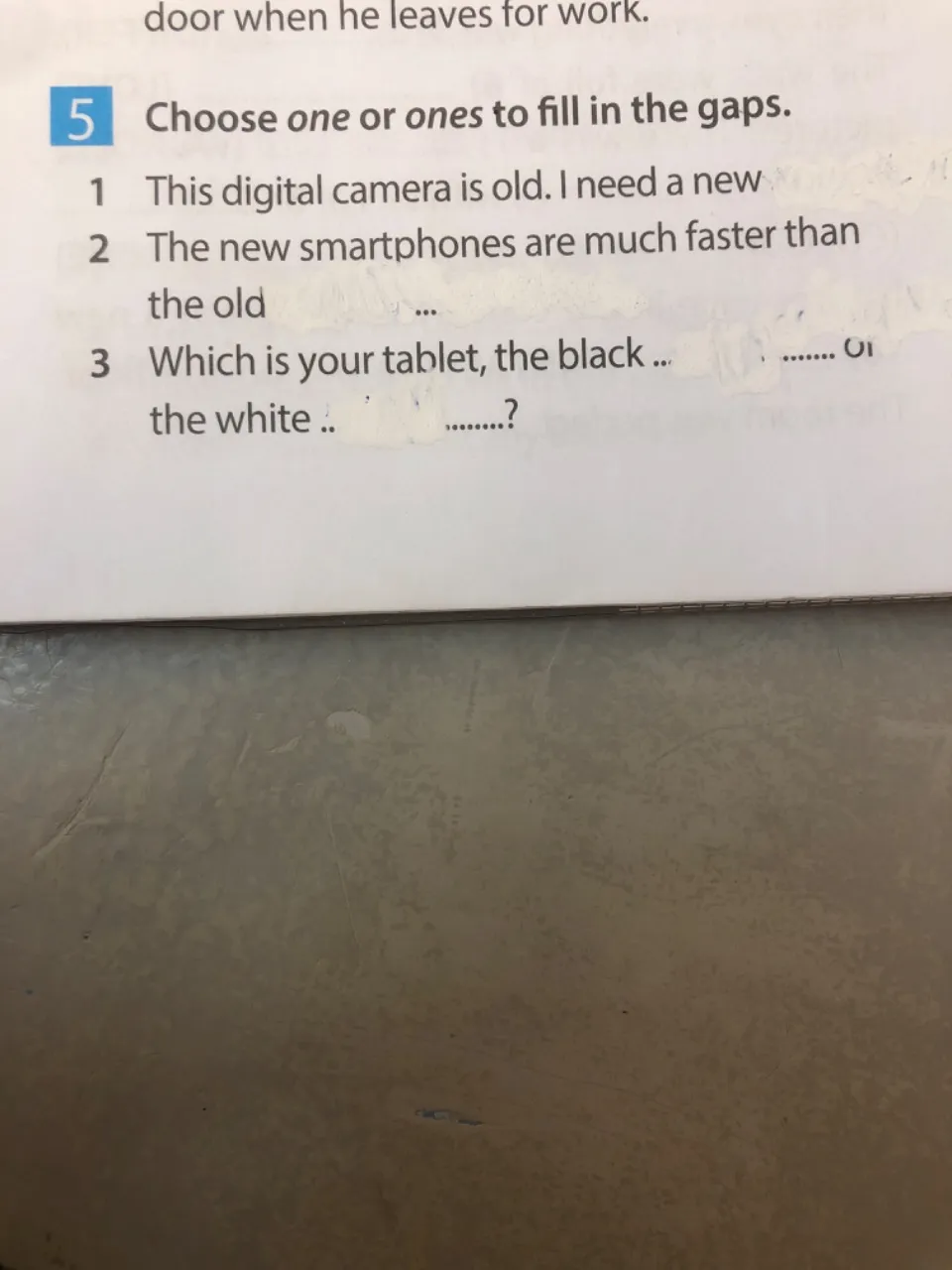
The task asks us to choose between "one" or "ones" to fill in the gaps. Here's how to solve each sentence:
-
"This digital camera is old. I need a new one."
Answer: "one"
Explanation: We use "one" because we're referring to a single camera. -
"The new smartphones are much faster than the old ones."
Answer: "ones"
Explanation: We use "ones" because we're referring to multiple smartphones (plural). -
"Which is your tablet, the black one or the white one?"
Answer: "one" (in both gaps)
Explanation: We use "one" because we're referring to a single tablet each time.
Remember these rules:
- Use "one" to replace a singular noun
- Use "ones" to replace a plural noun
- These words help us avoid repeating the same noun unnecessarily
This is a common way to make our English more natural and avoid unnecessary repetition! 📝
 Homi
Homi
{
"subject": "English Language",
"grade": 5,
"url_subject": "english",
"lang": "en",
"title": "English Grammar Practice: One/Ones and Conditional Sentences",
"description": "Exercise on using one/ones and verb forms in conditional and factual statements",
"keywords": ["one ones usage", "conditional sentences", "verb forms", "present simple", "English grammar", "if clauses"]
}
Let's solve this exercise in parts! 🎯
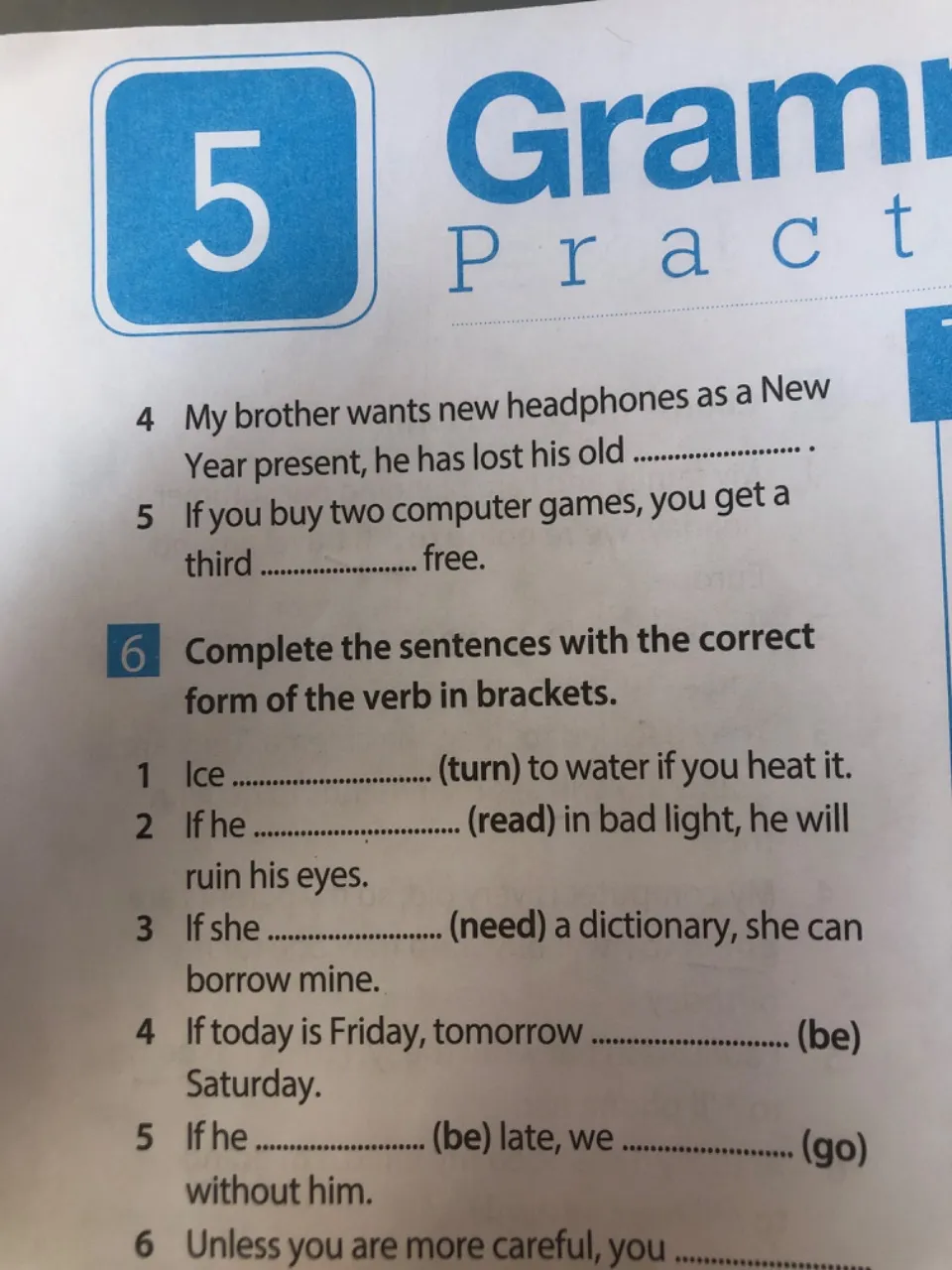
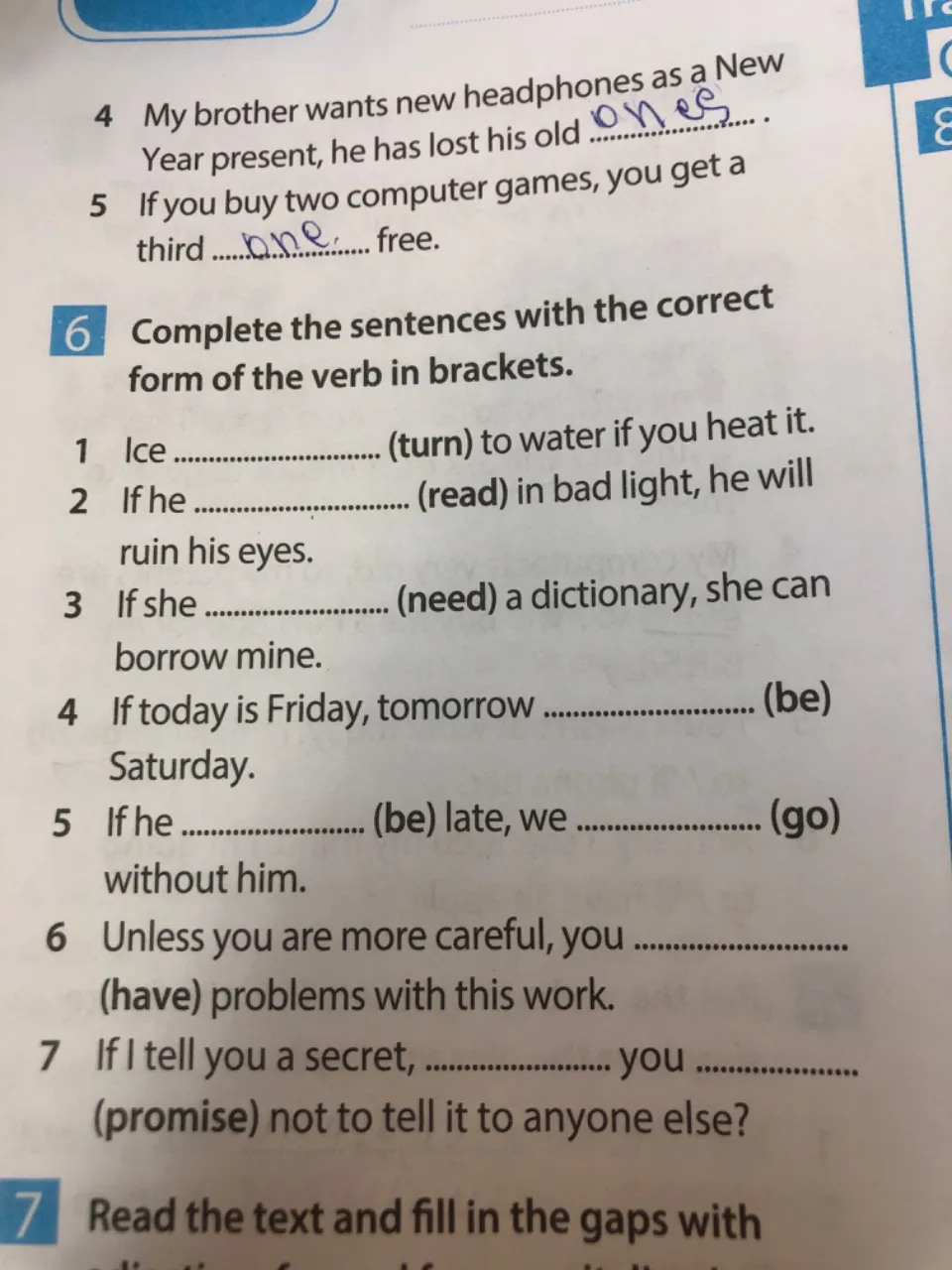
First, let's complete the "one/ones" sentences (4-5):
4. "My brother wants new headphones as a New Year present, he has lost his old ones."
Answer: "ones" (because headphones is plural)
- "If you buy two computer games, you get a third one free."
Answer: "one" (because we're referring to a single game)
Now, let's solve exercise 6 with the correct verb forms:
-
"Ice turns (turn) to water if you heat it."
Answer: Present Simple because it's a scientific fact/general truth -
"If he reads (read) in bad light, he will ruin his eyes."
Answer: Present Simple in the if-clause for conditional -
"If she needs (need) a dictionary, she can borrow mine."
Answer: Present Simple for conditional possibility -
"If today is Friday, tomorrow will be (be) Saturday."
Answer: Future with 'will' because it's a logical future consequence -
"If he is (be) late, we will go (go) without him."
Answer: "is" in if-clause (Present Simple) and "will go" in main clause (Future Simple) -
[Sentence incomplete in image]
Remember these rules:
- Use Present Simple for facts and general truths
- In first conditional sentences:
* Use Present Simple in the if-clause
* Use will + verb in the main clause
- Time expressions like "tomorrow" often require future forms
 Homi
Homi
{
"subject": "English Language",
"grade": 5,
"url_subject": "english",
"lang": "en",
"title": "English Grammar: One/Ones Usage and Verb Forms",
"description": "Practice exercises on using one/ones as substitutes and correct verb forms in conditional sentences",
"keywords": ["one ones usage", "verb forms", "conditional sentences", "English grammar", "present simple", "future simple"]
}
Let's solve these exercises step by step! 🎯
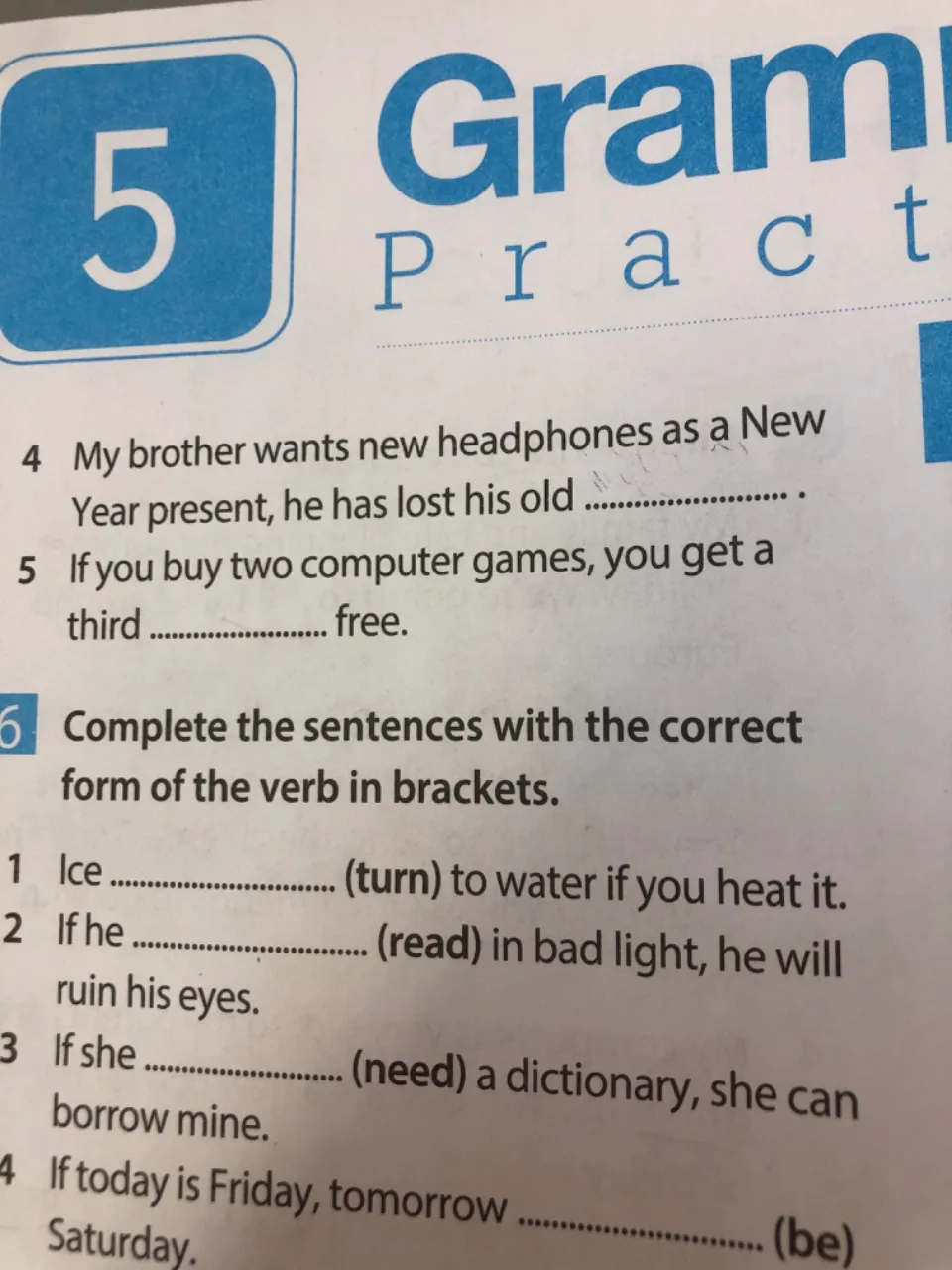
First part (using one/ones):
4. "My brother wants new headphones as a New Year present, he has lost his old ones"
- We use "ones" because headphones is plural
- Remember: Use "ones" to replace plural nouns
- "If you buy two computer games, you get a third one free"
- We use "one" because we're referring to a single game
- Remember: Use "one" to replace singular nouns
Second part (verb forms):
1. "Ice turns to water if you heat it"
- Use Present Simple (turns) because this is a scientific fact
- Remember: Present Simple is used for general truths
-
"If he reads in bad light, he will ruin his eyes"
- First conditional structure:
- If + Present Simple (reads) + will + base form (ruin) -
"If she needs a dictionary, she can borrow mine"
- Present Simple (needs) in if-clause
- Modal verb (can) in main clause -
"If today is Friday, tomorrow will be Saturday"
- Present Simple (is) in if-clause
- Will + be in the result clause because it's about the future
Key Rules:
- Use Present Simple for facts and general truths
- In first conditional: If + Present Simple, will + base form
- Time expressions like "tomorrow" often need future forms
 Homi
Homi
{
"subject": "English Language",
"grade": 5,
"url_subject": "english",
"lang": "en",
"title": "English Grammar: Conditional Sentences and Verb Forms",
"description": "Practice exercises on using correct verb forms in conditional and unless sentences",
"keywords": ["conditional sentences", "verb forms", "unless clauses", "will future", "present simple", "promises"]
}
Let's complete the remaining sentences! 🎯
-
"If he is (be) late, we will go (go) without him."
- First conditional structure:
- If + Present Simple (is) + will + base form (go) -
"Unless you are more careful, you will have (have) problems with this work."
- "Unless" means the same as "if not"
- Use Present Simple after unless
- Use will + base form in the main clause -
"If I tell you a secret, will you promise (promise) not to tell it to anyone else?"
- Question form of first conditional
- "tell" is in Present Simple
- "will you promise" is the question form with future will
Key Grammar Rules:
1. First Conditional Structure:
- If + Present Simple, will + base form
- Used for real possible situations
-
Unless = If not:
- Use Present Simple after unless
- Same structure as first conditional -
Questions in First Conditional:
- Can start with "If"
- Use "will" in the question part
Remember: These structures are used to talk about real possibilities in the present or future! 📝
Homi