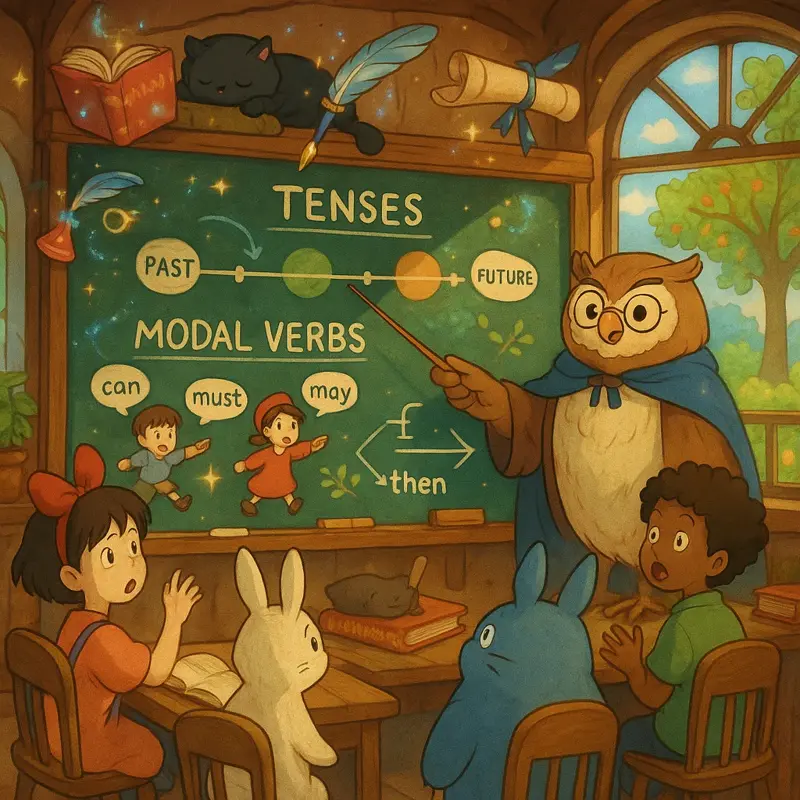
Modal Verbs in English
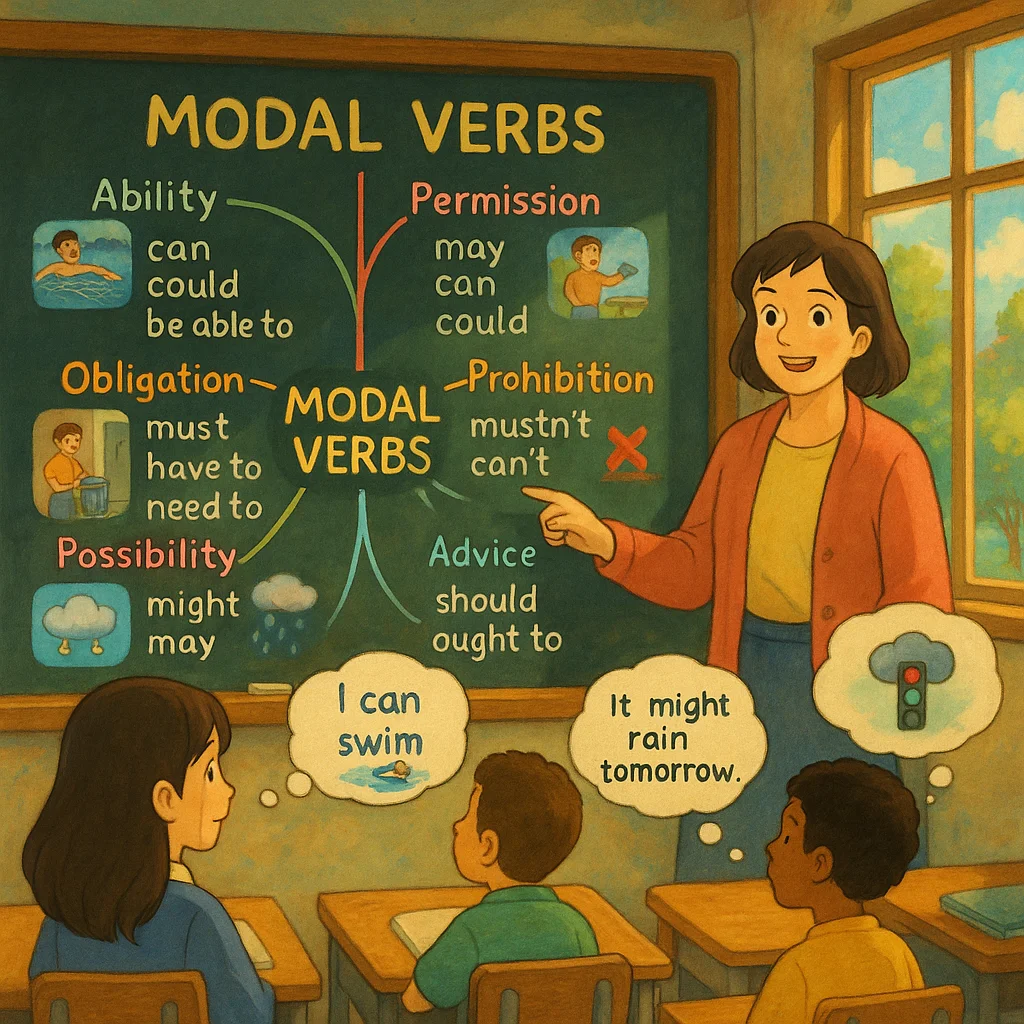
Modal verbs are special auxiliary verbs used to express ability, possibility, permission, obligation, or necessity. Unlike regular verbs, modals have unique characteristics:
- They don't take -s in the third person singular
- They are followed by the base form of the verb (without 'to')
- They don't have infinitive or -ing forms
- They form questions and negatives without 'do/does/did'
Common Modal Verbs and Their Uses
Ability
- Can: Present ability
- I can speak three languages.
- Could: Past ability or more polite requests
- I could swim when I was five.
- Could you help me with this?
- Be able to: Used in tenses where 'can' doesn't work
- I will be able to help you tomorrow.
- She has been able to solve the problem.
Permission
- Can: Informal permission
- You can use my phone.
- Could: More polite permission
- Could I borrow your pen?
- May: Formal permission
- May I come in?
Obligation and Necessity
- Must: Strong obligation (internal)
- I must study for my exam.
- Have to: External obligation
- I have to be at work by 8:00. (My boss requires it)
- Need to: Necessity
- You need to see a doctor.
- Should/Ought to: Advice or recommendation
- You should exercise regularly.
Prohibition
- Mustn't/Can't: Prohibition
- You mustn't smoke here. (It's forbidden)
- You can't park in front of the gate. (It's not allowed)
- Don't have to/Needn't: Lack of necessity
- You don't have to finish it now. (It's not necessary)
Possibility and Probability
- May/Might: Possibility
- It may/might rain later. (It's possible)
- Could: Possibility
- This could be the answer. (It's possible)
- Must: Logical conclusion/high probability
- He must be at home. His car is in the driveway.
- Can't/Couldn't: Impossibility
- That can't be true! (It's impossible)
Offers and Suggestions
- Shall: Offers/suggestions (mainly British English)
- Shall I help you?
- Shall we go for a walk?
- Will/Would: Requests/offers
- Will you help me move this table?
- Would you like some tea?
Modal Verbs in the Past
- Could have + past participle: Past possibility or ability that wasn't realized
- I could have passed the exam, but I was sick.
- Should have + past participle: Past advice or criticism
- You should have called me.
- Must have + past participle: Strong past deduction
- He must have missed the train.
- May/Might have + past participle: Past possibility
- She might have forgotten about our meeting.
- Needn't have + past participle: Unnecessary action that was done
- You needn't have bought so much food.
Common Mistakes to Avoid
-
Using 'to' after modal verbs
- ❌ I can to swim
- ✓ I can swim -
Adding -s in third person
- ❌ She cans speak French
- ✓ She can speak French -
Confusing 'must not' and 'don't have to'
- You must not smoke here = It's forbidden to smoke here
- You don't have to smoke here = It's not necessary to smoke here -
Using multiple modals together
- ❌ I will can go
- ✓ I will be able to go
Remember that modal verbs add nuance and precision to your communication, helping you express exactly what you mean about possibility, necessity, ability, and obligation.