ٹیرو میں چھ چھڑیاں کا کیا مطلب ہے
چھ چھڑیاں وہ لمحہ ہے جب کوششوں کو آخر کار دیکھا جاتا ہے: تعریف کی جاتی ہے، نوٹس لیا جاتا ہے، اور یہ احساس دلایا جاتا ہے کہ کوششیں رائیگاں نہیں گئیں۔ اس کارڈ کا دائرہ کار 'راتھ' (Chariot) یا 'سورج' (Sun) جتنا بڑا نہیں ہے — یہ تقدیر کی تبدیلی نہیں، بلکہ ایک مخصوص کام کے لیے مخصوص پذیرائی ہے: ایک ڈیل مکمل کرنا، امتحان پاس کرنا، پروجیکٹ ختم کرنا، یا عوامی تعریف۔
ایک اہم نکتہ: یہ کارڈ تقاضا کرتا ہے کہ کوشش واقعی کی گئی ہو۔ چھ چھڑیاں قسمت یا تحفے کے بارے میں نہیں، بلکہ اس مستحق نتیجے کے بارے میں ہے جسے آخر کار دیکھا گیا ہے۔ اگر آس پاس محنت کے کارڈز ہوں — جیسے آٹھ پینٹیکلز یا راتھ — تو یہ تصدیق کرتا ہے کہ کامیابی محنت سے ملی ہے، اتفاق سے نہیں۔
🔴 کسی بھی چھوٹے آرکانا کی طرح، یہ کارڈ ایک قسط کے بارے میں ہے، پوری تقدیر کے بارے میں نہیں۔ یہ وعدہ نہیں کرتا کہ پذیرائی ہمیشہ رہے گی یا ایک جیت کے بعد خود بخود دوسری ملے گی: آگے کیا ہوگا، یہ آس پاس کے کارڈز بتائیں گے۔
الٹی چھ چھڑیاں: مطلب
الٹی چھ چھڑیاں اکثر شکست کے بارے میں نہیں، بلکہ ایسی پذیرائی کے بارے میں بتاتی ہے جو توقع کے مطابق نہیں ملی۔ اس کی چند عام تشریحات ہیں:
- کام کو غلط لوگوں نے یا غلط طریقے سے دیکھا۔ کوشش حقیقی تھی، لیکن جواب نہیں ملا — باس نے شکریہ ادا نہیں کیا، سامعین نے ردعمل نہیں دیا، متوقع تعریف نہیں ملی۔
- کامیابی ہے، لیکن انسان خود اسے تسلیم نہیں کرتا۔ کلاسک امپوسٹر سنڈروم: نتیجہ اچھا ہے، لیکن اندر سے لگتا ہے کہ 'بس قسمت اچھی تھی'۔
- تعریف پر بہت زیادہ انحصار۔ انسان وہ نہیں کرتا جو اس کے لیے اہم ہے، بلکہ وہ کرتا ہے جس پر تعریف ملے؛ بیرونی تعریف کے بغیر سہارا ختم ہو جاتا ہے۔
- دوسروں کی محنت کا سہرا۔ کبھی کبھی کامیابی کا سہرا اسے مل جاتا ہے جس نے کام نہیں کیا ہوتا۔
سیدھی پوزیشن کے ساتھ فرق سادہ ہے: سیدھا کارڈ کوشش اور پذیرائی کے ملاپ کے بارے میں ہے، الٹا کارڈ ان کے درمیان دوری کے بارے میں ہے۔
ٹیرو 'ہاں یا نہیں' میں چھ چھڑیاں
ہاں/نہیں کے پھیلاؤ میں چھ چھڑیاں تقریباً ہمیشہ ہاں کا جواب دیتی ہیں — لیکن ایک وضاحت کے ساتھ: اگر کوشش پہلے ہی کی جا چکی ہو۔ یہ کارڈ صفر سے کامیابی کے بارے میں نہیں ہے، یہ محنت کے نتیجے کے بارے میں ہے، اس لیے یہ اس سوال کی حمایت نہیں کرتا کہ 'اگر میں کچھ نہ کروں تو کیا ہوگا'۔
الٹی پوزیشن جواب کو 'ہاں، لیکن بعد میں اور بغیر کسی دھوم دھام کے' تک محدود کر دیتی ہے: کام تو ہو سکتا ہے، لیکن پذیرائی، تالیاں اور عوامی تعریف اس بار نہیں ملے گی۔
تعلقات اور جذبات میں چھ چھڑیاں
تعلقات کے پھیلاؤ میں، سیدھی چھ چھڑیاں ایسے جوڑے کو بیان کرتی ہیں جسے دیکھا جاتا ہے اور جس پر فخر کیا جاتا ہے — رشتے کی عوامی پذیرائی: منگنی جس کا سب کو پتہ چل گیا، صلح جس کے بارے میں قریبی لوگوں نے بات کی، ایسا ساتھی جس پر فخر کرنے میں شرم نہ ہو۔ یہ ایسے تعلقات کا کارڈ ہے جنہیں چھپایا نہیں جاتا۔
جذبات کے معاملے میں، یہ فخر اور خوشگوار اعتماد کے طور پر پڑھا جاتا ہے: انسان کو منتخب کیا گیا، سراہا گیا، دوسروں پر ترجیح دی گئی — اور یہ مستحق کامیابی محسوس ہوتی ہے۔
تعلقات میں الٹی چھ چھڑیاں — یہ احساس کہ آپ ساتھی کے لیے کوشش کر رہے ہیں، لیکن جواب نہیں مل رہا: کوششیں جوڑے کے اندر نظر انداز رہتی ہیں۔ دوسرا آپشن — کسی دوسرے جوڑے سے حسد، ایسی ہی پذیرائی کی خواہش جو ابھی خود کو نہیں ملی۔
کام اور پیسے میں چھ چھڑیاں
کیریئر کے پھیلاؤ میں، چھ چھڑیاں ترقی، باس کی عوامی تعریف، کامیاب پریزنٹیشن، جیتا ہوا ٹینڈر، یا ایسا پروجیکٹ ہے جسے آخر کار مکمل کیا گیا اور پوری ٹیم کو پتہ چل گیا۔ یہ کارڈ کام کے عمل کے بجائے نتیجے کے اعلان کے لمحے کو بیان کرتا ہے۔
پیسے میں — مخصوص کوشش کے لیے حاصل کردہ آمدنی: بونس، فیس، کلوزڈ ڈیل، نہ کہ غیر فعال یا اتفاقی کمائی۔ آس پاس کے کارڈز پیمانہ دکھائیں گے: تین پینٹیکلز کے ساتھ — ٹیم کی پذیرائی، چھڑیوں کے اکے (Ace) کے ساتھ — انسان میں دلچسپی کی نئی لہر کا آغاز۔
الٹی پوزیشن یہاں — تاخیر سے ملنے والا بونس، ترقی جو ملتوی کر دی گئی، یا ایسی پذیرائی جو اسے ملی جس نے کام نہیں کیا۔ کارڈ کا مشورہ سادہ ہے: اپنی محنت کا کریڈٹ پہلے سے محفوظ کریں، اس پر بھروسہ نہ کریں کہ انصاف خود بخود ہو جائے گا۔
بطور انسان چھ چھڑیاں: مرد اور عورت
جب چھ چھڑیاں 'انسان کیسا ہے' کی پوزیشن میں آتی ہے، تو یہ کردار کو نہیں بلکہ موجودہ کردار کو بیان کرتی ہے: یہ وہ ہے جو ابھی نظروں میں ہے اور عروج پر ہے، جسے پسند کیا جاتا ہے اور بغیر کسی بحث کے حمایت حاصل ہے۔
مرد چھ چھڑیاں — خود اعتماد، کرشماتی، قدرتی طور پر توجہ کا مرکز بن جاتا ہے اور اس سے گھبراتا نہیں؛ لوگ اس پر بھروسہ کرتے ہیں اور اس کی بات مانتے ہیں۔ عورت چھ چھڑیاں — نمایاں طور پر کامیاب، اس کی کامیابیاں بغیر یاد دلائے نظر آتی ہیں، اور اختیار اوپر سے نہیں بلکہ محنت سے حاصل کیا گیا ہے۔
یہ شخصیت کا مستقل اندازہ نہیں، بلکہ لمحے کی تصویر ہے: انسان ابھی پذیرائی کی لہر پر ہے، اور اسے پڑھتے وقت مدنظر رکھنا چاہیے۔
Six of Wands in the position of thoughts
In the position of thoughts, the Six of Wands signifies attention directed towards how others perceive you. A person contemplates future reactions: how will they respond to the news, will the effort be noticed, will they say thank you. Often these are pleasant expectations, but sometimes it's an anxious dependence on external approval, where one's own assessment of the result ceases to matter without external validation.
Neighboring cards will suggest which option is closer: alongside confident Wands cards – a healthy anticipation of deserved praise, alongside Swords or reversed cards – an obsessive thought about "what if they don't notice."
What to do if the Six of Wands appears
The card's advice is simple: allow yourself to accept recognition, don't downplay it. Many, at the moment of success, immediately look for a reason to say "it's nothing" or "I just got lucky" – thereby devaluing what was truly deserved.
What is worth doing in essence:
- Separate the result from the applause. Praise is pleasant, but the card is fundamentally about the completed task – keep your focus there, not just on the audience's reaction.
- Name those who helped. If a team or a specific person was involved in the success, acknowledging them aloud doesn't diminish your own merit.
- Don't chase repeated approval at all costs. One success doesn't have to immediately become a habit of constantly proving yourself anew.
- Use the moment, don't just enjoy it. Recognition is a good time to ask for what you've been putting off: a raise, a new task, trust.
If recognition doesn't come, and the waiting becomes exhausting – it's a reason to talk to someone who can give honest feedback, rather than guessing the reasons alone.
What is depicted on the card
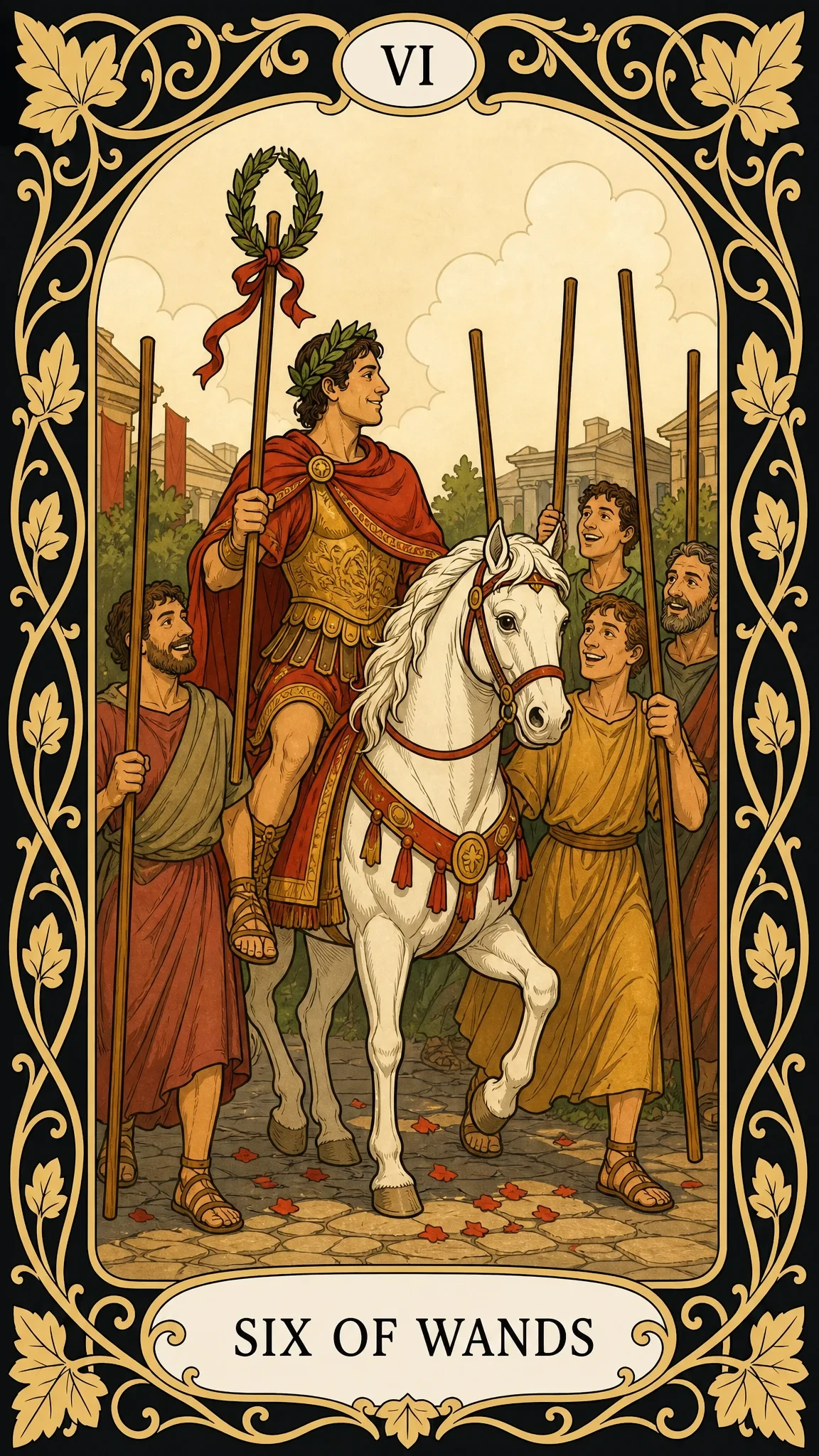
Our Six of Wands depicts a triumphal procession in the spirit of an ancient Roman general: a young rider in golden armor and a scarlet cloak, with a laurel wreath on his head, rides a white horse through a crowd of comrades. In his hand, he holds a tall wand, topped with a laurel wreath with a red ribbon – and this is the only wreath on a wand in the entire scene. The comrades around carry five simple staffs without decorations, one per person: a total of six wands on the card.
The scene is read as follows:
- The rider in the center – the one whose effort is recognized first, the face of victory.
- The white horse – the confidence and ease with which recognition is accepted, without strain or struggle.
- The wreath only on his wand – recognition is addressed: victory has a name, and the crowd knows whose it is.
- The five simple staffs held by those nearby – those without whom the procession would not have happened. They are nearby and noticeable, but the laurels are not theirs today: the card is about someone else's recognized success as much as about your own.
- The scarlet cloak and golden armor – status and visibility: the person on this card is seen from afar, hiding is impossible, and unnecessary.
At the top of the card is the Roman numeral VI, and at the bottom – the English name SIX OF WANDS: the Wands suit in our deck retains the traditional numbering of the minor arcana.
Six of Wands as a Day Card
The Six of Wands as a day card usually heralds a day when a small effort receives a response: someone publicly acknowledges your work, good news arrives regarding something long done, you manage to perform or show results in front of others.
A useful mindset for such a day: accept praise without an immediate "oh, it's nothing special," but also don't dwell on it all day to the detriment of tasks. If recognition didn't happen – don't consider it a failure of the day: the card speaks of the probability of a response, not a guarantee, and the outcome still depends on the specific situation.
Frequently asked questions about the Six of Wands card
Is it a Major or Minor Arcana?
A Minor Arcana of the Wands suit, element of Fire. There are 56 Minor Arcana in the Tarot deck – 14 cards in each of the four suits – and the Six of Wands is one of them.
How does the Six of Wands differ from the Six of Cups?
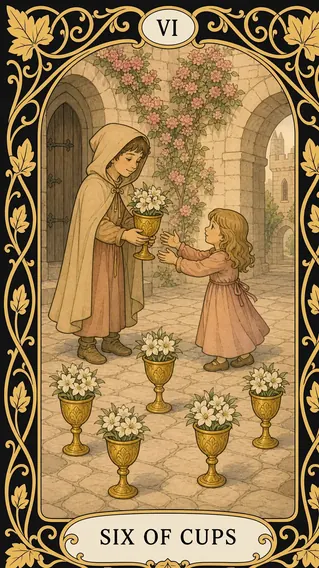
Both cards are about the sixth stage of their suit, but the themes are different. The Six of Wands looks forward and outward: public recognition, success that others see. The Six of Cups looks backward and inward: nostalgia, childhood memories, a warm personal past without an audience. One is about the stage, the other – about memory.
Is the Six of Wands always public success?
Not necessarily in the sense of worldwide fame, but the element of "someone recognized and appreciated it" is almost always important. It could be one person whose opinion matters, not a crowd – the essence of the card is the response to effort, not the scale of the audience.
What does the reversed Six of Wands mean in work?
Most often – delayed recognition: a bonus or promotion is postponed, and the credit is given to someone other than the person who actually did the work. Less often – the devaluation of one's own success by the person themselves. The card's advice in this position is to document your authorship in advance, rather than waiting for justice to be restored on its own.
Is the Six of Wands in a reading a yes or no?
More likely yes, if it's about a task to which effort has already been applied. The card does not support expecting success out of thin air. In the reversed position, the answer softens to "yes, but without immediate recognition and possibly later than desired."