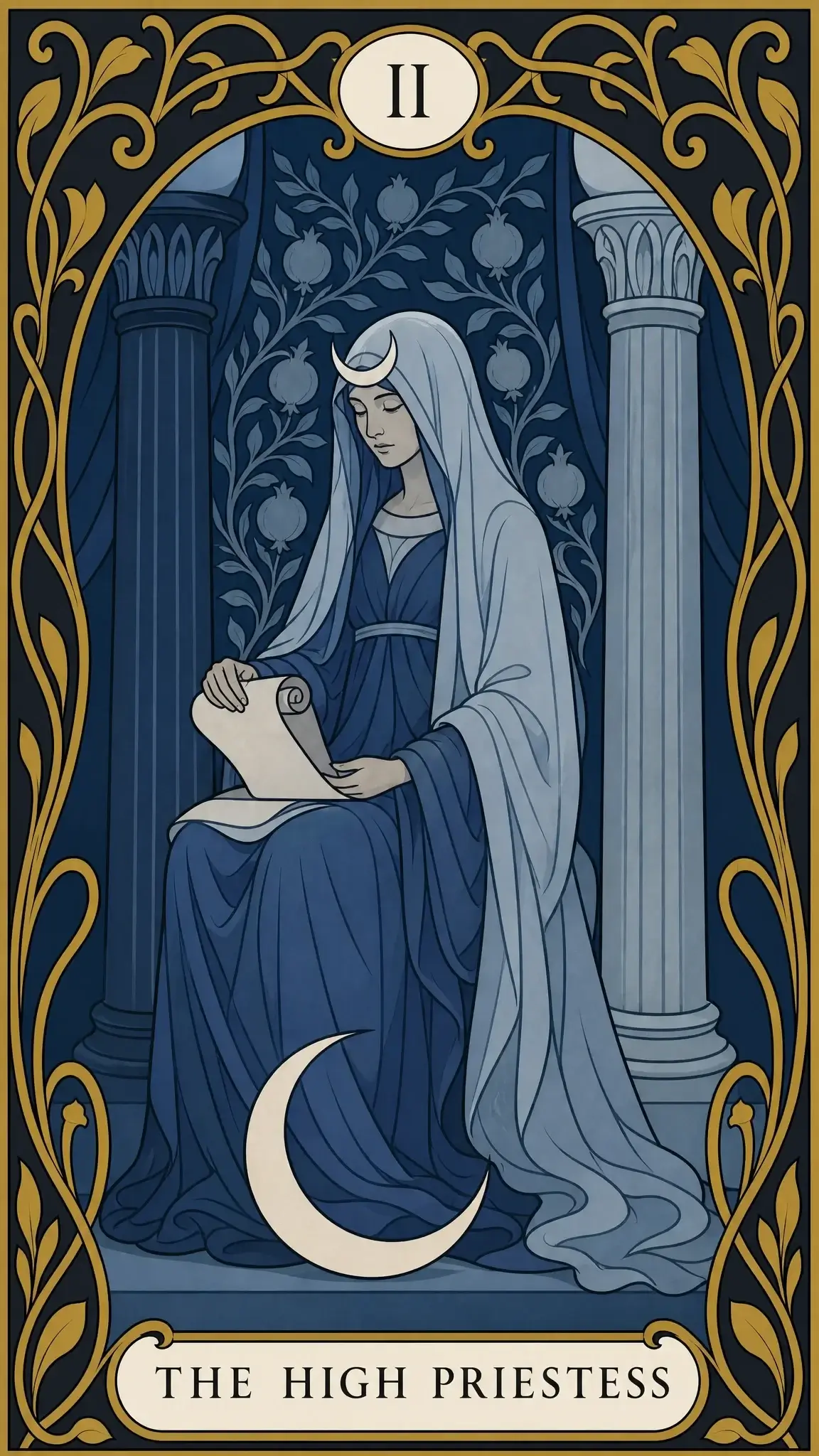
What does The High Priestess mean in Tarot
The upright Priestess is a situation where a person knows more than they can justify. They see the discrepancy, feel the mood, understand what is happening — but there is no evidence, and there is nothing to talk about yet.
An important nuance often lost in retellings: The Priestess does not prevent action, she prevents fuss. Her advice is not inaction, but observation: wait, watch, let the situation manifest itself. Unlike the Moon, where the picture is distorted, here the picture is correct — just not yet complete.
The second side of the card is mystery. The Priestess often indicates that something is hidden from the querent: not necessarily maliciously, sometimes it is just not the right time. And that they themselves are keeping something quiet — this occurs quite often in her stories.
Reversed Priestess: meaning
The reversed Priestess is usually read in one of three senses:
- Ignoring intuition. The person felt that something was wrong and convinced themselves it was just their imagination. This is the most common variant, and it is usually confirmed later.
- The secret is out. What was hidden has come to light — sometimes to relief, sometimes inconveniently.
- Superficiality. A decision was made based on the visible part; no one looked deeper.
Neighboring cards help to choose: next to the Moon — self-deception, next to Swords — too much reasoning and little listening to oneself, next to the Sun — the secret was revealed safely.
The Priestess in a "yes or no" spread
In "yes/no" spreads, The High Priestess is a card of silence. She answers "not now": not a refusal, but an indication that the answer has not yet formed or should not be voiced.
Often this is the most accurate answer to questions about other people's intentions: the other person has not yet decided for themselves, and any answer would be a fabrication.
The reversed Priestess in a yes/no spread is closer to yes in the sense of "it will become clear soon": what was hidden will become known, and the question will resolve itself.
The Priestess in relationships and feelings
In a relationship spread, the upright Priestess means unspoken things, but calm ones. There is sympathy, understanding without words, and things that are not yet spoken about. Often this is an early stage where both feel everything and neither names it.
In the position of feelings, the Priestess describes a deep but closed attachment. The person feels a lot and shows little — not out of coldness, but because they do not feel the need to prove it.
A separate common plot is secret relationships or a connection that is not told to others. The Priestess points directly to this.
The reversed Priestess in relationships means either the secret has been revealed, or the person ignored their own "something is wrong here" and moved on.
The Priestess in work and money
In career spreads, the Priestess is a period when it is better to observe than to act. Processes are underway that are not publicized: reshuffles, negotiations, decisions that will be announced later.
In money, the card speaks of an incomplete picture: not all conditions are known, some information has been withheld. Neighboring cards will show what this threatens: with the Seven of Swords — intentional omission, with the Two of Pentacles — simply not everything is finalized yet.
What the Priestess advises in a work spread: do not force it and collect information. Her plots collapse when a person, without figuring things out, demands certainty — they usually receive a hasty and disadvantageous answer.
The Priestess as a person: man and woman
In the "what kind of person" position, the Priestess describes someone who understands a lot and says little. Observant, closed off, it is difficult to get close to them quickly, but they see more than others.
The Priestess woman in a spread is reserved, deep, keeping both her own and others' secrets; she is difficult to read, but she is reliable. The Priestess man is someone who does not argue or explain, but simply knows, and over time turns out to be right.
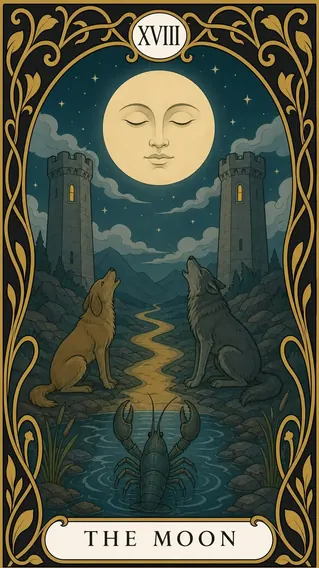
Difference from the Moon: The Priestess does not confuse. Next to her, it is unclear, but not alarming — she does not mislead, she just does not tell everything.
Ang High Priestess sa posisyon ng kaisipan
Sa posisyon ng kaisipan, ang High Priestess ay nangangahulugan ng panloob na katahimikan at pagmamasid. Hindi nagpaplano ang tao at hindi nakikipagtalo sa sarili; pinagmamasdan at pinupuna niya ang mga bagay nang hindi agad gumagawa ng konklusyon.
Kasama rin dito ang pakiramdam na "alam ko, pero hindi ko maipaliwanag." Hindi ito ang pagkabalisa ng Moon: ito ay kalmadong kaalaman na walang patunay. Ang mga katabing baraha ang naglilinaw nito: sa tabi ng Swords — pagtatangkang bigyang-katwiran ang isang bagay na malinaw na, sa tabi ng Moon — panganib na mapagkamalang intuwisyon ang takot.
Ano ang gagawin kung lumabas ang High Priestess
Payo ng High Priestess — manahimik at magmasid. Huwag magdesisyon, huwag mag-usisa, huwag humingi ng linaw sa ngayon.
Ano ang dapat gawin:
- Isulat ang iyong nararamdaman. Huwag agad kumilos base rito, itala lang: pagkalipas ng isang linggo, makikita mo kung intuwisyon ba ito o pagkabalisa.
- Huwag pilitin ang usapan. Sa barahang ito, nananalo ang taong hinahayaan ang sitwasyon na kusa itong lumitaw.
- Ipunin ang kulang. Ang pagmamasid dito ay produktibo: ang mga bagay na hindi sinabi ay karaniwang makikita sa mga kilos.
- Huwag magkwento ng sobra. Ang High Priestess ay mahusay maglarawan ng mga sikreto ng iba at ng pangangailangang itago ang sarili mong sikreto.
At isa pa: ang katahimikan ng barahang ito ay pansamantala lamang. Kung ang paghinto ay tumatagal ng ilang buwan at nagiging paraan na para hindi na makipag-usap, hindi na ito tungkol sa High Priestess, kundi sa Two of Swords — ang pagka-stuck.
Ano ang nakaguhit sa baraha
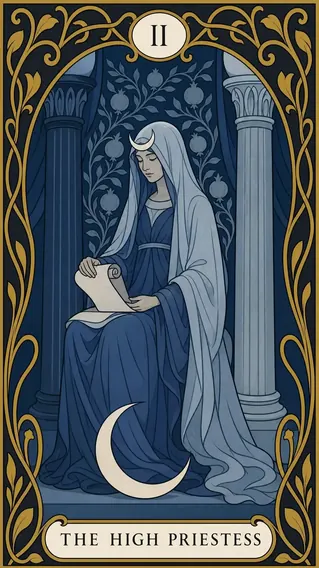
Sa ating High Priestess ay may babaeng nakasuot ng asul na belo, nakaupo sa pagitan ng dalawang haligi na may hawak na scroll. Sa kanyang paanan ay may gasuklay na buwan, sa kanyang likuran ay isang tabing, at ang lahat ay nasa malamig na asul na tono.
Ganito binabasa ang eksena:
- Tabing sa likuran — ang mga bagay na nakatago. Hindi ito naka-lock, pero hindi rin nakabukas: ang kaalaman ay accessible, hindi lang para sa lahat at hindi agad-agad.
- Scroll sa mga kamay — kaalamang naisulat pero hindi binasa nang malakas. Hawak niya itong nakarolyo.
- Dalawang haligi — mga magkasalungat na bagay, kung saan siya nakaupo sa gitna nang hindi pumipili ng panig. Hindi tulad ng Lovers, dito ay hindi kailangan ng pagpili.
- Gasuklay sa paanan — mga siklo at intuwisyon; ang parehong buwan na nasa XVIII arcana, pero dito ay kontrolado niya ito at hindi ito ang nagpapatakbo ng eksena.
Sa itaas ay ang Roman numeral na II, sa ibaba ang pangalang THE HIGH PRIESTESS: ang ating deck ay iginuhit sa tradisyon ng Rider-Waite, kung saan ang High Priestess ang ikalawang arcana.
High Priestess bilang baraha ng araw
Ang High Priestess bilang baraha ng araw ay araw ng pagmamasid. Walang kailangang desisyunan, pero marami ang mapapansin: intonasyon, pagkakamali sa pagsasalita, mood ng ibang tao.
Kapaki-pakinabang na mindset: mas kaunting pagsasalita at huwag agad sumagot sa mga bagay na nangangailangan ng agarang tugon. Magandang araw ito para sa pagbabasa, katahimikan, at pagtatrabaho nang mag-isa — at masamang araw para sa pag-aayos ng relasyon at mga pampublikong pahayag.
Mga madalas itanong tungkol sa High Priestess
Ano ang ibig sabihin ng High Priestess sa Tarot?
Kaalamang hindi pa maipahayag sa salita: intuwisyon, mga nakatagong pangyayari, at ang pangangailangang maghintay. Hindi niya ipinagbabawal ang pagkilos, pero pinapayuhan ka niyang tingnan muna kung paano kusa na lalabas ang sitwasyon.
Ano ang pagkakaiba ng High Priestess sa Moon?
Sa Moon, ang larawan ay baluktot: ang tao ay nag-iisip ng kung ano-ano at karaniwang tinatakot ang sarili. Sa High Priestess, ang larawan ay tama, hindi lang kumpleto — hindi siya nanliligaw, hindi lang siya nagsasabi ng buong detalye. Sa tabi ng High Priestess, hindi malinaw ang lahat, pero kalmado.
Ano ang ibig sabihin ng baligtad na High Priestess?
Kadalasan, ito ay binalewalang intuwisyon: naramdaman ng tao na may mali, pero kinumbinsi ang sarili na guni-guni lang. Gayundin — pagbubunyag ng sikreto o desisyong ginawa base sa mababaw na bahagi ng sitwasyon.
Ibig sabihin ba ng High Priestess ay niloloko ako?
Hindi naman. Sinasabi nito na hindi pa alam ang lahat, at ang dahilan ay maaaring simple lang: hindi pa panahon, hindi pa tapos ang desisyon, o hindi pa naiintindihan ng tao ang sitwasyon. Ang sadyang panlilinlang ay ipinapakita ng ibang mga baraha.
Pang-ilan itong arcana?
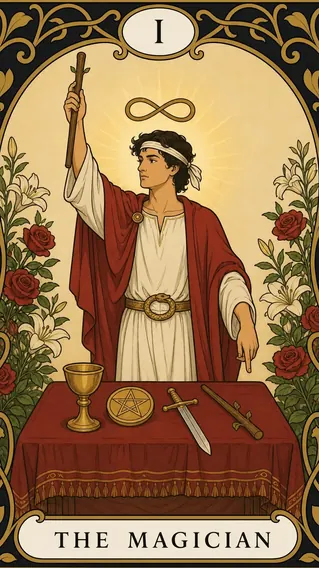
Ikalawang major arcana, may Roman numeral na II sa baraha. Sa Rider-Waite deck, kung saan iginuhit ang atin, ang High Priestess ay kasunod ng Magician (I) at bago ang Empress (III).