What does the Ace of Swords mean in Tarot
Aces in Tarot are not events, but the pure potential of the suit: the point from which the whole story unfolds. The Ace of Swords is the sharpest and most sudden of the four: swords are responsible for the mind, speech, and truth, and their element is air — fast, invisible, and intolerant of half-measures.
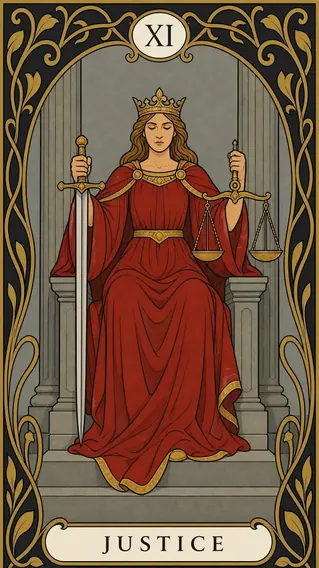
An important nuance that is lost in retellings: the minor arcana describes an episode, not a destiny. If the major Justice card speaks of the principle of honesty in general, the Ace of Swords is about a specific moment when a picture suddenly forms in the head, the right words are found, or an uncomfortable truth has to be spoken aloud. The card is not about the outcome of the conversation, but only about the fact that clarity has appeared, with which something must now be done.
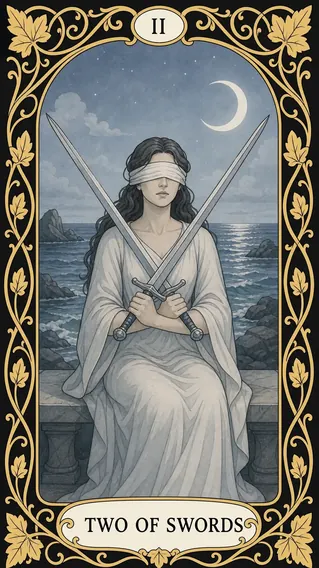
The upright position is read unambiguously: a sharp, almost physical sensation of "now I understand." A thought suddenly becomes precise, an argument becomes irrefutable, a decision becomes obvious. But this clarity has a flip side that is worth keeping in mind: the sword cuts both the truth and the feelings of the person standing nearby with equal ease. What to do with this sharpness is a question for the neighboring cards, primarily the Two of Swords, which shows what happens when clarity needs to be translated into a choice.
Reversed Ace of Swords: meaning
The reversed Ace of Swords is the same sharp mind, but without a precise strike. Usually, the spread refers to one of three options, and the question itself helps to choose.
- Thoughts are confused, clarity is not visible. There is a lot of information, but it is impossible to collect it into a clear conclusion.
- The truth exists, but it is spoken as a weapon. Sharpness turns into rudeness, and honesty into a way to hurt more painfully.
- The decision was made too quickly. The mind grabbed the first convincing argument without checking the others.
There is also a softer reading: sometimes the reversed Ace of Swords is not chaos, but a necessary pause before acting impulsively. The difference is whether this pause feels like relief or helplessness.
Ace of Swords in a "yes or no" spread
In "yes/no" spreads, the Ace of Swords is usually read as yes — but with a caveat that is easy to miss: the card promises clarity, not a comfortable answer. If the question sounds like "will I finally understand what is going on," "should I speak directly," "will a solution appear" — the answer is affirmative, and often faster than seems possible.
If the question is about a soft outcome ("will it happen without conflict," "will the interlocutor like my truth") — the card does not answer it, because it describes only the moment of insight, not its consequences.
The reversed position in this spread is "not yet, there is a mess in the head": clarity will appear, but not this time, and the question should be reformulated — not "what to decide," but "what prevents seeing the whole picture."
Ace of Swords in relationships and feelings
In a relationship spread, the upright Ace of Swords almost always means a frank conversation: finally spoken words, an honest confession, clarity about what a person actually wants. This is a card of the head, not the heart — it shows the moment when it becomes clear what to do, even if feelings are not yet ready for this understanding.
For new relationships, the card often describes attraction through conversation: interest is born not from mystery, but from the fact that one can speak directly with the person. For existing relationships — the moment when a couple finally calls a problem by its name instead of avoiding it.
The reversed Ace of Swords in this position is understatement or words spoken too sharply: the truth is there, but it is spoken in a way that hurts more than necessary. Or the opposite option — clarity is replaced by nitpicking, when a reluctance to talk about the main thing is hidden behind sharp words.
Ace of Swords in work and money
In career spreads, the Ace of Swords is an idea that has finally formed into a working plan: a clear formulation of a project, a successful phrase in negotiations, a solution that could not be found before. The card well describes the moment of intellectual breakthrough — when a complex task suddenly becomes solvable.
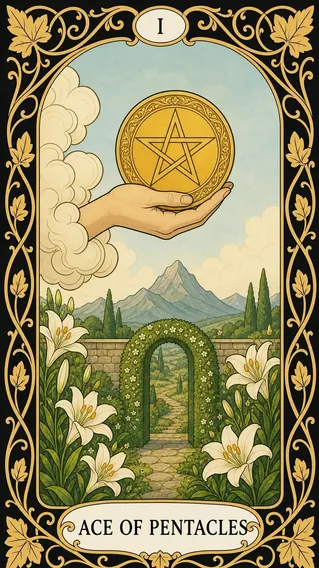
In money, the upright position is a sober decision, not luck: breaking an unprofitable contract, refusing unnecessary expenses, seeing numbers without illusions. This card is not about income, but about an honest look at the financial situation — this is its difference, say, from the Ace of Pentacles, which is closer to material opportunity, not understanding.
Reversed Ace of Swords in work is a decision made in a hurry without all the data, or an argument in which arguments are used to crush an opponent, not to find the truth. The advice here is simple: before acting on the results of an "epiphany," it is worth checking it with a fresh head.
Ace of Swords as a person: man and woman
When the Ace of Swords appears in the "what kind of person" position, it describes not the character as a whole, but a role — someone who calls things by their names, cuts to the quick where others are silent, and brings clarity to a controversial situation. Usually, this is a sharp-tongued, quick-thinking person with whom it is difficult to have empty conversations.
An Ace of Swords man is someone who speaks directly and does not choose words for the sake of politeness. An Ace of Swords woman is someone who is the first to name a problem aloud when others prefer not to notice it.
The flip side for both is the same: such directness is good for solving a problem and not always good for relationships with the person to whom this truth was reported. If the card is important as a forecast about the softness of communication — it is worth looking at whether there are cups cards nearby that soften the sharpness of the swords.
Ace of Swords sa posisyon ng kaisipan
Sa posisyon ng kaisipan, ang Ace of Swords ay isang bihirang estado para sa mga espada: hindi ito nakakabalisa, kundi isang biglaang katahimikan at kalinawan kung saan ang lahat ay biglang nagkakaroon ng lugar. Mabilis at tumpak ang takbo ng isip, at kusa nang nabubuo ang mga argumento.
Ang hamon ay sa talas ng isip na ito, madaling ma-overestimate ang sariling katwiran at hindi mapansin na ang pananaw ng iba ay may karapatan ding umiral. Kung may mga Cup sa tabi sa spread, ang kalinawan ay maaaring magpababa sa halaga ng damdamin; kung may mga Pentacle naman, ang ideya ay mas malamang na magkaroon ng praktikal at konkretong anyo.
Ano ang dapat gawin kung lumabas ang Ace of Swords
Simple lang ang payo ng card: gamitin ang kalinawan habang nariyan ito, ngunit huwag ipagpalit ang katapatan sa kalupitan. Ang Ace of Swords ay nagbibigay ng tumpak na sagot sa isang matagal nang tanong — ngunit ang paraan ng pagbigkas sa sagot na ito ay nakadepende na sa tao, hindi sa card.
Ano ang dapat gawin:
- Ibuod ang kaisipan sa isang pangungusap. Kung ang ideya o desisyon ay hindi kasya sa maikling parirala, hindi pa ganap na tunay ang kalinawan.
- Ihiwalay ang katotohanan sa paraan ng paghahatid nito. Ang pagsasabi ng totoo ay maaaring maging matalim o direkta — magkaibang bagay iyon.
- Huwag kumilos base sa unang bugso ng damdamin sa mahahalagang usapin. Ang matalas na kaisipan ay madalas na tama, ngunit dapat itong pag-isipan nang kahit isang gabi bago magbago ng anumang malaki base rito.
- Isulat ang desisyon bago ang mahirap na usapan, upang hindi mawala ang katumpakan ng pagpapahayag sa ilalim ng presyur ng emosyon.
Kung ang dahilan ng tanong ay isang mabigat na tunggalian, paghihiwalay, o desisyong makakaapekto nang malaki sa ibang tao, ang spread ay hindi kapalit ng pakikipag-usap sa isang eksperto: ipinapakita ng card ang kislap ng kalinawan, hindi ang handang solusyon sa lahat ng kahihinatnan.
Ano ang nakaguhit sa card
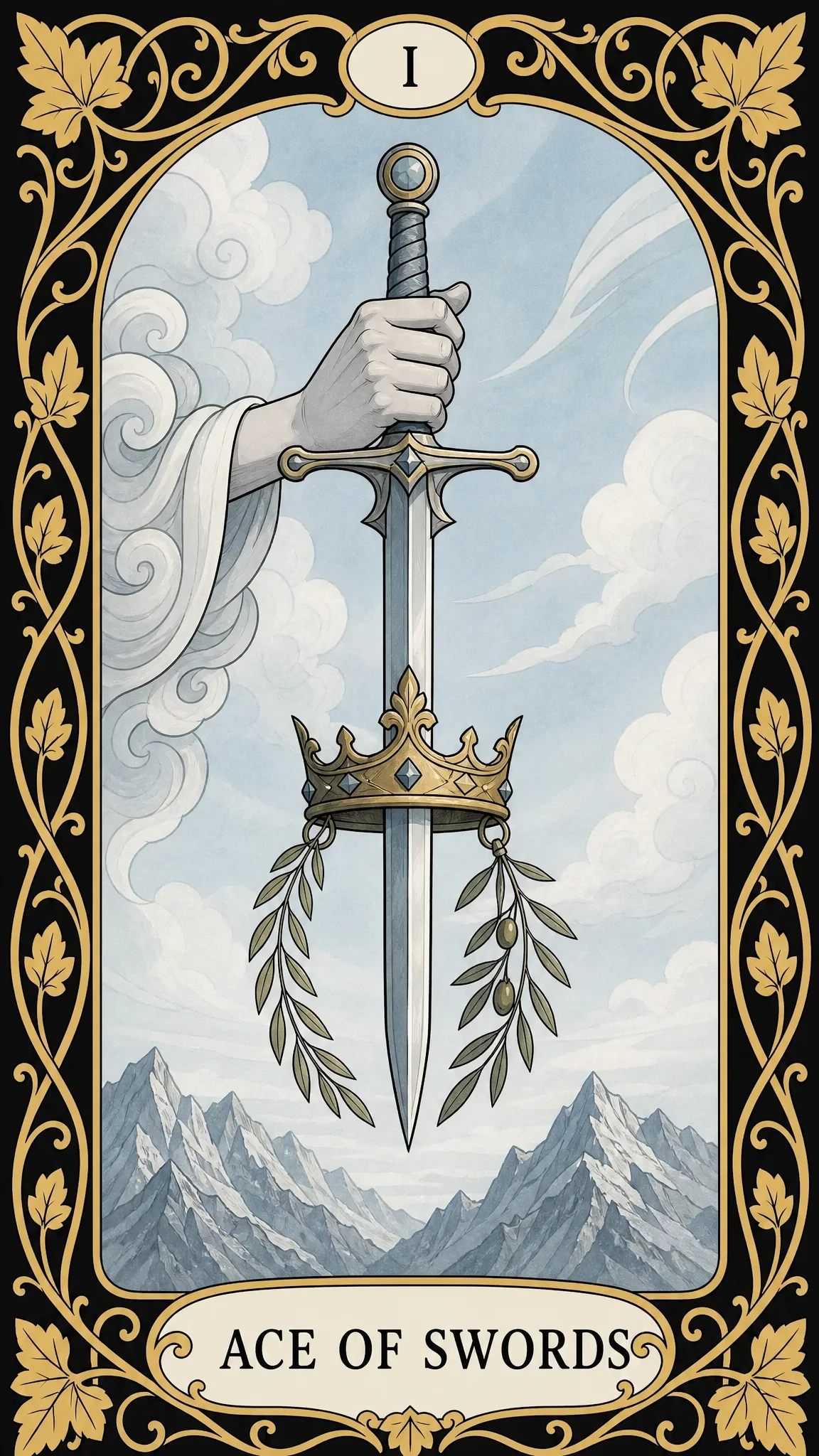
Sa ating card — isang kamay na lumalabas mula sa makapal na ulap ang mahigpit na humahawak sa hawakan ng isang tuwid at nakalantad na espada: ang talim ay nakaturo nang diretso paitaas, na tila hinihiwa ang mismong tela ng langit. Sa talim ay may nakasuot na gintong korona na may mga hiyas, at sa magkabilang panig nito ay nakalaylay ang dalawang sanga: sa isang panig ay makinis at pahabang mga dahon, sa kabila naman ay sanga na may mga bilog na bunga na parang mga oliba. Sa ibaba, sa ilalim ng dulo ng espada, ay isang masungit na hanay ng mga bundok na may niyebe.
Ganito binabasa ang eksena:
- Kamay mula sa ulap — ang kalinawan ay nanggagaling sa labas, bilang biglaang kislap ng pag-unawa, hindi bilang resulta ng mahabang pag-iisip: ang kaisipan ay ibinibigay, hindi binubuo nang paisa-isa.
- Korona sa talim — kapangyarihan ng katwiran laban sa kaguluhan: ang sinumang humahawak sa espadang ito ay nakakakuha ng sandaling kalinawan at karapatang magsabi ng totoo, hindi lang lakas para umatake.
- Dalawang sanga sa gilid — mga simbolo ng kapayapaan na nakasuot sa sandata: pahiwatig na ang matalas na katotohanan ay kayang magdala hindi lang ng tagumpay, kundi pati ng pagkakasundo, kung hindi ito aabusuhin.
- Hubad na bundok sa ibaba — ang landas pagkatapos ng kaliwanagan ay hindi pa natatahak: malinaw ang kaisipan, ngunit ang paglalakbay sa mahirap na lupain ay nagsisimula pa lamang.
Sa itaas ng card ay ang Roman numeral na I, at sa ibaba ay isang plake na may Ingles na pangalan na ACE OF SWORDS, gaya ng iba pang mga Ace sa ating deck.
Ace of Swords bilang card ng araw
Ang Ace of Swords bilang card ng araw ay magandang pagkakataon para sabihin ang matagal nang ipinagpapaliban: pangalanan ang problema nang malakas, magtanong nang direkta, gumawa ng desisyong ilang linggo nang umiikot sa isip. Ang araw ay angkop para sa katapatan, hindi para sa mga diplomatikong paglilihim.
Kung ang card ay lumabas na baligtad — ang araw ay mas malamang na tungkol sa ingay sa isip, kung saan mahirap tukuyin ang tunay na kaisipan mula sa nakakabalisa. Ang kapaki-pakinabang na panuntunan ay huwag gumawa ng mga desisyong hindi na mababago sa araw na iyon, kundi bigyan ang sarili ng oras para pag-isipan ito nang mabuti.
Mga madalas itanong tungkol sa Ace of Swords
Ito ba ay Major o Minor Arcana?
Minor Arcana, suit ng Swords, elementong Hangin. May kabuuang 56 na Minor Arcana sa Tarot deck — 14 na card bawat isa sa apat na suit, at ang Ace of Swords ang nagbubukas ng bilang para sa mga espada.
Ano ang pagkakaiba ng Ace of Swords sa Ace of Pentacles?
Parehong tungkol sa simula ang mga Ace, ngunit magkaiba ang kalikasan. Ang Swords ay elementong hangin, isip at katotohanan: ang Ace of Swords ay tungkol sa biglaang kalinawan, tumpak na desisyon, tapat na usapan. Ang Pentacles ay elementong lupa, materya: ang Ace of Pentacles ay tungkol sa konkretong oportunidad na kumita o magsimula ng proyekto gamit ang mga kamay. Kung ang interes sa spread ay pag-unawa sa sitwasyon o mahirap na desisyon — ito ay tungkol sa Swords; kung bagong source ng kita o praktikal na simula — tungkol sa Pentacles.
Ang Ace of Swords ba ay oo o hindi?
Malamang na oo: nangangako ang card na darating ang kalinawan — ngunit hindi nito ipinapangako ang madali o kaaya-ayang sagot. Kung ang tanong ay kung mauunawaan mo na ba sa wakas ang sitwasyon, ang sagot ay oo. Kung ang tanong ay tungkol sa komportableng resulta, hindi iyan ang sinasagot ng Ace of Swords.
Ano ang ibig sabihin ng baligtad na Ace of Swords?
Parehong matalas na isip, ngunit walang tumpak na tama: naguguluhan ang mga kaisipan, o ang katotohanan ay sinasabi nang masyadong matalim at nagiging paraan para makasakit. Minsan ito ay pahinga lamang bago ang desisyon, hindi kaguluhan — ang pagkakaiba ay kung nararamdaman ba ito bilang ginhawa o bilang kawalan ng magagawa.
Maaari bang mangahulugan ang Ace of Swords ng tunggalian o paghihiwalay?
Sa sarili nito — hindi: ang card ay tungkol sa sandali ng kalinawan, hindi tungkol sa paghihiwalay. Maaari nitong ipakita ang isang tapat na usapan na matagal nang dapat mangyari, kabilang ang mahihirap na usapan. Hindi hinuhulaan ng card ang tiyak na resulta — para sa mabibigat na desisyon, ito ay pagkakataon para talakayin ang sitwasyon sa isang eksperto, hindi para umasa lamang sa spread.