ความหมายของไพ่ 5 ไม้เท้าในทาโรต์คืออะไร
ไพ่ 5 ไม้เท้า คือไพ่แห่งการปะทะที่เสียงดังแต่ไม่ถึงตาย ห้าคนกำลังไขว่คว้าไม้เท้า แต่ละคนดึงไปในทิศทางของตนเอง ไม่มีใครได้เปรียบอย่างชัดเจน - นี่คือแก่นแท้ของไพ่: ไม่ใช่สงครามเพื่อทำลายล้าง แต่เป็นการต่อสู้เพื่อพื้นที่ เพื่อลำดับความสำคัญ เพื่อให้เสียงของตนเองได้ยินก่อน.
สิ่งสำคัญคือต้องแยกไพ่ใบนี้ออกจากไพ่ชุดใหญ่ทันที หอคอย หรือ ปีศาจ อธิบายถึงหัวข้อใหญ่ที่จะส่งผลต่อหลายปีข้างหน้า; ไพ่ 5 ไม้เท้า มีขอบเขตที่เล็กกว่ามาก นี่คือการโต้เถียงที่เฉพาะเจาะจงในการประชุม การทะเลาะกันในแชท การแข่งขันเพื่อความสนใจในกลุ่ม ไม่ใช่จุดเปลี่ยนของโชคชะตา การตีความว่าเป็น "ความโกลาหลจะเริ่มต้นขึ้นในชีวิต" คือการขยายความหมายของไพ่เกินจริง: ไพ่ชุดเล็กอธิบายถึงเหตุการณ์ ไม่ใช่โชคชะตา.
ธาตุไฟและชุดไม้เท้ากำหนดโทน: มีพลังงานมาก พลังงานพุ่งพล่านออกไป แต่ทิศทางผิด ทุกคนผลักกัน ไม่มีใครตกลงกฎล่วงหน้ากันไว้ ดังนั้น ความหมายคลาสสิก: การแข่งขัน ความขัดแย้ง ความขัดแย้งเล็กๆ น้อยๆ ความพยายามที่กระจัดกระจาย บ่อยครั้งที่ไพ่ปรากฏขึ้นในสถานการณ์ที่หลายคนถูกต้องในแบบของตนเองพร้อมกัน และไม่มีใครพร้อมที่จะยอมแพ้ก่อน
ความหมายของไพ่ 5 ไม้เท้ากลับหัว
ไพ่ 5 ไม้เท้ากลับหัว คือการเบียดเสียดแบบเดียวกัน แต่ถูกกดไว้ มีสามการตีความที่พบบ่อย ซึ่งเลือกตามคำถามของการอ่านไพ่:
- ความขัดแย้งสิ้นสุดลง - แต่ไม่ใช่เพราะมีใครโน้มน้าวใคร แต่เพราะทุกคนเหนื่อยล้า การสงบศึกอย่างเป็นทางการโดยไม่มีข้อตกลงที่แท้จริง
- ความขัดแย้งถูกเก็บไว้ภายใน ภายนอกเงียบสงบ แต่ความหงุดหงิดและการแข่งขันยังคงอยู่ - เพียงแค่ไม่แสดงออกมาอีกต่อไป
- การปะทะนั้นไม่ยุติธรรม เสียงหนึ่งกลบเสียงอื่น และภาพลวงตาของการต่อสู้ "อย่างเท่าเทียมกัน" จากตำแหน่งตรงหายไป - บางคนกำลังผลักดันความคิดของตนเอง
ตำแหน่งกลับหัวเป็นสัญญาณว่าการเผชิญหน้าอย่างเปิดเผยที่ไพ่ตรงอธิบายนั้นไม่เกิดขึ้น หรือถูกหลีกเลี่ยงโดยเจตนา บางครั้งก็เป็นเรื่องดี บางครั้งก็เป็นเพียงการสนทนาเดียวกันที่ถูกเลื่อนออกไป
ไพ่ 5 ไม้เท้าในการอ่านไพ่ "ใช่หรือไม่"
ในการอ่านไพ่ "ใช่หรือไม่" ไพ่ 5 ไม้เท้าโดยทั่วไปจะตีความว่า ใช่ แต่ไม่ใช่โดยปราศจากการต่อสู้ คำถามเช่น "จะเป็นไปได้หรือไม่" จะได้รับคำตอบยืนยัน - เพียงแต่จะต้องต่อสู้เพื่อผลลัพธ์ ไม่ใช่ได้รับทันทีโดยไม่มีการต่อต้าน
หากคำถามเกี่ยวกับความสงบ - "จะไม่มีการโต้เถียงหรือไม่" "จะเห็นด้วยโดยไม่มีข้อโต้แย้งหรือไม่" - ไพ่จะตอบว่า ไม่: จะมีความขัดแย้ง จะมีคนคัดค้านอย่างแน่นอน
เวอร์ชันกลับหัวจะทำให้คำตอบอ่อนลงเป็น "ความขัดแย้งยังไม่เกิดขึ้น" หรือ "ฝ่ายต่างๆ เหนื่อยล้าจากการโต้เถียง": ความหมายในทางปฏิบัติคือ จะไม่มีการต่อสู้ที่เปิดเผยซึ่งไพ่ตรงบ่งบอกถึงในอนาคตอันใกล้นี้
ไพ่ 5 ไม้เท้าในความสัมพันธ์และความรู้สึก
ในความสัมพันธ์ ไพ่ 5 ไม้เท้าตรงคือคู่รักที่แข่งขันกันเล็กน้อยอยู่เสมอ: ใครลงทุนมากกว่า ใครถูกในข้อพิพาทในครัวเรือน ความคิดเห็นของใครมีน้ำหนักมากกว่าในการตัดสินใจ สิ่งนี้ไม่ใช่จุดจบของคู่รัก - คู่รักหลายคู่ใช้ชีวิตแบบนี้มาหลายปี และความขัดแย้งยังคงทำให้ความสนใจมีชีวิตชีวา
บ่อยครั้งที่ไพ่ปรากฏขึ้นในสถานการณ์ที่คนคนเดียวถูกอ้างสิทธิ์โดยหลายฝ่าย: คู่แข่งโดยตรงเพื่อความสนใจ หรือเพียงแค่ภาระผูกพันที่แข่งขันกัน - ครอบครัว การงาน ความสัมพันธ์เก่า - ที่ดึงไปในทิศทางต่างๆ ไพ่ใบนี้ไม่ได้อธิบายถึงความรู้สึกที่ราบรื่นและสงบ ทั้งในตำแหน่งตรงและกลับหัว
ในตำแหน่งของความรู้สึก มันคือความตื่นเต้นมากกว่าความอ่อนโยน: ความปรารถนาที่จะพิสูจน์ตนเอง ให้ได้ยิน ไม่ยอมแพ้ในการโต้เถียงที่จริงๆ แล้วไม่คุ้มค่ากับความเข้มข้นเช่นนี้
ไพ่ 5 ไม้เท้ากลับหัวในความสัมพันธ์ - คือความขัดแย้งที่ถูกเก็บไว้ภายในและไม่ได้พูดถึง หรือในทางกลับกัน การสงบศึกสั้นๆ หลังจากการทะเลาะวิวาท ซึ่งไม่ได้แก้ไขสาเหตุเดิม
ไพ่ 5 ไม้เท้าในการทำงานและการเงิน
ในการอ่านไพ่งาน นี่คือการแข่งขันที่เปิดเผย: หลายคนอ้างสิทธิ์ในโครงการเดียว งบประมาณถูกแบ่งปันอย่างดุเดือด การประชุมกลายเป็นการตะโกนใส่กันแทนที่จะเป็นการอภิปราย บ่อยครั้งนี่คือทีมที่บทบาทไม่ชัดเจน และแต่ละคนดึงผ้าห่มเข้าหาตัวเอง ไม่ใช่เพราะความชั่วร้าย แต่เพราะมิฉะนั้นจะไม่มีใครได้ยินผลงานของพวกเขา
ในเรื่องการเงิน ไพ่คือการโต้เถียงเกี่ยวกับจำนวนเงิน: ใครเป็นหนี้เท่าไหร่ ใครจ่ายอะไร การต่อรองในการแบ่งทรัพย์สินหรือค่าใช้จ่าย ไพ่ไม่ได้สัญญาว่าจะขาดทุนโดยตรง - สัญญาว่าจะต่อสู้เพื่อวิธีการกระจายสิ่งที่มีอยู่
คำแนะนำของไพ่ 5 ไม้เท้าโดยเนื้อแท้: ก่อนที่จะโต้เถียงต่อไป ให้ตกลงกฎของการโต้เถียง - ใครพูดก่อน อะไรคือสิ่งที่กำลังจะถูกแบ่งปันและแบ่งออกเป็นกี่ส่วน ความโกลาหลบนไพ่ไม่ใช่การขาดทรัพยากร แต่เป็นการขาดกฎระเบียบ
ไพ่ 5 ไม้เท้าในฐานะบุคคล: ชายและหญิง
เมื่อไพ่ 5 ไม้เท้าปรากฏขึ้นเพื่ออธิบายบุคคล นี่คือคนที่โต้เถียงในทุกเรื่อง - ไม่จำเป็นต้องเป็นเพราะความดื้อรั้น แต่เพราะเป็นสิ่งสำคัญสำหรับเขาที่จะต้องยืนยันจุดยืนของตนเองออกมา การอยู่ใกล้คนแบบนี้มักจะไม่เงียบ: เขาตรวจสอบข้อโต้แย้งของผู้อื่นเพื่อความแข็งแกร่งและคาดหวังสิ่งเดียวกันเป็นการตอบแทน
ชาย 5 ไม้เท้า - เป็นนักโต้เถียงที่ตื่นเต้น ชอบสถานการณ์การแข่งขัน เข้าไปมีส่วนร่วมในการทะเลาะวิวาทได้อย่างง่ายดาย และออกจากมันไปโดยไม่เสียใจเช่นกัน หญิง 5 ไม้เท้า - คือคนที่ไม่อดทนและไม่เงียบ แม้ว่าการโต้เถียงจะไม่สะดวกหรือไม่เป็นประโยชน์ตามสถานะก็ตาม
นี่ ไม่ใช่ คำอธิบายของคนที่มีปัญหาหรือคนชั่วร้าย - แต่เป็นคนที่สำคัญที่จะต้องได้ยินในเสียงรบกวนทั่วไป และเขาพร้อมที่จะต่อสู้เพื่อสิ่งนั้น
Five of Wands in the position of thoughts
In the position of thoughts, the Five of Wands is the head, where several inner voices argue simultaneously: one insists on its own version, another objects, a third doubts everything at once. It is difficult to concentrate precisely because thoughts compete with each other, rather than lining up in order.
This is often the state before an important conversation or decision: a person mentally rehearses arguments that have not yet happened, preparing arguments for all sides at once. Neighboring cards will suggest whether this internal struggle is productive or just exhausting in vain.
What to do if the Five of Wands appears
The card's advice is simple, though not the most pleasant: don't disengage from the argument, but don't turn it into a war of annihilation. The Five of Wands is about energy scattered on trifles, and the first task is to gather it back.
What is worth doing in essence:
- Name what the argument is really about. Often, behind a squabble over a trifle lies one more serious unresolved issue.
- Agree on the rules, not just the content. Who speaks, in what order, by what deadline is the result needed.
- Don't confuse competition with personal offense. The excitement of an argument doesn't mean the opponent is an enemy.
- Leave room for a draw. Not every clash must have a clear winner.
If behind the card is not a domestic squabble, but a protracted exhausting conflict — the spread describes the dynamics, but does not solve it; in such cases, direct conversation or a mediator helps, not another card in the deck.
What is depicted on the card
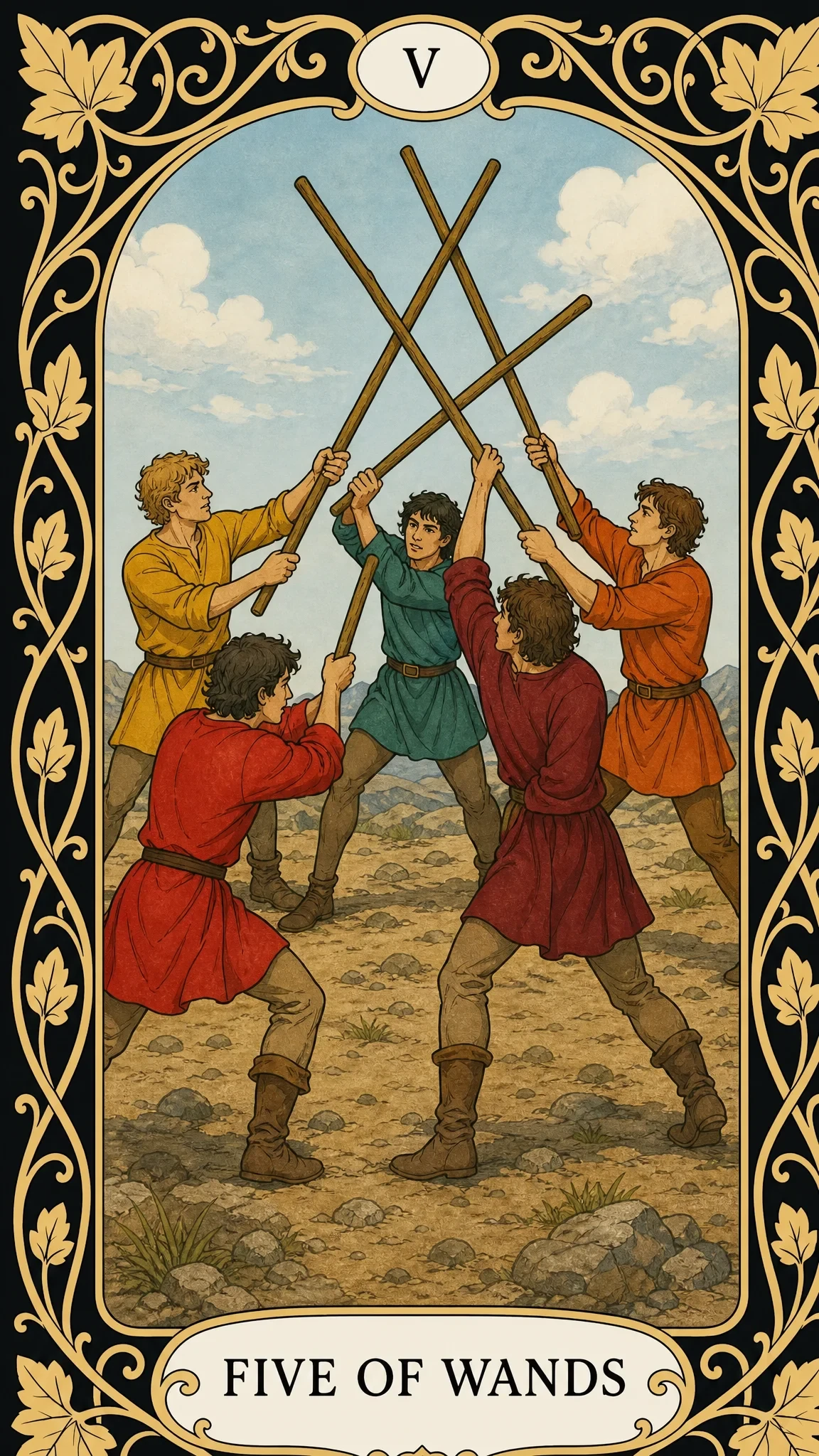
On our Five of Wands, there are five young people in a rocky wasteland, and each holds their own single wand: no one grips two at once or shares one wand with a neighbor. All five stand at full height in a loose circle and simultaneously raise their wands above their heads, so that the wands converge in the sky in a sweeping cross. The poses show that this is a brawl, not a one-on-one duel: someone pulls the wand towards them, someone pushes it away, and the young man in the turquoise tunic in the center holds his with both hands, squeezed by the other's wands from both sides.
The scene is read as follows:
- Five tunics — five equal positions. Golden-yellow, red, turquoise-green, dark red, and orange. The colors are deliberately mismatched. This is a dispute between equals, not a hierarchy where one is clearly in charge.
- Each has exactly one wand. No wand has to be shared by two, and none is left over: no extra wands on the ground or in a free hand — the balance of power in the skirmish is fair, without tilting to anyone's side.
- Wands are crossed high above the heads — no blow is delivered to the end, no one is injured or defeated: it looks more like an excited scuffle than a real fight.
- Rocky dry land and bare hills in the background — the setting is poor in resources, and the skirmish is partly about who gets the little that is available.
- Light sky with clouds — unlike cards of real misfortune, the background here is calm: the storm is only between people, not around them.
At the top of the card is the Roman numeral V, at the bottom — the English name FIVE OF WANDS: our deck is drawn in the Rider-Waite tradition, where this card is the fifth in the suit of Wands.
Five of Wands as a card of the day
The Five of Wands as a card of the day means a day with increased background friction: someone will definitely argue on a call, in a chat, in line, or at home over trifles. This in itself is not a bad sign — rather a signal to prepare for the fact that you will have to defend your point of view more often than usual.
A useful attitude for such a day: do not perceive every objection as an attack and do not get involved in other people's arguments that do not directly concern you. The excitement of this day quickly burns out on its own if you don't add extra fuel to it.
Frequently asked questions about the Five of Wands card
Is it a Major or Minor Arcana?
The Five of Wands is a Minor Arcana, suit of Wands, element of Fire. There are 56 Minor Arcana in a Tarot deck — 14 in each of the four suits, and the Five of Wands is one of them.
How does the Five of Wands differ from the Five of Swords?
Both cards are about conflict, but in different ways. The Five of Swords is about a dispute with a clear loser and remorse after winning at any cost. The Five of Wands is softer: it's a noisy competition without a single winner and without real enmity — the parties let off steam, rather than destroying each other.
Does the Five of Wands mean a fight?
Not literally. The card describes the energy of rivalry and friction — argument, competition, struggle for attention, not physical violence. The five characters on the card are waving wands, but none of them are injured: the meaning is in the scuffle itself, not in its outcome.
What does the reversed Five of Wands mean?
Usually one of three options: the conflict has been exhausted due to fatigue, not by agreement of the parties; the dispute has gone inward and has not been voiced; or, conversely, one person is pushing their agenda, and the appearance of a fair fight from the upright position is lost.
Is the Five of Wands a bad card?
No, rather neutral. It describes an energy-consuming but not destructive period: competition, arguments, scattered efforts. The card does not bring real misfortune or loss — what a person does with this friction is more important than the fact of its existence.