What the Two of Swords means in Tarot
The Two of Swords continues the count of the suit of swords — the element of air, meaning thoughts, words, and decisions. After the Ace, which provided the very idea of conflict or a difficult topic, the Two shows the first reaction to it: not action, but a stop. Two hands cross two blades in front of them — not to attack, but to keep everyone out, including oneself from the truth that is scary to see yet.
An important nuance lost in retellings: the minor arcana describes an episode, not a destiny. The Two of Swords is not a diagnosis of "eternal indecision," but a specific point: a specific question to which one does not want to answer yes or no right now. Usually, this is not due to laziness or stupidity, but the understanding that either of the two answers will cost something important.
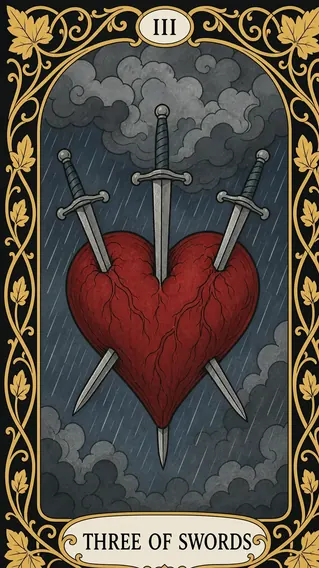
The upright position is read as a conscious pause: the person sees both options but deliberately does not choose because the choice causes pain for now. This is not an infinite state — the Two holds balance exactly as long as there is strength, and then the Three of Swords comes into play, showing what happens when the balance collapses.
Reversed Two of Swords: meaning
The reversed Two of Swords is the same deadlock, but on the verge of resolution. A spread usually implies one of three options.
- The decision has finally matured. There is nothing left to weigh — it is time to put the swords away and take a step, whatever it may be.
- The truth can no longer be ignored. What was hidden behind crossed arms has surfaced on its own — through words, an event, or someone else's direct question.
- Prolonged indecision has turned into overload. Weighing pros and cons for too long without a single step has turned the pause into an anxious state from which one wants to escape at any cost.
There is also a harsh reading: the removed blindfold sometimes means that the decision was not made by the person themselves — circumstances or another person made the choice for them. This is not a catastrophe, but a reason to ask oneself: is this outcome acceptable.
Two of Swords in a "yes or no" spread
In "yes/no" spreads, the Two of Swords is more likely no, but of a special kind: not a refusal, but a deferred answer. The card clearly says that the decision has not yet been made and the question was asked too early — either to oneself or to the cards.
If the question sounds like "should I wait" or "should I not choose yet" — the answer is likely yes: a pause is more appropriate now than haste. If the question is about the outcome of a specific decision that has long been overdue, the Two of Swords hints that one should not drag it out any longer: the longer the crossed swords are held, the heavier they become.
The reversed position in this spread is read as "yes, the answer is already there, it's just that one is afraid to say it out loud yet."
Two of Swords in relationships and feelings
In a relationship spread, the upright Two of Swords almost always speaks of emotional distance that is kept consciously: one does not want to break the relationship or move further in it, so it is easier to keep defenses up and not discuss the painful topic. The conversation is postponed not because the topic is unimportant, but because any honest answer looks risky.
The card often describes a situation where two people are literally avoiding one topic — everything is calm out loud, but between the lines, it is felt that a decision is overdue and is not being made only out of caution. Sometimes this is also an internal conflict of one person: drawn to closeness and simultaneously wanting to protect oneself.
The reversed Two of Swords in relationships — the silence is ending: either with an honest conversation or with the truth coming out on its own, without preparation.
Two of Swords in work and money
In career spreads, the Two of Swords describes a decision that is hanging: change jobs or stay, take a project or refuse, invest or wait. Both sides of the choice look justified, and that is why the decision does not move from its place — it is not arguments that are lacking, but the readiness to take a risk.
In money, the upright position often points to a financial issue that is being postponed: not counting expenses, not looking at the balance, not sorting through documents because the result might not be pleasant. This is a card of avoiding numbers, not money itself.
The reversed Two of Swords in work — the decision is made, and it is often long overdue: quitting, refusing a project, finally opening the expense spreadsheet. The advice here is simple: since the truth has surfaced anyway, it is better to deal with it immediately rather than postpone it again.
Two of Swords as a person: man and woman
When the Two of Swords appears in the "what kind of person" position, it does not describe the character as a whole, but a state: someone who maintains neutrality, does not show their cards to anyone, and prefers not to choose a side until they have to. From the outside, this can be read as restraint or even coldness.
Two of Swords man — someone who closes off from talking about feelings and decisions, preferring to "not think about it yet." Two of Swords woman — someone who keeps emotional distance consciously to avoid making a hasty decision under pressure.
The flip side for both is the same: such a position is convenient as long as the question does not require an urgent answer. If the card is important in the spread specifically as a forecast, it is worth looking at the neighboring sword cards — they usually show what will happen when the balance is finally broken.
အကြံအစည်အနေအထားတွင် ဓားနှစ်ချောင်း (Two of Swords)
အကြံအစည်အနေအထားတွင် ဓားနှစ်ချောင်း (Two of Swords) သည် မိမိကိုယ်ကို အကြောင်းအရာတစ်ခုမှ ရည်ရွယ်ချက်ရှိရှိ ဖယ်ထုတ်ထားသည့် အခြေအနေကို ပြသည်။ စိတ်က အဖြေတစ်ခု လိုအပ်နေမှန်း သိသော်လည်း စိုးရိမ်ပူပန်မှုများ မဖြစ်စေရန်အတွက် ထိုအကြောင်းကို မတွေးမိအောင် တမင်ရှောင်နေခြင်းဖြစ်သည်။ ၎င်းသည် အတွေးမဲ့နေခြင်းမဟုတ်ဘဲ အတွေးများကို တမင်တကာ ထိန်းချုပ်ထားခြင်းဖြစ်သည်။
ဖလား (Cups) ကတ်များနှင့်အတူ ပေါ်လာပါက ဤသို့ရပ်တန့်နေခြင်းသည် ဝန်ခံရန်ကြောက်ရွံ့နေသော ခံစားချက်များနှင့် ပိုမိုသက်ဆိုင်သည်။ ပိုက်ဆံ (Pentacles) ကတ်များနှင့်အတူ ပေါ်လာပါက သတိထား၍ ရွှေ့ဆိုင်းထားရသော လက်တွေ့ကျသည့် ဆုံးဖြတ်ချက်တစ်ခုနှင့် သက်ဆိုင်သည်။ မည်သို့ပင်ဖြစ်စေ ဤကတ်သည် အဖြေမရှိခြင်းကို ပြခြင်းမဟုတ်ဘဲ မိမိကိုယ်ကိုပင် ထုတ်ဖော်ပြောဆိုရန် ဝန်လေးနေခြင်းကို ပြသည်။
ဓားနှစ်ချောင်း (Two of Swords) ကျလာလျှင် ဘာလုပ်သင့်သလဲ
ကတ်၏ အကြံဉာဏ်မှာ ရိုးရှင်းပါသည်- အခြေအနေများက မလုပ်ဆောင်ခင် မျက်လုံးစည်းကို ကိုယ်တိုင် အရင်ဖြုတ်လိုက်ပါ။ ဓားနှစ်ချောင်း (Two of Swords) သည် ခေတ္တရပ်နားခြင်းကို အပြစ်မတင်ပါ၊ အလျင်စလို ဆုံးဖြတ်ချက်မချမိစေရန် တစ်ခါတစ်ရံ လိုအပ်တတ်သည်။ သို့သော် အချိန်အကြာကြီး ဆွဲထားပါက ၎င်းသည် ပညာရှိရာမရောက်ဘဲ အခြေအနေတစ်ခုတွင် ပိတ်မိနေခြင်းသာ ဖြစ်သွားပါလိမ့်မည်။
လက်တွေ့လုပ်ဆောင်သင့်သည်များမှာ-
၁။ မေးခွန်းကို တိုက်ရိုက်ထုတ်ပြောပါ၊ စကားပြောရာတွင် သို့မဟုတ် အတွေးထဲတွင် ရှောင်လွှဲမနေပါနှင့်။ ပြဿနာကို မဖော်ထုတ်နိုင်သရွေ့ ဖြေရှင်း၍ မရနိုင်ပါ။
၂။ ရပ်နားရန်အတွက် တိကျသောအချိန်သတ်မှတ်ပါ၊ မေးခွန်းကို အဆုံးအစမရှိ ပွင့်နေအောင် မထားပါနှင့်။ စိုးရိမ်စိတ်ဖြင့် ရှောင်လွှဲနေသည့် လပေါင်းများစွာထက် တစ်ပတ်တာ စဉ်းစားခြင်းက ပို၍အကျိုးရှိသည်။
၃။ ဘာကို တကယ်ကြောက်နေသလဲဆိုတာ စစ်ဆေးပါ - ဆုံးဖြတ်ချက်ကိုယ်တိုင်ကိုလား သို့မဟုတ် ရွေးချယ်မှုတစ်ခု၏ နောက်ဆက်တွဲဆိုးကျိုးကိုလား။ ၎င်းတို့သည် မတူညီသော ကြောက်စိတ်များဖြစ်ပြီး ကိုင်တွယ်ပုံလည်း ကွဲပြားသည်။
၄။ ရွေးချယ်မှုကို တခြားသူက လုပ်ပေးလိမ့်မည်ဟု မမျှော်လင့်ပါနှင့် - အခြေအနေများက လူတစ်ယောက်အတွက် ဆုံးဖြတ်ပေးနိုင်သော်လည်း ထိုရလဒ်သည် ကိုယ်တိုင်ဆုံးဖြတ်ချက်ထက် ပို၍ စိတ်ကျေနပ်မှုနည်းတတ်သည်။
အကယ်၍ ရပ်နားခြင်းသည် ခွဲခွာခြင်း၊ ရောဂါရှာဖွေခြင်း သို့မဟုတ် စွဲလမ်းမှုကဲ့သို့သော လေးနက်သည့်အကြောင်းအရာနှင့် ဆက်စပ်နေပါက ဤကတ်သည် ကျွမ်းကျင်သူနှင့် တိုင်ပင်ခြင်းကို အစားမထိုးနိုင်ပါ။ ၎င်းသည် အခြေအနေတစ်ခုတွင် ရပ်တန့်နေခြင်းကိုသာ ပြသပြီး ထိုအခြေအနေမှ လွတ်မြောက်မည့်လမ်းကို ပြသခြင်းမဟုတ်ပါ။
ကတ်ပေါ်တွင် ဘာပုံဖော်ထားသလဲ
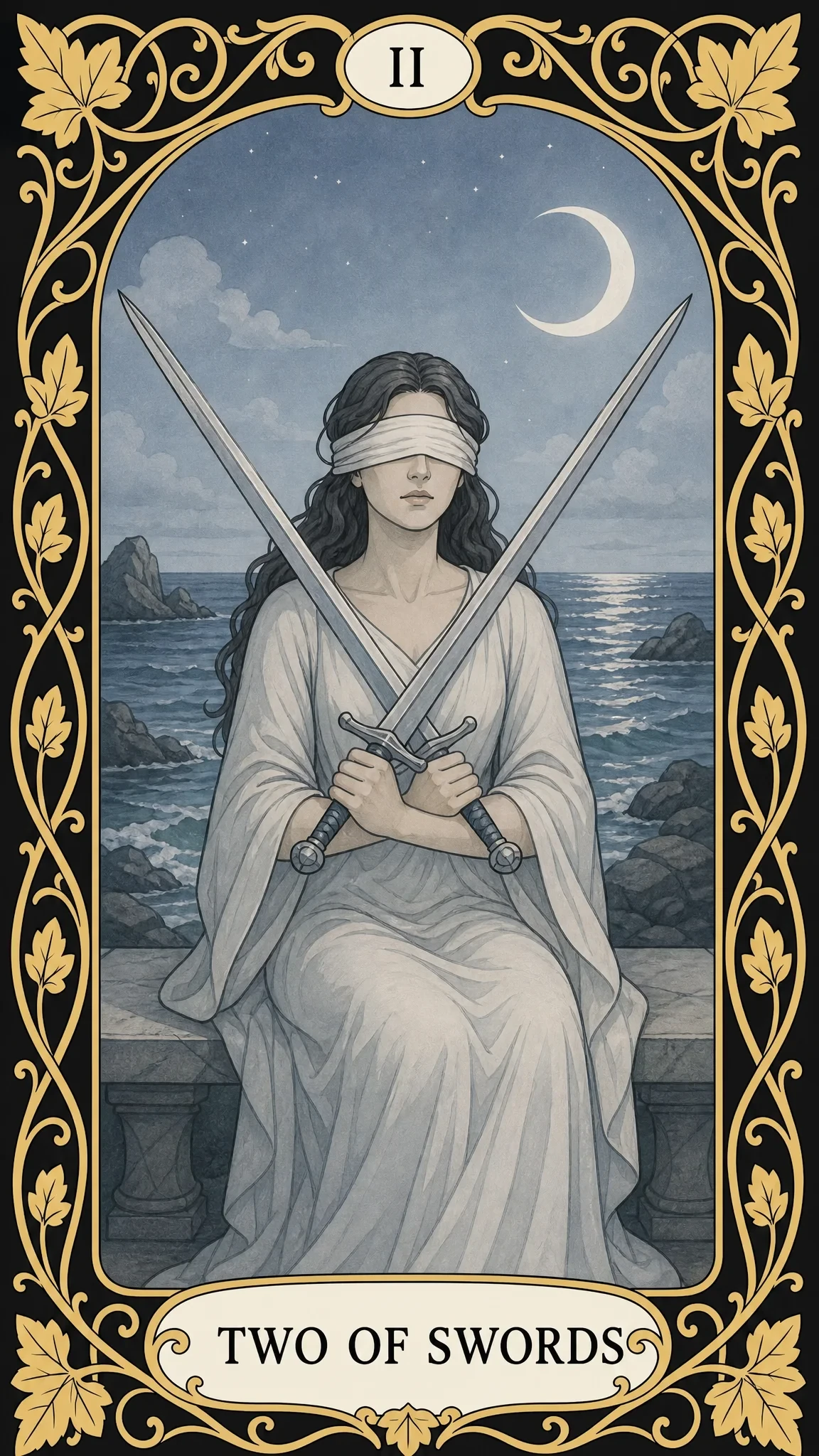
ကျွန်ုပ်တို့၏ကတ်တွင် အမျိုးသမီးတစ်ဦးသည် ပေါ့ပါးသော အဖြူရောင်အဝတ်အစားကို ဝတ်ဆင်ကာ ညဘက်ပင်လယ်ကမ်းစပ်ရှိ ကျောက်တုံးနံရံပေါ်တွင် ထိုင်နေသည်။ သူမ၏မျက်လုံးများကို အဖြူရောင်ပတ်တီးဖြင့် တင်းကျပ်စွာ စည်းထားပြီး ဆံပင်အရှည်များက ပခုံးပေါ်သို့ ကျဆင်းနေသည်။ လက်နှစ်ဖက်ကို ရင်ဘတ်ပေါ်တွင် စုထားပြီး လက်တစ်ဖက်စီတွင် ဓားအချည်းနှီးကို ကိုင်ထားသည်။ ဓားသွားများသည် မျက်နှာရှေ့တည့်တည့်တွင် အပေါ်သို့ ထောင်လျက် ကန့်လန့်ဖြတ်ထားသည်။
ဤမြင်ကွင်းကို အောက်ပါအတိုင်း အဓိပ္ပာယ်ဖွင့်ဆိုနိုင်သည်-
- မျက်လုံးစည်းထားခြင်း - အခြေအနေကို ကြည့်ရှုရန် တမင်ငြင်းဆန်ခြင်းဖြစ်ပြီး မျက်မမြင်ဖြစ်နေခြင်းမဟုတ်ပါ။ မြင်နေရသည့်အရာကို မမြင်ချင်ယောင်ဆောင်ရန် လူကိုယ်တိုင် ရွေးချယ်ထားခြင်းဖြစ်သည်။
- ရင်ဘတ်ပေါ်တွင် ဓားများ ကန့်လန့်ဖြတ်ထားခြင်း - တိုက်ခိုက်ခြင်းမဟုတ်ဘဲ ခုခံကာကွယ်ခြင်းဖြစ်သည်။ ဓားသွားများသည် အပြင်ဘက်သို့မဟုတ် တခြားသူဆီသို့ ဦးတည်နေခြင်းမဟုတ်ဘဲ ဒိုင်းတစ်ခုကဲ့သို့ ကိုယ်ခန္ဓာနှင့် နီးကပ်စွာ ကိုင်ထားခြင်းဖြစ်သည်။
- ညဘက်ပင်လယ်နှင့် လခြမ်း - ခံစားချက်များ တက်ကြွလာခြင်းနှင့် ထိန်းချုပ်ထားခြင်းကြားရှိ အခြေအနေဖြစ်သည်။ ရေပြင်သည် တစ်ချက်ကြည့်လျှင် ငြိမ်သက်နေသော်လည်း အမှောင်ထဲတွင် အမှန်တကယ် ဖြစ်ပျက်နေသည်ကို သတိမထားမိရန် ပိုလွယ်ကူသည်။
- နောက်က ကျောက်ဆောင်ကမ်းပါး - ပြင်ပတွင် ဟန်ချက်ညီနေသော်လည်း ခြေထောက်အောက်တွင် ခိုင်မာသော အထောက်အပံ့ရှိသည်။ ရပ်နားခြင်းသည် လေဟာနယ်ပေါ်တွင် တည်ရှိနေခြင်းမဟုတ်ဘဲ ခိုင်မာသော မြေပြင်ပေါ်တွင် တည်ရှိနေခြင်းဖြစ်သည်။
မုန်တိုင်းထန်သော ပင်လယ်နှင့် ပုံဖော်လေ့ရှိသည့် အခြားကတ်များနှင့်မတူဘဲ ကျွန်ုပ်တို့၏ကတ်တွင် ရေပြင်သည် မှန်ကဲ့သို့ ငြိမ်သက်နေသည်။ အဓိကအချက်မှာ လျှို့ဝှက်ထားသော မုန်တိုင်းမဟုတ်ဘဲ ဆုံးဖြတ်ချက်တစ်ခုကို ဖုံးကွယ်ထားသည့် ပြင်ပငြိမ်သက်မှုဖြစ်သည်။ ကတ်၏အပေါ်တွင် ရောမဂဏန်း II ရှိပြီး အောက်တွင် အင်္ဂလိပ်လို TWO OF SWORDS ဟု ရေးသားထားသော ဆိုင်းဘုတ်ရှိသည်။
နေ့စဉ်ကတ်အဖြစ် ဓားနှစ်ချောင်း (Two of Swords)
ဓားနှစ်ချောင်း (Two of Swords) သည် နေ့စဉ်ကတ်အဖြစ် ပေါ်လာပါက ယနေ့တွင် နောက်ဆုံးဆုံးဖြတ်ချက် ချရန် မလိုအပ်သော်လည်း ရွှေ့ဆိုင်းထားသော မေးခွန်းကို ရိုးသားစွာ ထုတ်ဖော်ပြောဆိုသင့်ကြောင်း သတိပေးနေသည်။ ဤနေ့သည် အဆုံးအစမရှိ ရှောင်လွှဲနေမည့်အစား တိကျသော နယ်နိမိတ်ဖြင့် ခေတ္တရပ်နားရန် သင့်လျော်သည်။
အကယ်၍ ကတ်သည် ပြောင်းပြန်ကျလာပါက ထိုနေ့သည် အဖြေတစ်ခုကို ပို၍ဆောင်ကြဉ်းပေးလိမ့်မည်။ ကြာမြင့်စွာကတည်းက ဖြစ်လာမည့် စကားပြောဆိုမှု သို့မဟုတ် ယခင်ကဲ့သို့ ဟန်ချက်ညီမှုမျိုး မရှိတော့မည့် သတင်းတစ်ခု ရောက်လာနိုင်သည်။ ၎င်းကို ဘေးအန္တရာယ်တစ်ခုအဖြစ် မမြင်ဘဲ သက်သာရာရစေမည့်အရာအဖြစ် လက်ခံလိုက်ပါ။ အဆုံးသတ်မရနိုင်သော အခြေအနေသည် နောက်ဆုံးတွင် ဖြေရှင်းသွားပါလိမ့်မည်။
ဓားနှစ်ချောင်း (Two of Swords) ကတ်နှင့် ပတ်သက်သော မေးလေ့ရှိသည့် မေးခွန်းများ
ဒါက Major Arcana လား၊ Minor Arcana လား။
Minor Arcana ဖြစ်ပြီး ဓား (Swords) အမျိုးအစား၊ လေ (Air) ဒြပ်စင်ဖြစ်သည်။ Tarot ကုန်းပတ်တွင် Minor Arcana စုစုပေါင်း ၅၆ ခုရှိပြီး အမျိုးအစား လေးခုစီတွင် ကတ် ၁၄ ခုစီ ပါဝင်သည်။ ဓားနှစ်ချောင်း (Two of Swords) သည် Ace ပြီးလျှင် ဒုတိယမြောက် ကတ်ဖြစ်သည်။
ဓားနှစ်ချောင်း (Two of Swords) နှင့် ပိုက်ဆံနှစ်ချောင်း (Two of Pentacles) က ဘာကွာသလဲ။
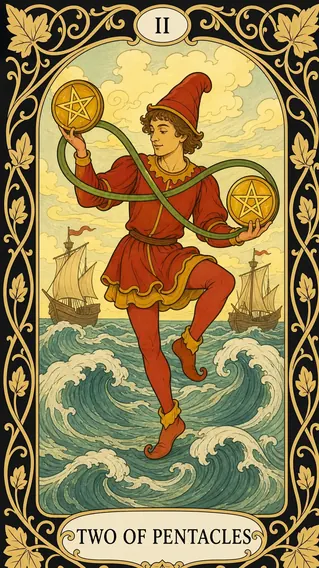
ကတ်နှစ်ခုစလုံးသည် ဟန်ချက်ညီမှုအကြောင်း ဖြစ်သော်လည်း သဘာဝချင်း ကွာခြားသည်။ ဓား (Swords) သည် လေဒြပ်စင်ဖြစ်ပြီး ဉာဏ်ပညာနှင့် ဆုံးဖြတ်ချက်များကို ကိုယ်စားပြုသည်။ ဓားနှစ်ချောင်း (Two of Swords) သည် စိတ်ပိုင်းဆိုင်ရာ ရပ်နားခြင်းနှင့် ရွေးချယ်မှုနှစ်ခုကြားတွင် ရွေးချယ်ရန် ဝန်လေးခြင်းအကြောင်း ဖြစ်သည်။ ပိုက်ဆံ (Pentacles) သည် မြေဒြပ်စင်ဖြစ်ပြီး လက်တွေ့လုပ်ဆောင်မှုနှင့် အရင်းအမြစ်များကို ကိုယ်စားပြုသည်။ ပိုက်ဆံနှစ်ချောင်း (Two of Pentacles) သည် အလုပ်များလွန်းပြီး အရာအားလုံးကို ထိန်းကျောင်းနေရသော်လည်း အဆင်ပြေအောင် လုပ်ဆောင်နိုင်ခြင်းအကြောင်း ဖြစ်သည်။ ကတ်ဖြန့်ရာတွင် ခက်ခဲသော ရွေးချယ်မှု သို့မဟုတ် အမှန်တရားကို ရှောင်လွှဲခြင်းအကြောင်းဆိုလျှင် ဓားကတ်များဖြစ်ပြီး၊ အလုပ်များစွာကို တစ်ပြိုင်နက် လုပ်ဆောင်ရင်း အချိန်နှင့် ငွေကြေး မလုံလောက်ခြင်းအကြောင်းဆိုလျှင် ပိုက်ဆံကတ်များ ဖြစ်သည်။
ဓားနှစ်ချောင်း (Two of Swords) ဆိုတာ ဟုတ်လား၊ မဟုတ်လား။
မဟုတ်သေးပါ၊ ပို၍တိကျစွာဆိုရလျှင် - မဟုတ်သေးပါ။ ဆုံးဖြတ်ချက် မချရသေးဘဲ မေးခွန်းကို အချိန်မတိုင်မီ မေးထားခြင်းဖြစ်ကြောင်း ကတ်က ပြသည်။ အကယ်၍ ရပ်နားခြင်းသည် သင့်လျော်သလားဟု မေးလျှင် ဟုတ်သည်ဟု အဖြေပေးနိုင်သော်လည်း၊ ကြာမြင့်စွာကတည်းက ဖြစ်လာမည့် ဆုံးဖြတ်ချက်၏ ရလဒ်အကြောင်းဆိုလျှင် ဆက်ဆွဲမထားသင့်ပါ။
ဓားနှစ်ချောင်း (Two of Swords) ပြောင်းပြန်ကျလာလျှင် ဘာကို ဆိုလိုသလဲ။
အခြေအနေ ပိတ်မိနေခြင်း ဖြေရှင်းသွားပါလိမ့်မည်။ ဆုံးဖြတ်ချက်ကို နောက်ဆုံးတွင် ချလိုက်ပြီ သို့မဟုတ် ရှောင်လွှဲနေသော အမှန်တရားသည် သူ့အလိုလို ပေါ်လာပါလိမ့်မည်။ တစ်ခါတစ်ရံတွင် ၎င်းသည် အခြေအနေများကြောင့် လူတစ်ယောက်အတွက် တခြားသူတစ်ဦးက ဆုံးဖြတ်ပေးလိုက်ခြင်း ဖြစ်နိုင်သည်။ ထိုရလဒ်သည် သင့်အတွက် အဆင်ပြေမပြေ စစ်ဆေးကြည့်သင့်သည်။
ဓားနှစ်ချောင်း (Two of Swords) သည် ခွဲခွာခြင်းကို ဆိုလိုသလား။
ဟောကိန်းတစ်ခုအနေဖြင့် မဟုတ်ဘဲ အခြေအနေကို ဖော်ပြခြင်းအနေဖြင့်သာ ဖြစ်သည်။ ဆက်ဆံရေးတွင် ခက်ခဲသော စကားပြောဆိုမှုတစ်ခု ဖြစ်လာတော့မည်ဆိုလျှင် ၎င်းကို ရှောင်လွှဲနေသည့် အဆင့်ကို ကတ်က ပြသသည်။ ၎င်းသည် မည်သို့ အဆုံးသတ်မည်ကို တိုက်ရိုက်မပြောပြပါ။ လူနှစ်ဦး ခွဲခွာသွားမည်လား သို့မဟုတ် ပွင့်ပွင့်လင်းလင်း စကားပြောဖြစ်သွားမည်လားဆိုသည်မှာ ကတ်ပေါ်တွင် မူတည်ခြင်းမဟုတ်ဘဲ ရွှေ့ဆိုင်းထားသော ထိုစကားပြောဆိုမှုအပေါ်တွင်သာ မူတည်သည်။