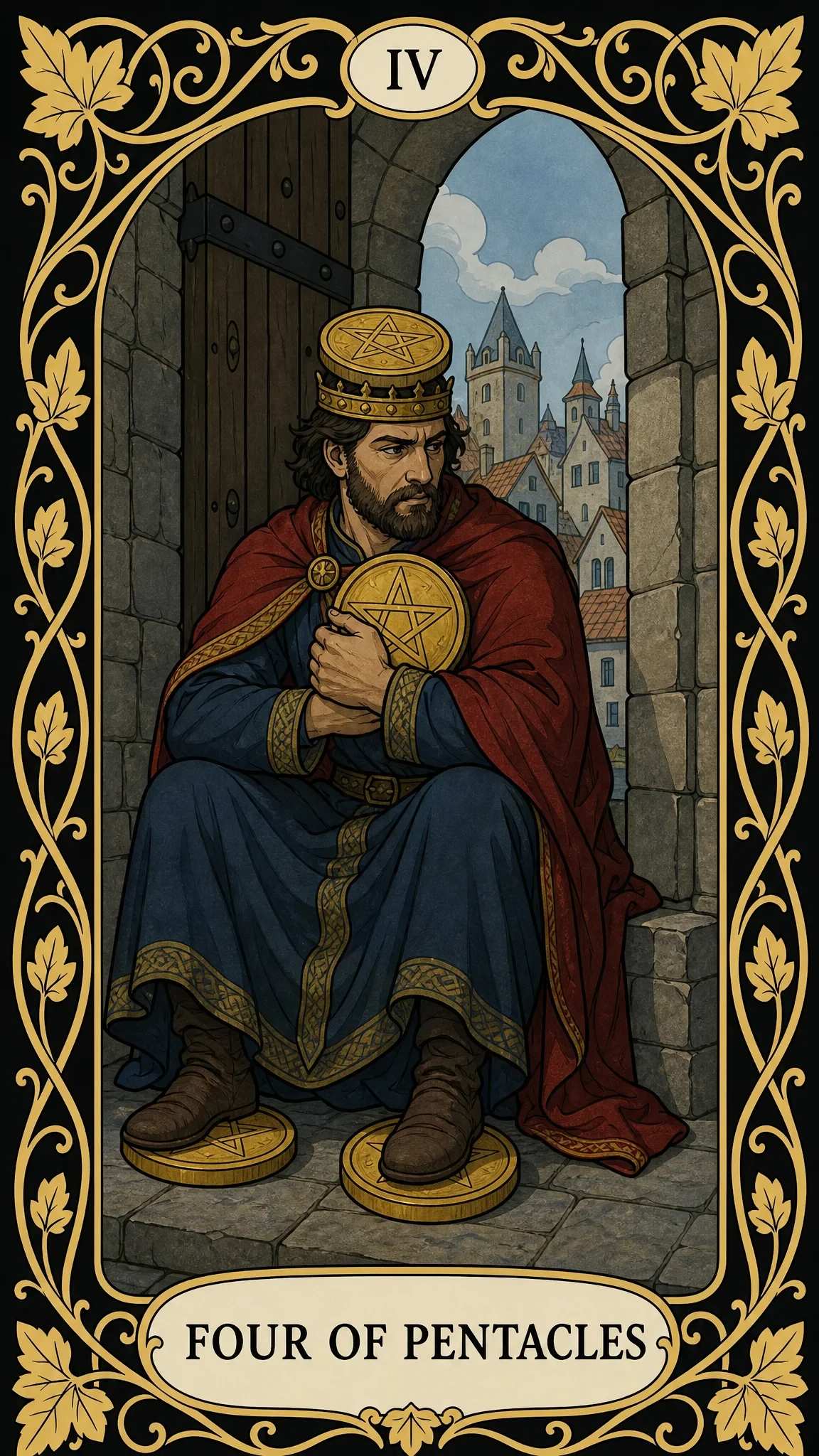
What the Four of Pentacles means in Tarot
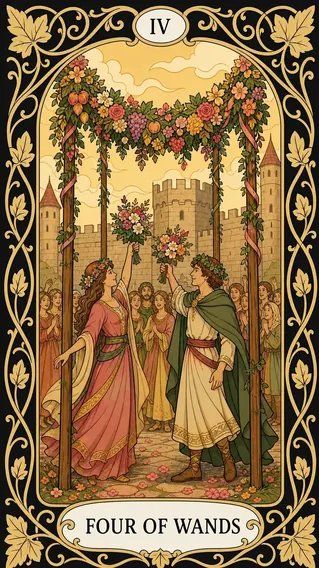
Fours in Tarot are cards about structure and what happens to what has been achieved when it needs to be secured: the Four of Wands celebrates success, the Four of Cups describes satiety with feelings, the Four of Swords — a forced pause. The Four of Pentacles secures what has been achieved in the most tangible sense: money, property, status, the habitual order of life — and does it more firmly than any other four.
An important nuance that is lost in retellings: frugality and greed are not the same thing, although the card is almost always interpreted as greed. The difference is in the motive. A frugal person saves because they remember what it is like to be without a reserve; a greedy person wants more even when they have enough. The Four of Pentacles more often describes the former: not an appetite for more, but a fear of being left without support again. In itself, this is not a vice — the question is whether caution turns into a prison from which one does not want to leave, even when the threat is long gone.
And, like any minor arcana, this is not about fate as a whole, but about a specific segment: a week when you don't want to spend extra, a conversation about a budget, a decision not to share what has been hard-earned. Neighboring cards will show whether this caution is justified by circumstances or is already hindering life.
Reversed Four of Pentacles: meaning
The reversed Four of Pentacles loosens the grip, but not always voluntarily and not always for the better. The meaning is chosen by the question of the spread.
- The grip loosened against one's will. Money or things leave against one's desire: an unplanned expense, a forced change in the budget, what was saved suddenly needs to be given away or spent.
- Caution taken to the limit. The reverse option: control does not let go, but intensifies — saving becomes no longer reasonable, but anxious; a person is afraid to spend even on necessities.
- The grip is released consciously. The rarest but occurring reading: a decision to stop keeping everything to oneself — to share, to invest, to trust, for the first time in a long time not to count every penny.
Neighboring cards help distinguish these options: next to anxious Swords — it is more likely an increase in control, next to the Star or the Ten of Cups — it is more likely a conscious release.
Four of Pentacles in a "yes or no" spread
In "yes/no" spreads, the Four of Pentacles is more often read as no — but specifically as "not now and not through movement": the card describes holding, not action, so it answers questions about change, risk, or new investments with a restrained refusal.
The answer changes if the question is phrased differently. "Will what I have be preserved?" — here the Four answers yes, and more confidently than many other cards: it is specifically about preservation, not growth.
The reversed position in this spread is read as "no, and it will become harder to hold on": either the resource will have to be given away against one's will, or the efforts to keep everything as it is will become noticeably heavier.
Four of Pentacles in relationships and feelings
In a relationship spread, the upright Four of Pentacles describes not emotional coldness, but an unwillingness to risk what one already has. A person holds onto the relationship tightly, sometimes too tightly: they are afraid to open up first, to share vulnerability, to let in changes that could shake the habitual order.
In the position of feelings, the card often points to caution instead of warmth: feelings exist, but they are afraid to show them in full force — what if this is used or devalued. Here again, it is important not to confuse this with stinginess of character: more often it is a consequence of past experience, where openness was costly.
For one person in a couple, the Four of Pentacles can mean a desire to control the dynamics: who invests how much, who makes concessions first. This is not a love of power, but an attempt not to end up without support again if something goes wrong.
Reversed position — either the grip loosens and a readiness to trust appears, or, conversely, control turns into jealousy and an unwillingness to let the partner go even in small things.
Four of Pentacles in work and money
In career spreads, the Four of Pentacles is a stable but inflexible position: holding onto the current job, not agreeing to the risk of changing jobs, avoiding projects with an uncertain result. Often this is a justified strategy in an unstable period, but sometimes it is a missed opportunity because any movement begins to seem like a threat.
In money, the card speaks about accumulation and expense control, not about a specific amount or term: the desire to save, not to spend extra, to have a reserve just in case. This is a state, not a forecast — the Four of Pentacles does not show how much will be accumulated and when, only the mode of frugality itself.
The card's advice in money and work is one: it is useful to ask yourself, is saving now a reasonable preparation or already a way not to look into the eyes of a larger decision that has long been overdue.
Four of Pentacles as a person: man and woman
When the Four of Pentacles appears in the "what kind of person" position, it describes someone who keeps resources to themselves: not necessarily stingy, but cautious to the limit — counts carefully, does not like to share what was obtained with difficulty, is wary of others' requests for help.
The Four of Pentacles man is reliable but closed: keeps his word and money under control, does not like spontaneous spending and risky partnerships. The Four of Pentacles woman is someone who has built her own stability and protects it, sometimes too zealously.
This is not a description of a greedy person, but rather someone who was once left without support and has not wanted a repeat since. Neighboring cards will show whether this person is ultimately ready to trust and share, or if the grip will remain their main trait.
Four of Pentacles in the thoughts position
In the thoughts position, the Four of Pentacles is an obsessive focus on preservation: thoughts revolve around the budget, property, how not to lose what has already been achieved. This is a state of anxious bookkeeping, not calm planning.
Next to Pentacles, it is more likely sober calculation; next to Swords — anxiety that inflates the risk of loss more than it actually is.
ဘာလုပ်ရမလဲ - ပင်တာကယ် ၄ (Four of Pentacles) ကျလာတဲ့အခါ
ပင်တာကယ် ၄ ရဲ့ အကြံဉာဏ်က "အရာအားလုံးကို လွှတ်ချလိုက်ပါ" လို့ မဟုတ်သလို "တင်းတင်းကျပ်ကျပ် ဆုပ်ကိုင်ထားပါ" လို့လည်း မဟုတ်ပါဘူး။ ပိုပြီး တိကျတဲ့အချက်ကတော့ - အဲဒီလို တင်းတင်းကျပ်ကျပ် ဆုပ်ကိုင်ထားရတဲ့ အကြောင်းရင်းကို အရင်စစ်ဆေးကြည့်ဖို့ ဖြစ်ပါတယ်။
လက်တွေ့လုပ်ဆောင်သင့်တဲ့အချက်များ:
၁။ ကျိုးကြောင်းဆီလျော်တဲ့ စုဆောင်းမှုနဲ့ စိုးရိမ်စိတ်ကြောင့် ချွေတာမှုတို့ကို ခွဲခြားပါ။ ပထမအချက်က စိတ်အေးချမ်းမှုကို ပေးပေမဲ့ ဒုတိယအချက်ကတော့ ပစ္စည်းဥစ္စာ ပြည့်စုံနေရင်တောင် စိတ်ဖိစီးမှုကို ဖြစ်စေပါတယ်။
၂။ ဘာကို ဆုပ်ကိုင်ထားရတာလဲဆိုတာကို ဖော်ထုတ်ပါ။ များသောအားဖြင့် ဒါဟာ လောဘကြောင့် မဟုတ်ဘဲ ငွေကြေး၊ ပံ့ပိုးမှု ဒါမှမဟုတ် အခြေအနေကို ထိန်းချုပ်နိုင်စွမ်း ဆုံးရှုံးသွားမှာကို ကြောက်ရွံ့တဲ့စိတ်ကြောင့် ဖြစ်ပါတယ်။
၃။ လွှတ်ချဖို့ ကြောက်နေတဲ့ အရာတစ်ခုကို စစ်ဆေးပါ။ အခုချက်ချင်း လွှတ်ချဖို့ မလိုပါဘူး၊ ဒါပေမဲ့ အဲဒီအရာက တကယ်ပဲ အန္တရာယ်ရှိနေတာလားဆိုတာကို ရိုးသားစွာ ဆန်းစစ်ကြည့်ပါ။
၄။ ချွေတာခြင်းနဲ့ ကိုယ့်ကိုယ်ကိုယ် နှိပ်စက်ခြင်းကို မရောထွေးပါနဲ့။ ချွေတာခြင်းဟာ ရည်မှန်းချက်တစ်ခုအတွက် ဖြစ်မှသာ အဓိပ္ပာယ်ရှိပါတယ်။ ကိုယ့်ကိုယ်ကိုယ် အရာရာကနေ ကန့်သတ်ထားတာမျိုး မဖြစ်သင့်ပါဘူး။
အကယ်၍ ဒီကတ်က ငွေကြေးအခက်အခဲ၊ အကြွေး ဒါမှမဟုတ် စိုးရိမ်ပူပန်မှုတွေနဲ့ ပတ်သက်ပြီး ကျလာတာဆိုရင်တော့ ဒါဟာ ငွေကြေးဆိုင်ရာ ကျွမ်းကျင်သူ ဒါမှမဟုတ် စိတ်ပညာရှင်နဲ့ တိုင်ပင်ဆွေးနွေးတာကို အစားထိုးနိုင်မှာ မဟုတ်ပါဘူး။ ဒီကတ်က လက်ရှိအခြေအနေကို ဖော်ပြပေးတာဖြစ်ပြီး ပြဿနာတွေကို တိုက်ရိုက်ဖြေရှင်းပေးမှာ မဟုတ်ပါဘူး။
ကတ်ပေါ်မှာ ဘာတွေပုံဖော်ထားသလဲ
ကျွန်ုပ်တို့ရဲ့ကတ်မှာတော့ အမှောင်ပြာရောင်ဝတ်စုံနဲ့ အနီရောင်ဝတ်ရုံကို ဝတ်ဆင်ထားတဲ့ အမျိုးသားတစ်ဦးဟာ ခံတပ်ရဲ့ ကျောက်တံခါးပေါက်မှာ ထိုင်နေပါတယ်။ သူ့ခေါင်းပေါ်မှာ တန်ဖိုးကြီးကျောက်မျက်အစား ရွှေရောင်ပင်တာကယ်တစ်ခုပါတဲ့ သရဖူကို ဆောင်းထားပြီး၊ နောက်ထပ် ပင်တာကယ်တစ်ခုကို ရင်ဘတ်မှာ လက်နှစ်ဖက်နဲ့ တင်းတင်းကျပ်ကျပ် ဖက်ထားပါတယ်။ နောက်ထပ် ပင်တာကယ်နှစ်ခုကတော့ သူ့ခြေထောက်အောက်မှာ ရှိနေပြီး သူက အဲဒီအပေါ်မှာ နင်းရပ်နေပါတယ်။
သူ့နောက်ကျောမှာတော့ ခိုင်ခံ့တဲ့ အနက်ရောင်ပတ္တာတွေနဲ့ တံခါးကို တင်းတင်းကျပ်ကျပ် ပိတ်ထားပါတယ်။ တံခါးပေါက်အပြင်ဘက်မှာတော့ အုတ်ကြွပ်မိုးအိမ်တွေ၊ ကျောက်တံတိုင်းတွေနဲ့ ပြည့်နှက်နေတဲ့ မြို့ပြမြင်ကွင်းကို မြင်တွေ့ရပါတယ်။ အမျိုးသားကိုယ်တိုင်ကတော့ အဲဒီမြို့ကိုဖြစ်စေ၊ ကြည့်ရှုသူကိုဖြစ်စေ မကြည့်ဘဲ ဘေးဘက်ကို စိုးရိမ်တကြီးနဲ့ သတိထားကြည့်နေပါတယ်။
ဒီမြင်ကွင်းကို အောက်ပါအတိုင်း အဓိပ္ပာယ်ဖွင့်ဆိုနိုင်ပါတယ်:
- နောက်ကျောက တံခါးကို သော့ခတ်ထားခြင်း - အပြင်လောကနဲ့ အဆက်အသွယ်ဖြတ်ထားပြီး လိုအပ်သမျှကို ကိုယ့်ဆီမှာပဲ သိမ်းဆည်းထားခြင်း။
- သရဖူပေါ်က ပင်တာကယ် - ထိန်းချုပ်နိုင်စွမ်းဟာ သူ့ရဲ့ အစိတ်အပိုင်းတစ်ခု ဖြစ်လာခြင်း - "ငွေရှိတယ်" ဆိုတာထက် "ငါက အရာအားလုံးကို ထိန်းချုပ်ထားသူ" ဆိုတဲ့ ခံယူချက်။
- ရင်ဘတ်မှာ ဖက်ထားတဲ့ ပင်တာကယ် - အဖိုးတန်ဆုံးနဲ့ အထိခိုက်မခံနိုင်ဆုံးအရာ၊ အန္တရာယ်မပြုချင်ဆုံးအရာ။
- ခြေထောက်အောက်က ပင်တာကယ်နှစ်ခု - သူရပ်တည်နေတဲ့ အခြေခံအုတ်မြစ်၊ ဒီအရာတွေကို မထိခိုက်စေဖို့ သူက နေရာကနေတောင် မရွေ့ဘဲ နေနေခြင်း။
အဝေးက မြို့ပြမြင်ကွင်းကတော့ အပြင်မှာ ဆက်လက်လည်ပတ်နေတဲ့ ဘဝကို ကိုယ်စားပြုပါတယ်။ ကတ်ထဲက ဇာတ်ကောင်ကတော့ အိမ်နဲ့ လမ်းကြားမှာပဲ ပိတ်မိနေပြီး အသစ်အဆန်းတွေကို လက်ခံဖို့လည်း မဝံ့ရဲ၊ အပြင်ကို ထွက်ဖို့လည်း မဝံ့ရဲ ဖြစ်နေပါတယ်။
ပင်တာကယ် ၄ (Four of Pentacles) - နေ့စဉ်ကတ်အဖြစ်
ပင်တာကယ် ၄ ကတ်က နေ့စဉ်ကတ်အဖြစ် ကျလာရင်တော့ ငွေကြေးနဲ့ ပိုင်ဆိုင်မှုတွေမှာ ရုတ်တရက် အပြောင်းအလဲလုပ်ဖို့ မကြိုးစားဘဲ ခဏရပ်နားဖို့ သတိပေးနေတာပါ။ အသစ်အဆန်းတွေနဲ့ စွန့်စားတာထက် ရှိပြီးသားတွေကို စနစ်တကျ ပြန်လည်စီမံဖို့ ပိုသင့်တော်တဲ့နေ့ ဖြစ်ပါတယ်။
ငွေကြေးကိစ္စနဲ့ ပတ်သက်ပြီး စိုးရိမ်စိတ်များနေတယ်ဆိုရင်တော့ သတိထားရမယ့်အချက်နဲ့ ထိတ်လန့်နေတဲ့အချက်ကို ခွဲခြားဖို့ လိုပါတယ်။ ကိန်းဂဏန်းတွေကို ရိုးသားစွာ ပြန်ကြည့်ဖို့ လိုအပ်ပြီး ရှောင်လွှဲမနေပါနဲ့။ ပင်တာကယ် ၄ က ထိန်းချုပ်လိုတဲ့ဆန္ဒကို ဖော်ပြတာဖြစ်ပြီး စိုးရိမ်စရာအကြောင်းရှိမရှိကိုတော့ အချက်အလက်တွေနဲ့သာ စစ်ဆေးသင့်ပါတယ်။
ပင်တာကယ် ၄ ကတ်နဲ့ ပတ်သက်တဲ့ မေးလေ့ရှိတဲ့ မေးခွန်းများ
ဒါက Major Arcana လား၊ Minor Arcana လား။
ဒါဟာ Minor Arcana ဖြစ်ပြီး Pentacles (မြေဓာတ်) ဖြစ်ပါတယ်။ Tarot ကတ်ပြားမှာ Minor Arcana စုစုပေါင်း ၅၆ ကတ်ရှိပြီး တစ်မျိုးစီမှာ ၁၄ ကတ်စီ ပါဝင်ပါတယ်။ ပင်တာကယ် ၄ ဟာ ပင်တာကယ်အုပ်စုရဲ့ စတုတ္ထမြောက်ကတ် ဖြစ်ပါတယ်။
ပင်တာကယ် ၄ နဲ့ ဝန်း (Wands) ၄ တို့ ဘာကွာသလဲ။
နှစ်ခုစလုံးက တည်ငြိမ်မှုကို ကိုယ်စားပြုပေမဲ့ ပုံစံချင်း မတူပါဘူး။ Wands (မီးဓာတ်) ၄ ကတော့ အောင်မြင်မှုအတွက် ဝမ်းမြောက်ခြင်း၊ အခြားသူတွေနဲ့ အတူတူ အောင်ပွဲခံချင်တဲ့ တည်ငြိမ်မှုမျိုး ဖြစ်ပါတယ်။ Pentacles (မြေဓာတ်) ၄ ကတော့ အောင်မြင်မှုကို တစ်ယောက်တည်း သိမ်းဆည်းထားခြင်း၊ ဝေမျှဖို့ မလိုလားခြင်းနဲ့ ပတ်သက်ပါတယ်။ အောင်မြင်မှုရဲ့ ပျော်ရွှင်မှုကို အဓိကထားရင် Wands ဖြစ်ပြီး၊ ဆုံးရှုံးမှာကို စိုးရိမ်တဲ့စိတ်ဆိုရင်တော့ Pentacles ဖြစ်ပါတယ်။
ပင်တာကယ် ၄ ဆိုတာ ဟုတ် (Yes) လား၊ မဟုတ် (No) လား။
အများအားဖြင့်တော့ 'မဟုတ်' ပါ။ ဒီကတ်က ရှေ့ဆက်တိုးတာထက် ရှိပြီးသားကို ထိန်းသိမ်းတာကို ဆိုလိုပါတယ်။ 'ရှိပြီးသားအရာတွေ ဆက်ရှိနေမလား' လို့ မေးရင်တော့ 'ဟုတ်' လို့ ဖြေနိုင်ပေမဲ့ အပြောင်းအလဲ ဒါမှမဟုတ် ရင်းနှီးမြှုပ်နှံမှုအသစ်တွေအကြောင်း မေးရင်တော့ 'မဟုတ်' လို့ပဲ ဆိုရပါမယ်။
ပင်တာကယ် ၄ (ပြောင်းပြန်) က ဘာကို ဆိုလိုသလဲ။
ဆုပ်ကိုင်ထားမှု ပုံစံပြောင်းသွားပါမယ်။ တစ်နည်းအားဖြင့် ကိုယ့်ဆန္ဒမပါဘဲ အရင်းအမြစ်တွေ ဆုံးရှုံးသွားတာမျိုး ဒါမှမဟုတ် စိုးရိမ်စိတ်ကြောင့် ပိုပြီး တင်းတင်းကျပ်ကျပ် ထိန်းချုပ်တာမျိုး ဖြစ်နိုင်ပါတယ်။ တစ်ခါတရံမှာတော့ အရာအားလုံးကို လွှတ်ချပြီး တခြားသူကို ယုံကြည်ဖို့ ဆုံးဖြတ်ချက်ချတာမျိုးလည်း ဖြစ်နိုင်ပါတယ်။ ဘေးက ကတ်တွေကို ကြည့်ပြီး အဓိပ္ပာယ်ဖွင့်ဆိုရပါမယ်။
ပင်တာကယ် ၄ ဆိုတာ လောဘကြီးတာကို ဆိုလိုတာလား။
မသေချာပါဘူး။ ဒီကတ်က များသောအားဖြင့် ပစ္စည်းဥစ္စာ ပေါများနေပေမဲ့ အားကိုးရာမဲ့သွားမှာကို ကြောက်ရွံ့တဲ့စိတ်ကို ပိုဖော်ပြပါတယ်။ သတိထားပြီး ချွေတာတာနဲ့ လောဘကြီးတာဟာ အပြင်ပန်းမှာ ဆင်တူပေမဲ့ အတွင်းစိတ်ချင်း မတူညီတဲ့အတွက် အဓိပ္ပာယ်ဖွင့်ဆိုတဲ့အခါ သတိပြုဖို့ လိုပါတယ်။