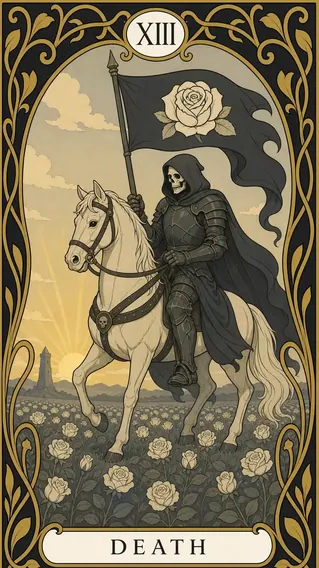
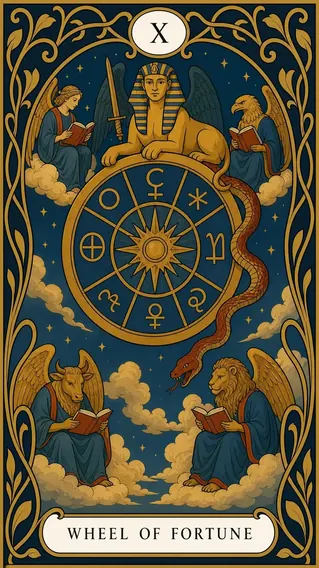
What does the Death and Wheel of Fortune combination mean
Together, these cards describe an end that coincides with an external turn of circumstances: one life path is closing not on its own, but against the backdrop of a shift that the person did not initiate and could not have foreseen.
If Death leads, the analysis begins with the outcome: the stage within has already been lived through and brought to a point, and the Wheel here is what shapes the next step from the outside, often not according to plan and not where expected. If the Wheel leads, the order is reversed: first, an external shift occurs — a move, someone else's decision, an accident — and it is this that forces one to admit what was being put off: the previous option no longer exists and holding onto it further makes no sense.
Common to both orders: the pair is not about a catastrophe or a happy accident, but about the coincidence of two different types of change — irreversible from within and accidental from the outside. Their meeting usually means that what is required of the person now is not resistance, but the ability to notice in time that a door, the existence of which was previously unknown, has already opened.
Death and the Wheel of Fortune in the reversed position
The reversed position of one or both cards changes not the meaning of the end, but whether it is acknowledged or not.
If only Death is reversed and the Wheel is upright: external changes are already happening, but the person continues to pretend that the old option is still alive — holding onto what has effectively ended while circumstances around them change without their participation.
If only the Wheel is reversed and Death is upright: the end is acknowledged and lived through internally, but the turn promised from the outside does not come or is delayed — a feeling of stagnation after an honest farewell, when the next door has not yet opened.
If both cards are reversed: neither the end is named nor the change has happened — the situation is stuck in a state where everything formally continues, although there has been no living content in it for a long time, and external circumstances are not moving either. This is the most viscous of the three options, and the analysis here should not be about "when it will finally happen," but about what exactly is supporting this immobility on both sides.
Death and the Wheel of Fortune in relationships
In a relationship spread, this pair often describes a breakup that coincides with an external circumstance, rather than happening in a vacuum: the separation is superimposed on a move, a change of job for one of the partners, or the appearance in life of a person who changes the balance of power.
If Death leads, the feelings inside have already faded, and the external reason is more of a formality than a cause. If the Wheel leads, it is the opposite: an external event exposes the fact that the relationship has long since ceased to correspond to changed circumstances, and this becomes the point after which there is no return to the previous format.
A nuance that is easy to miss: the pair does not say that the new person or new situation is necessarily better than the previous one — only that the previous connection has ended irrevocably, and where the next turn will go is decided not by the spread, but by the person themselves.
If the topic concerns a difficult breakup or the loss of a loved one, it is important to say directly: the cards describe the nature of the moment, rather than replacing a conversation with a loved one or a specialist.
Death and the Wheel of Fortune in work and money
In a work spread, the pair well describes reorganization: a position, project, or entire direction is indeed ending — not temporarily, not with the possibility of returning — and at the same time, a new configuration is forming somewhere nearby that is not yet fully visible.
If Death leads, the conversation is about the closure itself: the person has already realized that there is nowhere to move further in the old role, and the Wheel nearby only confirms that the next chance will not come by their initiative. If the Wheel leads, the external news is primary — downsizing, merger, change of management — and it forces one to admit the end of what was previously held by inertia.
In money, the combination speaks not about the size of the sum, but about the nature of the event: the closing of one source of income coincides with the appearance of another, but the composition of the new one is not yet determined.
The advice here is not to look for someone to blame for the external shift and not to waste energy trying to hold onto what has already ended from within: both efforts are equally unrewarding.
What to do if this combination appears
A practical analysis of this combination begins with one question: which of the two processes — internal completion or external shift — has already occurred, and what is the person still waiting for?
If the internal outcome has been reached but the external turn has not yet happened, it is reasonable not to force events and not to try to guess where the next opportunity will come from — the Wheel does not spin according to a schedule that can be drawn up in advance. If the external shift has already begun but the acknowledgment of the end is delayed, it is worth calling things by their names before circumstances do it for you: the price of delay in this pair usually grows, not decreases.
In any order of cards, do not make major decisions in the first days after the blow — neither the spread nor haste replaces the time needed to look around in the new configuration.
And separately: if the spread concerns a heavy loss, a serious illness, or an addiction, the cards describe the nature of the situation, not a diagnosis or a deadline — decisions in such a topic are made together with a doctor or another specialist, not by the cards.
Frequently asked questions about the Death and Wheel of Fortune combination
What is more important in this pair, Death or the Wheel of Fortune?
Neither card is more important than the other — it is important which one comes first in the spread. If Death lies first, the analysis begins with the internal end that has already occurred, and the Wheel describes what it will turn into from the outside. If the Wheel lies first, start with the external shift that forces the acknowledgment of the end. The order of the cards changes not the meaning, but from which side to enter the conversation.
What does the Death and Wheel of Fortune combination mean in relationships?
Usually, this is a breakup that coincides with an external circumstance — a move, a change of job, the appearance of a new person — rather than happening on its own. The previous format of the relationship ends irrevocably, but the pair does not say that things will be better or worse later: only that the old option no longer exists.
Death နှင့် Fortune Wheel ကို ပြောင်းပြန်လှန်ပြီး အတူတူဖတ်နည်းက ဘယ်လိုလဲ။
အဓိပ္ပာယ်က ဘယ်ကတ်ကို ပြောင်းပြန်လှန်ထားလဲဆိုတဲ့အပေါ် မူတည်ပါတယ်။ Death ကို ပြောင်းပြန်လှန်ပြီး Fortune Wheel ကို ပုံမှန်ထားရင် - အခြေအနေတွေ ပြောင်းလဲနေပေမဲ့ အဟောင်းတွေ ပြီးဆုံးသွားပြီဆိုတာကို လက်မခံချင်တဲ့သဘောပါ။ Fortune Wheel ကို ပြောင်းပြန်လှန်ပြီး Death ကို ပုံမှန်ထားရင် - အဆုံးသတ်ကို လက်ခံပေမဲ့ မျှော်လင့်ထားတဲ့ အပြောင်းအလဲက ကြန့်ကြာနေတာပါ။ နှစ်ခုလုံး ပြောင်းပြန်ဖြစ်နေရင်တော့ အခြေအနေက ရပ်တန့်နေပါတယ် - အဆုံးသတ်လည်း မဖြစ်၊ အပြောင်းအလဲလည်း မရှိသေးပါဘူး။
Death နှင့် Fortune Wheel ပေါင်းစပ်မှုက မကောင်းဘူးလား။
ဒီပေါင်းစပ်မှုက ကောင်းတာ၊ ဆိုးတာမျိုး မဟုတ်ပါဘူး။ သူက လူတစ်ယောက်ရဲ့ ထိန်းချုပ်မှုအောက်မှာ မရှိတဲ့ ပြင်ပအပြောင်းအလဲတစ်ခုနဲ့ မလွှဲမရှောင်သာတဲ့ အဆုံးသတ်တစ်ခုကို ဖော်ပြတာပါ။ ဒီအတွဲကို စိတ်အနှောင့်အယှက်ဖြစ်စေတာက ကတ်တွေကြောင့်မဟုတ်ဘဲ နောက်တစ်ခါးပေါက် ဘယ်မှာဖွင့်လဲဆိုတာကို မကြည့်ဘဲ ပြီးဆုံးသွားတဲ့အရာကို ဆက်ပြီး ဖက်တွယ်ထားဖို့ ကြိုးစားနေတာကြောင့်ပါ။