Ką reiškia Raitelis kardai Taro
Raitelis kardai yra teismo korta iš kardų grupės, ir ji pirmiausia yra apie minčių greitį, kuris iškart virsta veiksmu. Jei tai būtų žmogus pokalbyje, Raitelis kardai būtų tas, kuris pirmas randa kontrargumentą ir jį garsiai ištaria, nelaukdamas, kol pašnekovas baigs kalbėti.
Svarbus patikslinimas, kuris taikomas bet kuriam jaunesniajam arkanui: korta apibūdina epizodą, o ne visą gyvenimą trunkantį charakterį, kaip tai daro vyresnieji arkanai. Ji apie konkretų ginčą, sprendimą ar trumpą šuolį šią savaitę, o ne apie tai, koks žmogus bus visada. Raitelis kardai – tai ne „tu esi toks aštrus visą gyvenimą“, o „štai kokiu greičiu ir spaudimu dabar reikia veikti“ arba „štai kas įsiveržė į situaciją ir ką jis su savimi atnešė“.
Iš esmės korta apibūdina protinės ir valios energijos antplūdį: norą vienu judesiu perpjauti mazgą, tiesiai pasakyti tai, ko kiti vengia, laimėti ginču ar reakcijos greičiu. Oro stichija čia skaitoma tiesiogiai – greitai, aštriai, kartais negailint kitų jausmų. Raitelis kardai retai sustoja, kad patikrintų, ar jo spaudimas ką nors žeidžia pakeliui: už atsargumą ir taktiškumą kaladėje atsako kitos kortos, ne Raitelis.
Apverstas Raitelis kardai: reikšmė
Apverstas Raitelis kardai yra tas pats spaudimas, bet jis arba praleidžia taikinį, arba atsisuka prieš patį žmogų. Paprastai išsidėstymas susiveda į vieną iš trijų variantų.
- Agresija be priežasties. Aštrumas, kuris ieško preteksto, o ne sprendžia realią problemą – ginčas dėl ginčo, konfliktas, kuriame niekas jau neprisimena, nuo ko viskas prasidėjo.
- Žodžiai pasakyti anksčiau, nei reikėjo. Aštri replika, karštligiškai išsiųstas laiškas, sprendimas, ištartas prieš tai, kai jis buvo apgalvotas – ir dabar tenka tvarkytis su pasekmėmis.
- Spaudimas išsekino patį nešėją. Per ilgas greitis ant ribos vargina: dirglumas, nervinė įtampa, jausmas, kad kovoji jau su visais iš eilės.
Skirtumas su tiesia padėtimi paprastas: tiesioginė korta – apie tikslų, pateisinamą smūgį, apversta – apie smūgį, kuris duodamas ne ten arba ne laiku.
Raitelis kardai išsidėstyme „taip ar ne“
Išsidėstymuose „taip/ne“ Raitelis kardai paprastai skaitomas kaip ryžtingas taip – bet su sąlyga: veikti reikia greitai ir tiesiai, be ilgų derinimų. Korta ne apie kompromisą ir ne apie idealų diplomatinį variantą; ji apie tai, kad tiesus kelias suveiks geriau nei aplinkinis.
Jei klausimas skamba kaip „ar verta tiesiai išsakyti“ ar „ar verta veikti greitai“ – atsakymas greičiau teigiamas, bet be garantijos, kad apsieis be trinties: Raitelis kardai ne apie tai, kad visi liks patenkinti, o apie tai, kad delsimas kainuos brangiau.
Apversta padėtis šiame išsidėstyme pakeičia atsakymą į „taip, bet ne taip staigiai“ – idėja teisinga, bet pasirinktas tonas ar momentas tik viską sugadins.
Raitelis kardai santykiuose ir jausmuose
Išsidėstyme santykiams tiesioginis Raitelis kardai – tai tiesus paaiškinimas, kuris seniai brendo: pokalbis be užuolankų, sąžiningas „mums reikia pasikalbėti“, prisipažinimas ar išsiskyrimas, pasakyti be pasiruošimo, bet be neišsakytų minčių. Korta gerai apibūdina momentą, kai tylėti tampa blogiau nei pasakyti nepatogią tiesą.
Jausmų pozicijoje Raitelis kardai – tai greičiau aiškumas, nei šiluma: žmogus tiksliai žino, ko nori, ir neketina vaikščioti ratais. Tai gali būti skaitoma kaip jaudinantis tiesumas santykių pradžioje arba kaip vėsi aštrumas, jei korta apibūdina jau esamą porą.
Yra ir kita pusė: tas pats spaudimas lengvai virsta taktiškumu – pasakyti tiesą nereiškia pasakyti ją švelniai, o Raitelis kardai nesirūpina švelnumu. Svarbus niuansas, kuris prarandamas persakant: jis nenori specialiai įžeisti, tiesiog jo minčių greitis aplenkia rūpestį, kaip skambės žodis.
Apversta padėtis santykiuose – tai kivirčas, prasidėjęs iš nieko, arba aštrumas, dėl kurio vėliau gėda; arba, atvirkščiai, svarbus pokalbis, kuris atidedamas, kad nebūtų per daug tiesus.
Raitelis kardai darbe ir piniguose
Karjeros išsidėstymuose Raitelis kardai – tai ryžtingos derybos, trumpas ir griežtas pokalbis su viršininku, ginčas, laimėtas dėl reakcijos greičio ir tikslių argumentų. Korta gerai apibūdina situacijas, kur laimi tas, kas pirmas ir aiškiausiai suformulavo poziciją.
Piniguose Raitelis kardai – tai greitas, rizikingas sprendimas: sudaryti sandorį be ilgo derybų proceso, eiti į konfliktą dėl pinigų, nes toliau vilkinti brangiau. Kaimyninės kortos parodys, ar greitis atsipirks: su Tūzu kardų ar Saule – tikslus ir sėkmingas žingsnis, su Penkiuke kardų ar Bokštu – pergalė, kuri kainuoja per daug.
Apversta padėtis darbe – tai konfliktas, kuris kilo dėl skubėjimo ar neteisingai pasirinkto tono: aštrumas ten, kur reikėjo ištvermės, ir dabar tenka atkurti santykius su kolegomis ar partneriais.
Raitelis kardai kaip žmogus: vyras ir moteris
Kai Raitelis kardai pasirodo „koks žmogus“ pozicijoje, tai yra tipažo aprašymas, o ne tiesioginis amžiaus ar lyties užuomina. Tai tas, kas pasirodo situacijoje kaip įtampos iškrovėjas: atneša aiškumą, tiesų klausimą ar tiesų atsakymą – ten, kur kiti metus vaikščiojo aplink temą.
Vyras-Raitelis kardai – aštrus, protingas, nepakantus kitų lėtumui; sako, ką galvoja, ir ne visada švelnina formuluotes. Moteris-Raitelis kardai – ta, kuri pirma pavadina problemą savo vardu ir nebijojo įsivelti į ginčą, jei mano esanti teisi.
Šio tipažo kita pusė: šalia jo lengva pasijusti įžeistam – ne todėl, kad jis norėjo įžeisti, o todėl, kad taktiškumas nėra jo įrankių rinkinyje. Geras sąjungininkas kovoje ar ginče, ne visada – pokalbyje, kur reikalingas subtilumas.
Knight of Swords in the mindset position
In the mindset position, the Knight of Swords represents a state where a decision has already been made instantly, and the mind is occupied not with doubt, but with formulating what to say and how to do it faster. Thought outpaces feeling: the argument comes first, and only then – how it will sound to another person.
Sometimes this is a useful clarity – it’s time to stop weighing and call things by their names. Sometimes it’s nervous belligerence, when a person is mentally preparing for an argument that hasn’t happened yet. Adjacent cards help to differentiate: next to the Ace of Swords or the Sun, it’s more like sober determination; next to the Five of Swords or the Tower, it’s an anxious readiness for a fight.
What to do if the Knight of Swords appears
The card’s direct advice: act quickly and speak directly, but don’t confuse honesty with rudeness. The Knight of Swords rarely fails with reaction speed – he fails by forgetting to choose his words before speaking them.
What is worth doing in essence:
- Formulate the main point in one sentence. If a thought requires five paragraphs of justification – it’s not yet ready to be expressed sharply.
- Give yourself a pause before sending. One minute between “wrote” and “sent” often changes the tone of the message, but not the decision.
- Separate an argument for the sake of the matter from an argument for the sake of winning. The first is worth seeing through, the second is better stopped before it involves unnecessary people.
- Check who will be affected by the harshness. A quick decision is no reason to forget about those it concerns.
And separately: if the situation concerns a serious conflict, health, or breakup – a sharp step is not always the best advisor here. The cards show the energy of the moment, but a considered decision still rests with the person.
What is depicted on the card
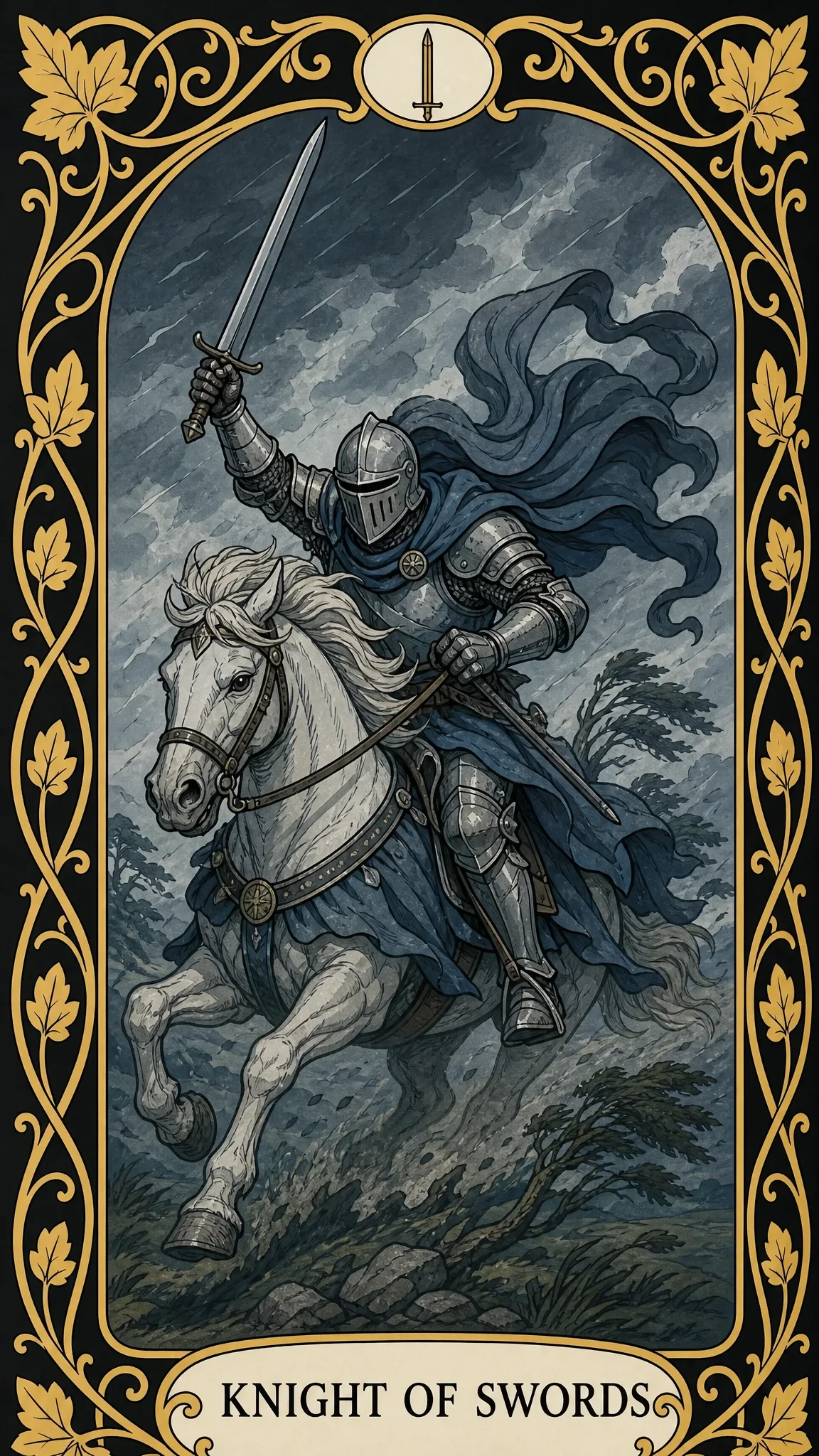
On our card, the Knight of Swords is a warrior in silver armor with a fully closed visor, riding a light gray horse galloping sharply through a thunderstorm. The sword in his raised hand is pointed vertically upwards, the dark blue cloak is torn horizontally by the wind, the sky is streaked with diagonal rain, and the trees on the right are bent almost to the ground by the gust.
The scene is read as follows:
- The horse at full gallop – unlike the rearing horse of the Knight of Wands, here the force is not gathering but flying forward: movement, not a burst at the starting point. Swords are the element of air, and the horse literally cuts through the air in front of it.
- Closed visor – the face is not visible: in this card, the speed and direction of the strike are more important than who is delivering it.
- Sword raised strictly upwards – not a defense or a side strike, but readiness to strike decisively at any moment: the decision is made, execution follows.
- Thunderstorm and bent trees – resistance of the environment, which does not stop the Knight of Swords: he rushes not into calm, but directly into the bad weather, and this also characterizes the suit in its own way.
At the top of the card is an oval medallion with a sword image, a sign of belonging to the suit; at the bottom is a plaque with the English name KNIGHT OF SWORDS.
The Knight of Swords as a daily card
The Knight of Swords as a daily card is a signal not to postpone a direct conversation or a quick decision that has already been brewing: say what you think, answer immediately, instead of composing a formulation for a week. This is a day when speed and directness work for a person more than cautious diplomacy.
A useful mindset for such a day: say the main thing – yes, but don’t turn every phrase into an attack. It’s worth choosing one issue where clarity is important, resolve it briefly and to the point, rather than scattering sharpness at everyone. And keep in mind that not everyone around is ready for such a pace – what is normal speed for the Knight of Swords may sound like an attack to the interlocutor.
Frequently asked questions about the Knight of Swords card
Is it a Major or Minor Arcana?
Minor Arcana, a court card of the Swords suit, element of Air. In a Tarot deck, there are 56 Minor Arcana – 14 cards in each of the four suits, and the Knight is one of the four court ranks within the Swords suit.
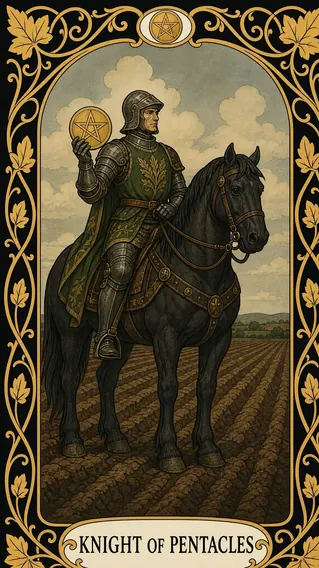
How does the Knight of Swords differ from the Knight of Pentacles?
Both are court cards at the rank of Knight, but their elements are opposite. Swords are the element of air, speed of thought and word: the Knight of Swords is about sharp decisions, directness, and drive. Pentacles are the element of earth, slow and steady movement: the Knight of Pentacles is about methodicalness and persistence without haste. If the Knight of Swords appears in a reading, the emphasis should be on speed and directness, not on thoroughness.
Is the Knight of Swords a yes or no?
More likely yes, but with the condition to act quickly and directly, without lengthy согласований. The card doesn’t promise that there won’t be friction – it’s about the fact that delay in this situation will cost more.
What does the reversed Knight of Swords mean?
The same drive, but it misses the target: aggression without real reason, harsh words spoken in the heat of the moment, or exhaustion from maintaining too much speed at the limit. Another option is an important direct conversation that is deliberately postponed.
Knight of Swords in relationships – is it about conflict?
Not necessarily about conflict, but definitely about directness: an honest conversation without beating around the bush, a confession or decision made without preparation. Whether this is good or bad depends on whether the other person is ready for such speed – the card itself doesn’t promise care for the softness of phrasing.