معنی شوالیه شمشیر در تاروت چیست
شوالیه شمشیر یک کارت دربار از دسته شمشیر است و در درجه اول به سرعت تفکر اشاره دارد که بلافاصله به عمل تبدیل میشود. اگر او فردی در مکالمه بود، شوالیه شمشیر کسی است که اولین استدلال متقابل را پیدا میکند و قبل از اینکه طرف مقابل صحبتش را تمام کند، آن را بیان میکند.
یک نکته مهم که در مورد هر آرکانای کوچک صدق میکند: کارت یک قسمت را توصیف میکند، نه شخصیت مادامالعمر را، همانطور که آرکانای بزرگ انجام میدهند. این کارت در مورد یک بحث خاص، یک تصمیم یا یک جهش کوتاه در این هفته است، نه در مورد اینکه فرد همیشه چگونه خواهد بود. شوالیه شمشیر به معنای «شما همیشه اینقدر تندخو هستید» نیست، بلکه به معنای «این سرعتی که باید با آن عمل کنید» یا «این کسی است که وارد موقعیت شده و چه چیزی با خود آورده است» است.
در اصل، کارت بیانگر انفجار انرژی ذهنی و ارادی است: تمایل به گره را با یک حرکت باز کردن، گفتن مستقیم آنچه دیگران از آن اجتناب میکنند، برنده شدن در بحث یا با سرعت واکنش. عنصر هوا در اینجا به معنای واقعی کلمه خوانده میشود - سریع، تیز، گاهی اوقات بدون ترحم به احساسات دیگران. شوالیه شمشیر به ندرت متوقف میشود تا بررسی کند که آیا فشار او به کسی در مسیر آسیب میرساند یا خیر: کارتهای دیگر در دسته کارت مسئول احتیاط و ظرافت هستند، نه شوالیه.
معنی شوالیه شمشیر معکوس
شوالیه شمشیر معکوس همان فشار است، اما یا به هدف نمیخورد، یا علیه خود فرد تمام میشود. معمولاً چیدمان به یکی از سه گزینه خلاصه میشود.
- پرخاشگری بیدلیل. تندی که به دنبال بهانه میگردد، نه اینکه مشکل واقعی را حل کند - بحث برای بحث، درگیری که در آن دیگر کسی به یاد نمیآورد از کجا شروع شده است.
- کلمات زودتر از آنچه باید گفته شدند. یک اظهار نظر تند، نامهای که از روی عصبانیت ارسال شده، تصمیمی که قبل از اینکه فرصت فکر کردن داشته باشد اعلام شده - و اکنون باید با عواقب آن کنار آمد.
- فشار خود فرد را خسته کرده است. سرعت بیش از حد در حد نهایی خستهکننده است: تحریکپذیری، تنش عصبی، احساس اینکه با همه در حال جنگ هستید.
تفاوت با حالت مستقیم ساده است: کارت مستقیم در مورد ضربه دقیق و توجیهپذیر است، کارت معکوس در مورد ضربهای است که در جای اشتباه یا در زمان اشتباه وارد میشود.
شوالیه شمشیر در چیدمان «بله یا خیر»
در چیدمانهای «بله/خیر»، شوالیه شمشیر معمولاً به عنوان یک «بله» قاطع خوانده میشود - اما با یک شرط: باید سریع و مستقیم عمل کرد، بدون هماهنگی طولانی. این کارت در مورد سازش یا گزینه دیپلماتیک ایدهآل نیست؛ بلکه در مورد این است که مسیر مستقیم بهتر از مسیر غیرمستقیم عمل خواهد کرد.
اگر سوال این باشد که «آیا باید مستقیماً صحبت کنم» یا «آیا باید سریع عمل کنم» - پاسخ بیشتر مثبت است، اما بدون تضمین اینکه بدون اصطکاک پیش برود: شوالیه شمشیر در مورد راضی بودن همه نیست، بلکه در مورد این است که تأخیر گرانتر تمام خواهد شد.
موقعیت معکوس در این چیدمان پاسخ را به سمت «بله، اما نه اینقدر تند» سوق میدهد - ایده درست است، اما لحن یا زمان انتخاب شده همه چیز را خراب میکند.
شوالیه شمشیر در روابط و احساسات
در چیدمان روابط، شوالیه شمشیر مستقیم به معنای یک توضیح مستقیم است که مدتهاست در حال وقوع است: مکالمه بدون تعارف، «باید صحبت کنیم» صادقانه، اعتراف یا جدایی، که بدون آمادگی گفته میشود، اما بدون ابهام. این کارت لحظهای را به خوبی توصیف میکند که سکوت بدتر از گفتن حقیقت ناخوشایند است.
در موقعیت احساسات، شوالیه شمشیر بیشتر وضوح است تا گرما: فرد دقیقاً میداند چه میخواهد و قصد ندارد دور و بر بگردد. این میتواند به عنوان صراحت جذاب در ابتدای رابطه یا به عنوان تندی سرد خوانده شود، اگر کارت یک زوج موجود را توصیف کند.
یک روی دیگر هم وجود دارد: همان فشار به راحتی به بیادبی تبدیل میشود - گفتن حقیقت به معنای گفتن آن به نرمی نیست، و شوالیه شمشیر نگران نرمی نیست. نکته مهمی که در بازگوییها گم میشود: او نمیخواهد عمداً آزار دهد، فقط سرعت تفکر او از نگرانی در مورد اینکه کلمات چگونه به نظر میرسند جلوتر است.
موقعیت معکوس در روابط به معنای دعوایی است که از هیچ شروع شده، یا تندی که بعداً باعث شرمندگی میشود؛ یا برعکس، مکالمه مهمی که برای مستقیم نبودن به تعویق افتاده است.
شوالیه شمشیر در کار و پول
در چیدمانهای شغلی، شوالیه شمشیر به معنای مذاکرات قاطع، گفتگوی کوتاه و سخت با رئیس، بحثی که با سرعت واکنش و استدلالهای دقیق برنده میشود. این کارت موقعیتهایی را به خوبی توصیف میکند که در آن کسی که اول و واضحترین موضع را بیان کرده، برنده میشود.
در امور مالی، شوالیه شمشیر به معنای یک تصمیم سریع و پرخطر است: انعقاد معامله بدون چانهزنی طولانی، ورود به درگیری بر سر پول، زیرا ادامه دادن آن گرانتر است. کارتهای همسایه نشان میدهند که آیا سرعت سودآور خواهد بود: با آس شمشیر یا خورشید - یک حرکت دقیق و موفق، با پنج شمشیر یا برج - پیروزی که هزینه زیادی دارد.
موقعیت معکوس در کار به معنای درگیری است که به دلیل عجله یا لحن اشتباه شعلهور شده است: تندی در جایی که خویشتنداری لازم بود، و اکنون باید روابط با همکاران یا شرکا را بازسازی کرد.
شوالیه شمشیر به عنوان یک شخص: مرد و زن
وقتی شوالیه شمشیر در موقعیت «چه نوع شخصی» ظاهر میشود، این توصیف یک تیپ است، نه اشارهای تحتاللفظی به سن یا جنسیت. این کسی است که به عنوان یک رهاییدهنده تنش وارد موقعیت میشود: وضوح، سوال مستقیم یا پاسخ مستقیم را به جایی میآورد که دیگران سالها دور موضوع چرخیدهاند.
مرد شوالیه شمشیر - تند، باهوش، بیصبر در برابر کندی دیگران؛ آنچه را که فکر میکند میگوید و همیشه فرمولبندیها را نرم نمیکند. زن شوالیه شمشیر - کسی است که ابتدا مشکل را به نام خود میخواند و از ورود به بحث نمیترسد، اگر خود را درست بداند.
این تیپ یک روی دیگر هم دارد: در کنار او، احساس ناراحتی آسان است - نه به این دلیل که او میخواست توهین کند، بلکه به این دلیل که ظرافت در مجموعه ابزارهای او وجود ندارد. یک متحد خوب در مبارزه یا بحث، نه همیشه در مکالمهای که نیاز به ظرافت دارد.
Knight of Swords in the position of
In the position of thoughts, the Knight of Swords is a state where a decision has already been made instantly, and the mind is occupied not with doubt, but with formulating what to say and how to do it faster. Thought overtakes feeling: first the argument, then how it will sound to another person.
Sometimes it's useful clarity – it's time to stop weighing and call things by their names. Sometimes it's nervous belligerence, when a person is mentally preparing for a dispute that hasn't happened yet. Adjacent cards help to distinguish: next to the Ace of Swords or the Sun, it's more sober determination, next to the Five of Swords or the Tower – anxious readiness for a fight.
What to do if the Knight of Swords appears
The card's advice is direct: act quickly and speak directly, but don't confuse honesty with rudeness. The Knight of Swords rarely fails with reaction speed – he fails by forgetting to choose his words before saying them.
What is worth doing in essence:
- Formulate the main point in one sentence. If a thought requires five paragraphs of justification – it's not yet ready to be expressed sharply.
- Give yourself a pause before sending. One minute between "wrote" and "sent" often changes the tone of the message, but not the decision.
- Separate a dispute for the sake of the matter from a dispute for the sake of victory. The first is worth bringing to an end, the second is better to stop before it involves extra people.
- Check who will be affected by the sharpness. A quick decision is no reason to forget about those it concerns.
And separately: if the situation concerns a serious conflict, health, or breakup – a sharp step is not always the best advice. The cards show the energy of the moment, but a considered decision still rests with the person.
What is depicted on the card
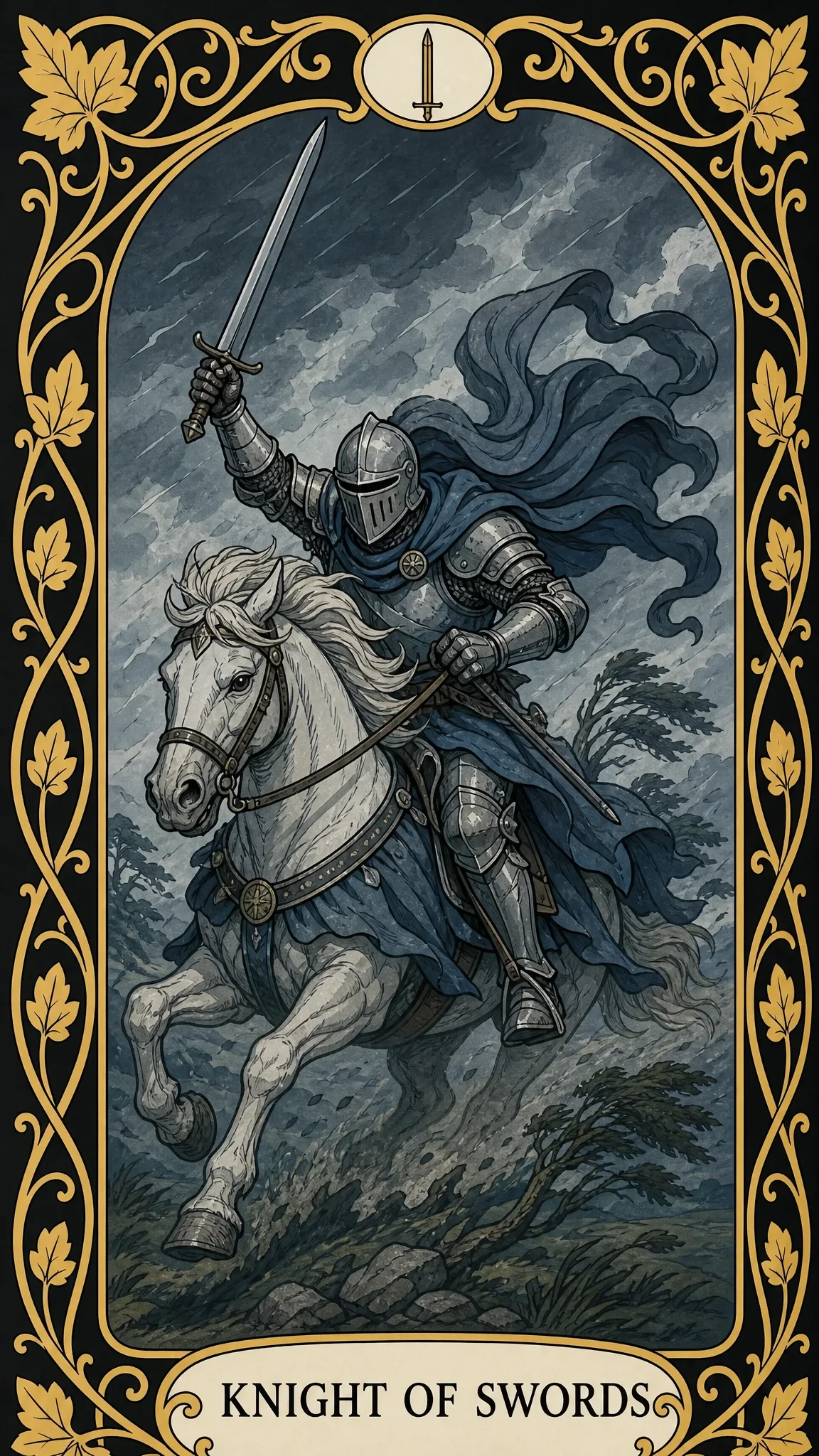
On our card, the Knight of Swords is a warrior in silver armor with a fully closed visor, riding a light gray horse flying at a sharp gallop through a thunderstorm. The sword in his raised hand is pointed vertically upwards, his dark blue cloak tears horizontally in the wind, the sky is streaked with diagonal rain, and the trees on the right are bent almost to the ground by the gust.
The scene reads as follows:
- The horse at full gallop – unlike the rearing horse of the Knight of Wands, here the power is not gathering, but flying forward: movement, not a burst at the starting point. Swords are the element of air, and the horse literally cuts through the air in front of it.
- Closed visor – the face is not visible: in this card, the speed and direction of the strike are more important than who is delivering it.
- Sword raised strictly upwards – not a defense or a side strike, but readiness to strike at any moment: the decision has been made, the execution is pending.
- Thunderstorm and bent trees – resistance of the environment, which does not stop the Knight of Swords: he rushes not into calm, but directly into bad weather, and this also characterizes the suit in its own way.
At the top of the card is an oval medallion with a sword, a sign of belonging to the suit, and at the bottom is a plaque with the English name KNIGHT OF SWORDS.
Knight of Swords as a card of the day
The Knight of Swords as a card of the day is a signal not to postpone a direct conversation or a quick decision that has already ripened: say what you think, answer immediately, instead of composing a formulation for a week. This is a day when speed and directness work for a person more than cautious diplomacy.
A useful attitude for such a day: say the main thing – yes, but don't turn every phrase into an attack. It's worth choosing one issue where clarity is important, resolve it briefly and to the point, rather than scattering sharpness at everyone. And keep in mind that not everyone around is ready for such a pace – what is normal speed for the Knight of Swords may sound like an attack to the interlocutor.
Frequently asked questions about the Knight of Swords card
Is it a Major or Minor Arcana?
Minor Arcana, a court card of the suit of Swords, element of Air. In a Tarot deck, there are 56 Minor Arcana – 14 cards in each of the four suits, and the Knight is one of the four court ranks within the suit of Swords.
How does the Knight of Swords differ from the Knight of Pentacles?
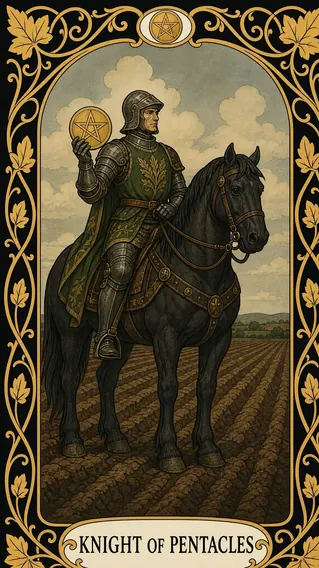
Both are court cards of the rank of Knight, but their elements are opposite. Swords are the element of air, speed of thought and word: the Knight of Swords is about a sharp decision, directness, and drive. Pentacles are the element of earth, slow and steady movement: the Knight of Pentacles is about methodicalness and perseverance without haste. If the Knight of Swords appears in a reading, the emphasis should be on speed and directness, not on thoroughness.
Is the Knight of Swords a yes or no?
More likely yes, but with the condition of acting quickly and directly, without lengthy согласований. The card doesn't promise that there won't be friction – it's about the fact that delay in this situation will cost more.
What does the reversed Knight of Swords mean?
The same drive, but it misses the target: aggression without real reason, harsh words spoken in haste, or exhaustion from maintaining too much speed at the limit. Another option is an important direct conversation that is deliberately postponed.
Is the Knight of Swords in relationships about conflict?
Not necessarily about conflict, but definitely about directness: an honest conversation without beating around the bush, a confession or decision made without preparation. Whether this is good or bad depends on whether the other person is ready for such speed – the card itself does not promise care in the wording.